The $1 Trillion Wipeout: What the AI Chip Selloff Reveals About the Market's Biggest Bet


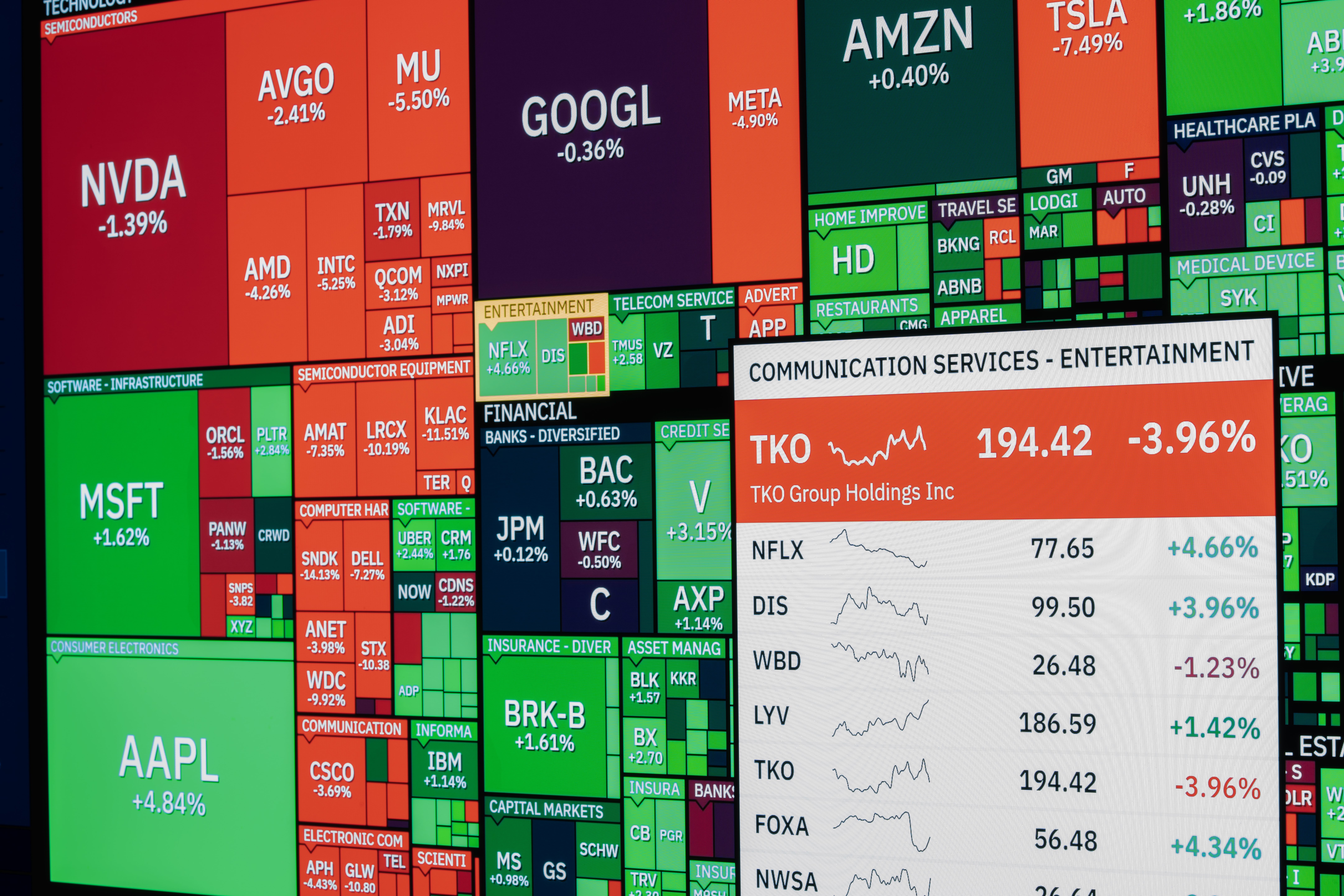
There is a number that captures the scale of what happened to the AI trade last week: 1 trillion. That is how many dollars in market value were erased from chip stocks in a matter of days, as the Philadelphia Semiconductor Index posted its steepest weekly decline in over a year. The S&P 500 fell 1.6% for the week. The Nasdaq dropped 2.9%. And in South Korea, the KOSPI - a market so heavily concentrated in Samsung and SK Hynix that it has become a proxy for global AI sentiment - plunged 27% from its recent high, triggering margin calls on 1.2 million brokerage accounts.
This was not a routine correction. It was a reckoning.
A Perfect Storm of Catalysts
The selloff did not arrive from a single direction. It came from several at once. First, Chinese AI startup Moonshot released Kimi K3, a model that analysts described as pushing into frontier territory - casting fresh doubt on whether the hyperscalers' gargantuan infrastructure spending is truly necessary at the pace they have been deploying it. Then came earnings from TSMC and Netflix, both of which disappointed traders and sent their stocks down 7.3% and 9.2% respectively in a single session. And looming in the background was Meta's announcement of Meta Compute - a cloud business unit designed to sell surplus AI training and inference capacity to enterprise customers.
That last development may be the most structurally significant. When Meta - a company that has spent tens of billions building AI infrastructure - decides it has enough excess GPU capacity to become a seller rather than just a buyer, the perpetual scarcity thesis that drove semiconductor valuations to extreme levels starts to look like it has an expiration date. Micron fell 13% in a single session. Intel dropped 21% over seven trading days. AMD shed 7-8%. Even Nvidia, the seemingly untouchable leader of the AI hardware complex, slipped - though its 1.25% decline was the smallest in the group, a testament to the durability of its software moat.
The Samsung Paradox
Perhaps no single data point better illustrated the market's shifting psychology than Samsung's earnings report. The company announced preliminary second-quarter operating profit of 89.4 trillion won - an increase of more than 1,800% year-over-year. The stock fell nearly 7%. Investors were not looking backward at record profits. They were looking forward at capital expenditure plans and asking whether the demand assumptions baked into chip valuations were still valid.
SK Hynix compounded the concern by announcing it was delaying its HBM4 memory expansion in favor of higher-margin DDR5 production - a supply-chain shift that the market read as a signal of moderating AI-driven memory demand. When the world's two largest memory makers are both sending cautionary signals in the same week, the market listens.
The Leverage Problem
What made the selloff so violent was not just the fundamental narrative shift - it was the leverage embedded in the system. Fundstrat's Tom Lee estimated that margin debt is up 54% annually, marking the sixth biggest surge in the last 60 years. In South Korea, the AI boom had given rise to leveraged ETFs that magnified every swing in Samsung and SK Hynix. When sentiment turned, 1.2 million margin calls followed. Forced selling cascaded across global markets.
Lee's view is that this is ultimately healthy - a rolling correction that reduces speculation ahead of earnings season rather than a systemic collapse. "I think those names are going to bounce later this year," he said on CNBC. "I don't think the trade is over." The S&P 500's 2% dip from its recent high and the Nasdaq's 6% slide look like speed bumps compared to the KOSPI's 27% crash.
The Deeper Warning: AI as the Economy's Last Pillar
But there is a more sobering read on what this week revealed. Apollo Global Management's chief economist Torsten Slok has been warning for weeks that AI has become the single load-bearing pillar of both the stock market and the broader U.S. economy. Without IT-related capital expenditure, corporate investment in the United States would actually be negative right now. The Big Four hyperscalers - Microsoft, Amazon, Google, and Meta - are still guiding to a combined approximately $250 billion in 2026 AI capital spending, up 77% from 2025. But Slok's concern is about timing: if AI revenue does not accelerate fast enough to justify that spending, the capex cycle could slow - and with it, economic growth itself.
Adding to the pressure, the cover ratio on hyperscaler bonds - the number of investor orders per dollar of debt issued - has fallen from nearly 5x in February 2026 to below 2x in July. Bond investors, who are less susceptible to narrative momentum than equity traders, are quietly demanding better terms to absorb the flood of AI-related debt. That is a signal worth watching.
What Comes Next
The AI infrastructure cycle is not over. The long-term demand for compute is real, and the companies with genuine competitive moats - Nvidia's CUDA ecosystem chief among them - are not going away. But the market has shifted from pricing in perpetual scarcity to asking harder questions about fundamentals, competitive positioning, and the timeline to profitability. Intel's second-quarter earnings, expected around July 23, will be the next major test. Management must either steady the story with concrete progress on its 18A manufacturing process or confirm the bears' fears.
For investors, the lesson of this week is not that AI is over. It is that the easy money phase - where any company touching a GPU was rewarded regardless of execution - has likely passed. The next phase will reward companies that can demonstrate real revenue growth, durable competitive advantages, and a credible path to returns on the capital they have deployed. That is a harder test. And the market just made clear it intends to administer it.