The $50 Billion Debt Bomb: What CoreWeave's Credit Crisis Reveals About the AI Buildout's Hidden Risk
CoreWeave's credit default swaps hit distressed levels this week, pricing in a 63% chance of default. The Nasdaq posted its worst week since June. Here is what the AI debt crisis actually means for investors.

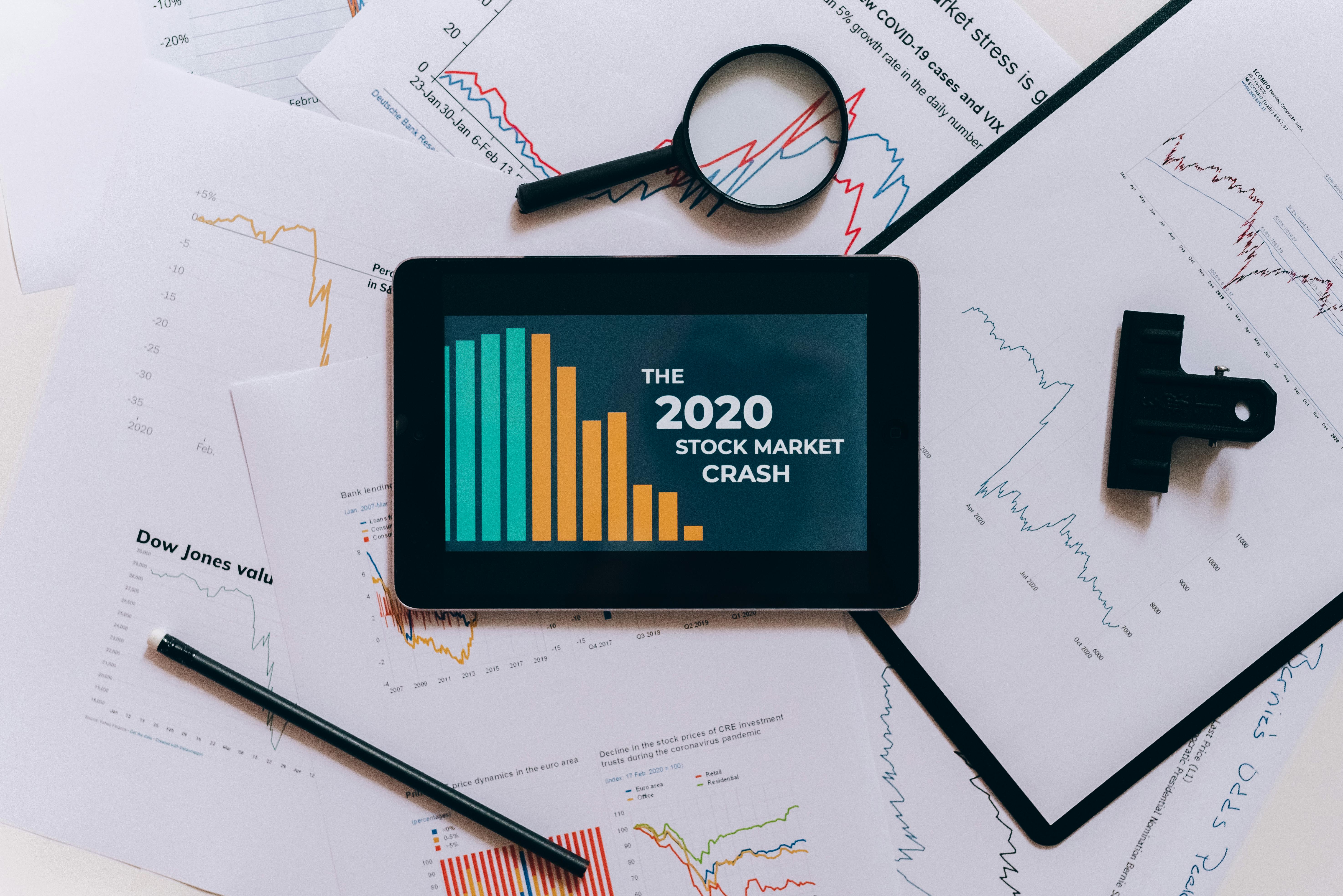
There is a number that Wall Street has been sitting with since Thursday morning: 1,000. That is how many basis points the cost of insuring CoreWeave's debt against default reached this week - a level that implies a nearly 63 percent chance the Nvidia-backed AI cloud company defaults within five years. The Nasdaq Composite dropped 2.1 percent on Friday, capping its worst week since June with a 4.5 percent decline. Chipmakers shed nearly $2 trillion in market value over five sessions. And at the center of it all was a single, uncomfortable question that the AI trade has been avoiding for months: what happens when the debt that built the AI economy comes due?
The CoreWeave Problem in Plain English
CoreWeave is not a household name, but it is one of the most consequential companies in the AI infrastructure stack. The Nvidia-backed cloud provider rents GPU compute capacity to AI companies - including Microsoft and OpenAI - and has built its business on a simple premise: borrow money to buy Nvidia chips, lease that capacity to AI customers, and use the revenue to service the debt. The model worked when borrowing was cheap and AI demand was accelerating. It is under severe stress now that the 10-year Treasury yield is sitting above 5.3 percent and the cost of capital has risen sharply.
The numbers are stark. CoreWeave carries approximately $50 billion in debt. The company is expected to post revenue of nearly $13 billion this year alongside a loss of $2.13 billion. Its bonds have sunk to distressed levels, trading at roughly 79 cents on the dollar. The credit default swap market - the instrument investors use to hedge against corporate default - is pricing in a 63 percent probability of default within five years, up from approximately 30 percent a year ago. CoreWeave CEO Mike Intrator pushed back in an internal memo, telling employees the company's deal backlog more than covers its debt obligations and that markets can sometimes "misunderstand and act irrationally." Nvidia CEO Jensen Huang told Bloomberg that CoreWeave's cost of capital is actually decreasing. The bond market, for now, is not listening.
Why This Is Bigger Than One Company
The CoreWeave selloff is not primarily a story about one overleveraged cloud provider. It is a stress test for the entire model of AI infrastructure financing. The AI buildout of 2024 through 2026 has been funded, in significant part, by debt - chip mortgage loans, high-yield bonds, private credit facilities, and equity raises that have collectively put tens of billions of dollars of leverage onto the balance sheets of companies whose revenue is still catching up to their capital expenditure. CoreWeave is the most visible example, but it is not the only one.
Research firm Gartner released a report this week estimating that approximately 80 percent of neocloud companies - the category of AI-focused cloud providers that includes CoreWeave - could shut down by 2030 if AI infrastructure investment continues at its current pace. Gartner projected that AI providers will spend nearly $1 trillion on infrastructure in 2026 alone, with an additional $6 trillion forecast between 2027 and 2030. Against that spending, the firm estimated that AI data center revenue can only reach $3.6 trillion by 2030 - a gap that implies more than $4 trillion in potential asset impairment by 2032. These are projections, not certainties. But they are the kind of numbers that move credit markets.
The Rotation That Tells You Something
The market's reaction this week was not uniform, and the divergence is instructive. While the Nasdaq fell 4.5 percent and chipmakers were hammered, the Dow Jones Industrial Average actually rose 0.7 percent for the week as investors rotated into defensive sectors, industrials, and consumer staples. Treasury yields fell as investors fled to safety, with the 10-year dropping to 5.09 percent on Thursday before recovering. The pattern - tech selling off while defensive assets hold - is the classic signature of a credit-driven risk-off move, not a broad economic deterioration.
That distinction matters. The AI demand story has not changed. TSMC just reported its sixth consecutive quarter of record earnings, with revenue up 51 percent year over year. Microsoft, Google, Amazon, and Meta are still spending hundreds of billions on AI infrastructure. The hyperscalers are not CoreWeave. They are funding their AI buildout from operating cash flows, not borrowed money at the margin. The credit stress is concentrated in the neocloud layer - the companies that borrowed aggressively to build capacity ahead of demand, betting that AI revenue would arrive fast enough to service the debt before rates made the math impossible.
What Investors Should Watch
The CoreWeave crisis is a preview of a reckoning that has been building since the AI infrastructure boom began in earnest. The companies that borrowed to build data centers on three-year customer contracts, financed with five-year debt, are now facing a structural mismatch: the contracts may expire before the loans mature, and the residual value of GPU assets in a rapidly evolving chip cycle is genuinely uncertain. As one analyst put it this week, the exposure sits with anyone borrowing against assets whose residual value is set by a chip cycle they do not control.
The hyperscaler earnings calls in late October will be the next major test. If Microsoft, Alphabet, Amazon, and Meta maintain or accelerate their AI capex commitments, it validates the demand side of the equation and provides a floor under the broader AI trade. If any of them signal deceleration - whether due to rising capital costs, regulatory pressure, or simply the natural digestion of a massive buildout - the credit stress in the neocloud layer could spread. The $50 billion debt bomb at CoreWeave is not the whole story. It is the first chapter of a reckoning that the AI economy has been deferring since rates started rising. The market spent this week deciding it can no longer look away.