The Earnings Bubble Question: What Wall Street's Record Profit Forecasts Mean for Q2 Season
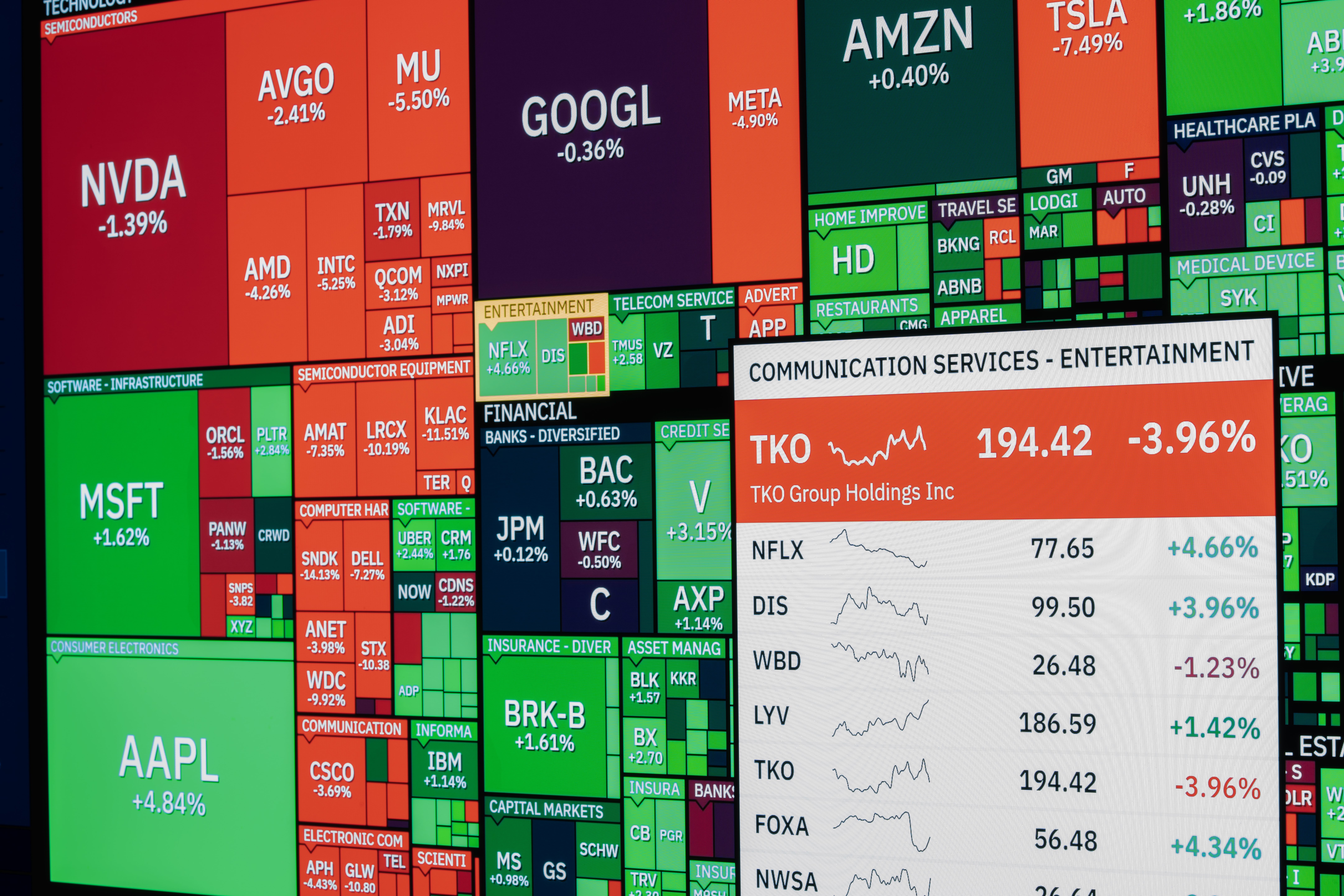
Analysts are forecasting 25% S&P 500 earnings growth, but some of Wall Street's most respected voices are asking if these record profit forecasts are sustainable. With Q2 earnings season beginning July 13, the margin of safety on earnings has narrowed to a critical point.

There is a number that has quietly become the most debated figure on Wall Street heading into the second half of 2026: 25. That is the percentage by which analysts are now forecasting S&P 500 company earnings will grow over the coming year, according to Bloomberg data. It is a figure so large, rising so fast, that some of the most respected voices in institutional finance are asking a question that rarely gets asked during a bull market: what if the forecasts are wrong?
The concern has a name. Michel Lerner, head of UBS's investment analytics platform HOLT, has called it an "earnings bubble" - a situation in which share prices in the AI food chain are priced to maintain supernormal profits that, by any historical measure, are extraordinarily difficult to sustain. The warning is not that the market is about to collapse. It is that the margin of safety between what investors are paying and what companies will actually deliver has narrowed to a point where even modest disappointments could trigger significant repricing.
The Fastest Upgrade Cycle Since the Pandemic Rebound
The numbers behind the concern are striking. Consensus estimates for S&P 500 coming-year profits have risen by almost 20 percent in just six months - the biggest such jump since 2021, when earnings were rebounding from the depths of the COVID-19 shutdown. Ben Inker, co-head of asset allocation at GMO, described the pace as rising "at an exceedingly high rate, nothing we have seen outside of a crisis recovery." His conclusion was blunt: "What we are due for, in the market, is the eventual realisation that they will not come true."
Goldman Sachs has set its 2026 earnings-per-share forecast for the S&P 500 at $340, representing 24 percent growth compared to last year, and raised its year-end index target to 8,000. FactSet estimates Q2 2026 earnings growth at 22 percent, up from 18.7 percent at the start of the quarter, with revenue growth expected at 12.1 percent. These are not modest projections. They are the kind of numbers that require nearly everything to go right - AI spending to hold, consumer demand to remain resilient, and the Federal Reserve to stay on the sidelines.
The Context That Makes the Forecasts Fragile
The problem is that not everything is going right. The June jobs report, released on July 3, showed the U.S. economy added only 57,000 nonfarm payrolls - roughly half of what economists had forecast and the weakest monthly print in well over a year. The labor force participation rate fell to 61.5 percent, its lowest level since March 2021, as 720,000 people left the workforce entirely. That is not the backdrop of an economy firing on all cylinders.
Meanwhile, traders are now pricing at least one quarter-point Federal Reserve rate hike by year-end - a complete reversal from the two or three cuts that markets were expecting at the start of 2026. Higher borrowing costs compress margins, slow consumer spending, and raise the discount rate applied to future earnings. Each of those effects works against the 25 percent earnings growth that analysts are currently projecting.
Capital Economics warned this week that "AI-related equity markets may be approaching a point where earnings expectations and capital expenditure assumptions become difficult to sustain" and that a correction in these could "trigger a broad equity market pullback." The concern is not that AI is a fraud. It is that the capital being deployed - hundreds of billions of dollars annually in data center construction, chip procurement, and infrastructure buildout - needs to generate returns that justify the investment. That translation from spending to profit is not guaranteed, and it is not fast.
The Valuation Paradox
Here is the paradox that makes this moment genuinely interesting. U.S. stocks are currently trading at roughly 20 times forward earnings expectations - a level that is below the peaks reached during the post-COVID rebound and well below the heights of the dotcom era. On that measure alone, the market does not look obviously overvalued. The rapid rise in earnings estimates is actually keeping the price-to-earnings ratio in check even as indices hit fresh highs.
But Sarah Ketterer, chief executive of Causeway Capital Management, offered a counterintuitive read: low multiples could mean it is "not a good time to invest" if they indicate a stock is nearing its peak earnings. In other words, a 20x multiple on peak earnings is more dangerous than a 25x multiple on trough earnings. The question is not where the multiple sits today. It is where earnings will be in 12 to 18 months.
Arun Sai, senior multi-asset strategist at Pictet Asset Management, framed the current moment as "the strongest earnings upgrade cycle since the commodity supercycle" - the China-driven natural resources boom of the mid-2000s. That comparison is instructive. The commodity supercycle produced extraordinary earnings growth for several years before the cycle turned. Investors who rode it well made fortunes. Investors who stayed too long paid dearly.
What Q2 Earnings Season Will Reveal
The second-quarter earnings season begins in earnest the week of July 13, when the major banks report. JPMorgan, Goldman Sachs, and their peers will set the tone. Three-quarters of the S&P 500's market capitalization reports in the following three weeks. The results will be the first real test of whether the 22 percent growth that analysts are projecting is achievable in an environment of softening labor markets, persistent inflation running at 4.2 percent year-over-year, and a consumer that is, by multiple measures, under pressure.
Kasper Elmgreen, chief investment officer for fixed income and equities at Nordea Asset Management, put the stakes plainly: there is a "very narrow margin of safety" on earnings right now. "The debate is really about how long can we continue to see positive surprises, and are there some cracks now that expectations are so elevated?"
The honest answer is that no one knows. The AI boom is real. The earnings growth it has generated is real. But the speed at which analysts have revised their forecasts upward - 20 percent in six months - is the kind of momentum that historically precedes either a genuine earnings supercycle or a painful reckoning with reality. Q2 season will begin to answer which one this is.