Hollywood's $110 Billion Endgame: What the Paramount-Warner Bros Deal Means for Media, Markets, and the Streaming Wars


There is a number that captures the scale of what is about to happen to Hollywood: 110. That is how many billion dollars Paramount Skydance has agreed to pay to absorb Warner Bros Discovery, combining two of the four major American studios into a single entertainment colossus. On Friday, July 11, 2026, the Oregon attorney general's office withdrew its court motion to delay the transaction - a small but telling development in a deal that has been grinding through regulatory and legal obstacles for months and is now closer to closing than at any point since it was announced.
The deal, if it closes as expected in the third quarter of 2026, will create an entity that controls HBO, CNN, Warner Bros film and television studios, Paramount+, CBS, MTV, Nickelodeon, BET, and a library of intellectual property that spans nearly a century of American popular culture. It is not just a media transaction. It is a restructuring of the competitive landscape in which Netflix, Disney, and Amazon have been winning for years - and a bet by two legacy studios that scale is the only viable answer to the streaming era's economics.
The Regulatory Gauntlet
The path to this point has been anything but smooth. Warner Bros Discovery shareholders voted overwhelmingly to approve the merger on April 23, 2026. The U.S. Department of Justice cleared the deal on June 12, concluding it was unlikely to substantially lessen competition in the relevant markets. Those were the two biggest hurdles, and both were cleared faster than many analysts had expected.
But the deal has faced a second front of opposition from state attorneys general. Oregon's AG Dan Rayfield had asked a Multnomah County court to order Paramount to hand over records related to "Project Warrior" - the company's internal code name for its regulatory clearance strategy - and to delay the transaction by 60 days. On Friday, that motion was withdrawn. The Oregon DOJ said in a statement that Paramount had made clear it would not comply with the investigative demand, and that the state was not going to waste resources on what it characterized as legal gamesmanship.
The withdrawal is a tactical retreat, not a surrender. Reuters reported this week that other U.S. states could sue as early as next week to block the acquisition on competition grounds. The deal has drawn criticism from actors, writers, and others in Hollywood who fear job losses and reduced competition for creative talent. Whether any state-level legal challenge can actually stop a transaction that the DOJ has already cleared is a question that antitrust lawyers are debating actively - but the precedent from recent mega-mergers suggests that state-level opposition, while capable of creating delay and cost, rarely succeeds in blocking a deal that federal regulators have approved.
What the Combined Company Actually Looks Like
The strategic logic behind the merger is straightforward, even if the execution is not. Warner Bros Discovery and Paramount have both been struggling with the same fundamental problem: the economics of legacy media - linear television, theatrical distribution, and traditional advertising - are deteriorating faster than streaming revenues are growing to replace them. Warner Bros Discovery has been carrying a heavy debt load from its own 2022 merger between WarnerMedia and Discovery. Paramount has been burning cash on Paramount+ while watching its linear TV business erode.
Together, the combined company would have a streaming subscriber base that could credibly compete with Netflix's roughly 300 million global subscribers. Max, the HBO-anchored streaming service, has approximately 110 million subscribers. Paramount+ has around 70 million. The combined platform would have a content library - from Game of Thrones and The White Lotus to Mission: Impossible and SpongeBob SquarePants - that no single competitor can replicate quickly or cheaply.
The cost synergies are the other half of the equation. Analysts have estimated that the combined company could eliminate $3 billion to $4 billion in annual costs by consolidating back-office functions, reducing duplicate content spending, and rationalizing the combined portfolio of cable networks. In an industry where margins are under pressure from every direction, that kind of cost reduction is not a nice-to-have. It is a survival mechanism.
The Wall Street Read
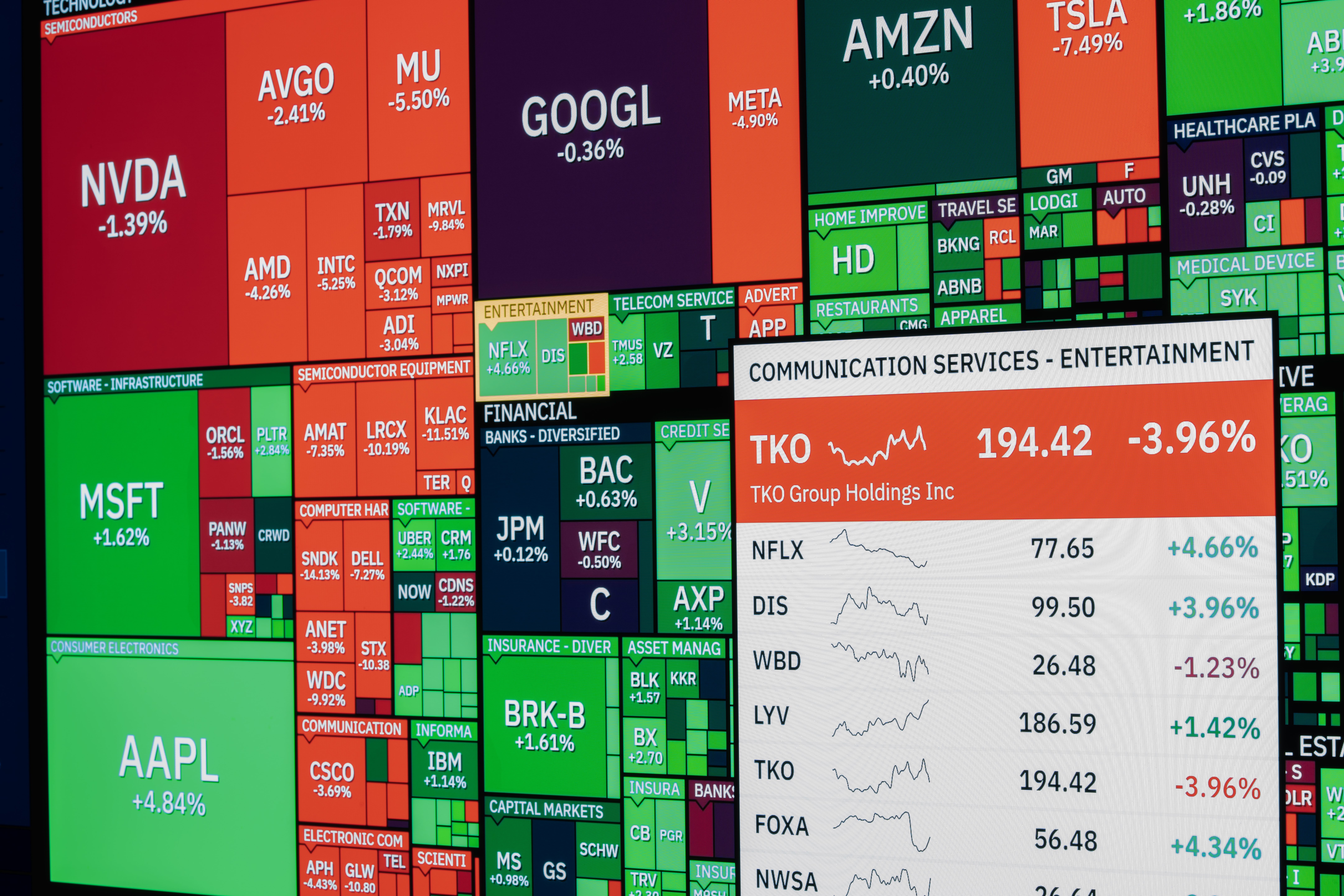
Markets have been cautiously constructive on the deal. Paramount Skydance shares (PSKY) have traded with modest volatility around the merger timeline, reflecting the uncertainty of the state-level legal challenges. Warner Bros Discovery (WBD) shares have been more stable since the DOJ clearance in June, trading around $26 to $27 as arbitrageurs price in a high probability of closing.
The more interesting question for investors is what the combined company's equity story looks like post-close. The deal is structured as an all-cash acquisition at $30 per WBD share - a premium that WBD shareholders have already endorsed. The surviving entity will carry significant debt, and the first years of the combined company will be dominated by integration costs, content rationalization decisions, and the challenge of convincing streaming subscribers that a merged Max-Paramount+ platform is worth paying for.
Netflix's response to the merger has been characteristically understated. The company has said nothing publicly, which is itself a statement. Netflix does not need to respond to a deal that, even at its most optimistic, creates a competitor that is still smaller and more leveraged than the market leader. The more relevant competitive dynamic is with Disney, which has been executing its own streaming consolidation through Disney+, Hulu, and ESPN+. A combined Paramount-Warner entity would be the first credible challenger to Disney's position as the second-largest streaming platform in the world.
The Broader Implication for Media M&A
The Paramount-Warner deal is not happening in isolation. It is the largest transaction in a wave of media consolidation that reflects a shared conclusion among legacy entertainment companies: the streaming era rewards scale above almost everything else. Content costs are high and rising. Technology infrastructure is expensive. Marketing a streaming service in a crowded market requires the kind of brand recognition and content depth that only the largest libraries can provide.
The deal also reflects a broader M&A environment that PwC has described as on track to eclipse the 2021 deal boom, with global deal value approaching $4 trillion in 2026. Morgan Stanley has said global M&A activity is on track to set a new record. In that context, a $110 billion media merger is large but not anomalous - it is consistent with a market in which boards are dreaming big and capital markets are willing to finance ambition.
What happens next week - whether additional state AGs file suit, and whether any court grants a temporary restraining order - will determine whether the Q3 closing timeline holds. The Oregon withdrawal suggests that at least one state has concluded the legal fight is not worth the cost. Whether others reach the same conclusion, or whether the deal faces a more sustained legal challenge, is the question that will define the next chapter of Hollywood's most consequential merger in a generation.