IBM's Worst Day in History: What the 25% Collapse Reveals About AI's Hidden Casualty
IBM's stock plummeted 25% on July 14, 2026 - its worst day in history - as enterprise clients redirected capital budgets from software to AI infrastructure, signaling a hidden casualty of the AI boom.

There is a number that captures the scale of what happened to IBM on Tuesday: 25. That is how many percent the company's stock fell in a single session on July 14, 2026 - its worst single day in recorded history, surpassing even the 23% collapse the company suffered in October 1987. By the close, IBM shares had fallen to $217.05, erasing roughly $35 billion in market value in one afternoon.
The trigger was a preliminary second-quarter earnings warning that IBM CEO Arvind Krishna released ahead of the company's full report, scheduled for July 22. The numbers were stark: revenue of $17.2 billion, up just 1% year over year but well below the $17.86 billion Wall Street consensus. Non-GAAP earnings per share came in at $2.93, missing the $3.01 estimate. In a letter to investors, Krishna did not mince words. "This quarter we faltered," he wrote. "We did not adapt and move quickly enough, and numerous large deals failed to close on the timelines we expected."
The AI Hardware Squeeze
The story behind the miss is more revealing than the numbers themselves. Krishna explained that IBM's enterprise clients had abruptly redirected their capital expenditure budgets in the final weeks of June - away from software licenses and mainframe upgrades, and toward servers, storage, and memory chips. The reason: a global shortage of AI-grade memory has driven hardware prices sharply higher, and corporate IT departments scrambled to lock in supply before prices rose further.
This is the paradox at the heart of the AI investment boom. The same insatiable demand for AI infrastructure that has made Micron, SK Hynix, and Nvidia into market darlings is now actively cannibalizing the software and services budgets that companies like IBM depend on. Enterprise IT spending is not infinite. When the hardware bill surges, something else gets cut - and in Q2 2026, that something was IBM's deal pipeline.
The infrastructure division bore the brunt of the damage, with revenues falling 7%. IBM's Software segment, by contrast, held up reasonably well, growing 5% with Red Hat posting an 11% gain. Consulting was roughly flat. The miss was concentrated, not broad - but the market treated it as an existential warning about the entire software sector.
Contagion Across the Software Stack
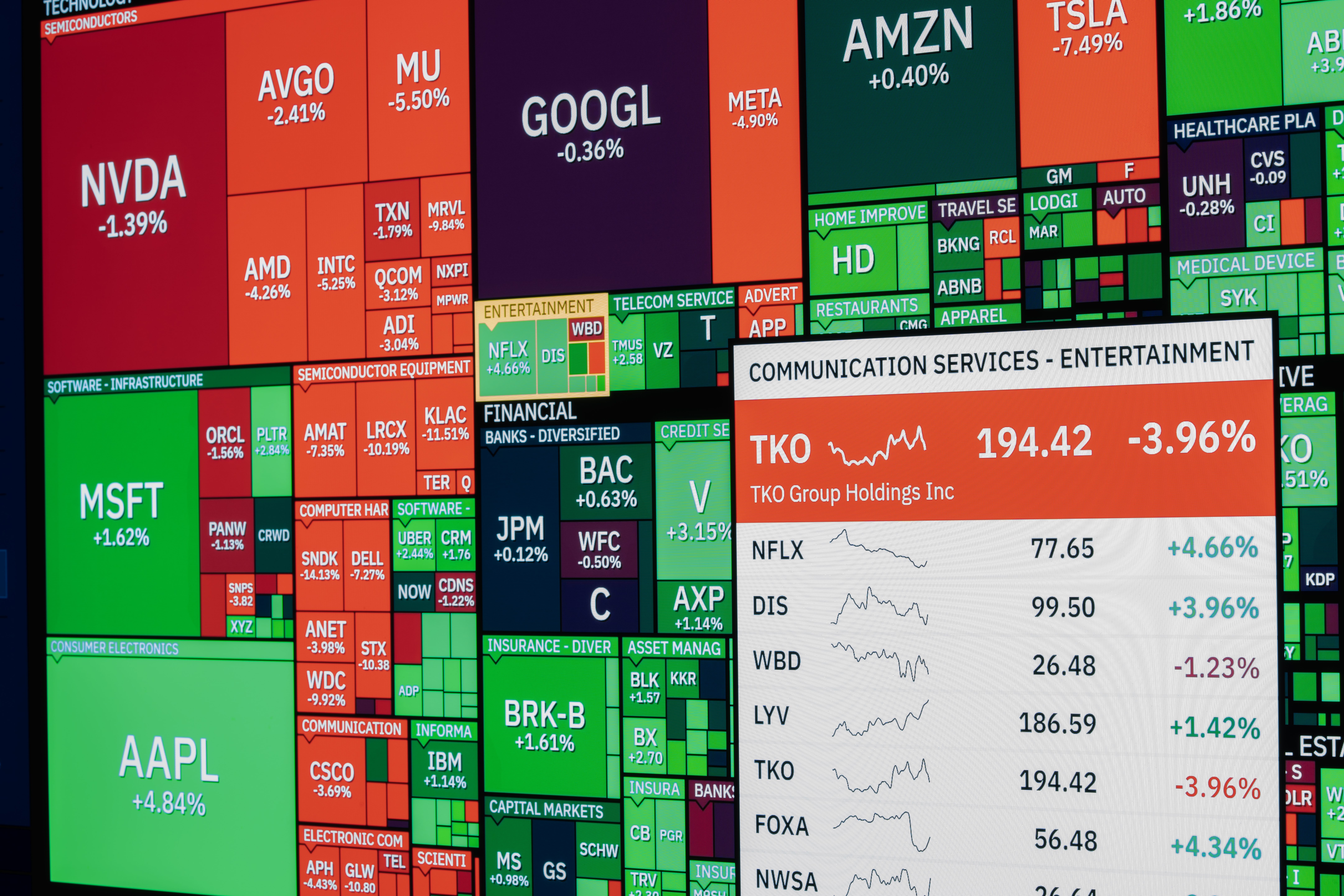
The selloff did not stay contained to IBM. Microsoft fell nearly 3% to $379.76. ServiceNow dropped 8% to $102.38. Salesforce and Adobe both declined sharply. The iShares Expanded Tech-Software Sector ETF fell 4%. The message the market was sending was blunt: if IBM's clients are cutting software budgets to fund hardware, every enterprise software vendor is potentially exposed.
HSBC moved quickly to downgrade IBM to Reduce from Hold, slapping a $191 price target on the stock - implying further downside from already-depressed levels. Morgan Stanley and Oppenheimer, which had maintained more bullish targets heading into earnings season, are widely expected to revise their estimates before the full July 22 report.
The broader context matters here. The global memory chip shortage - driven by AI data center buildouts consuming specialized high-bandwidth memory at unprecedented rates - has been well documented. Micron's CEO has said he expects "tight conditions to persist beyond calendar 2027." What Tuesday's IBM collapse made viscerally clear is that this hardware squeeze has a direct and painful corollary for the software industry. Capital is finite. When hyperscalers and enterprises alike are racing to secure AI infrastructure, the discretionary software budget is the first line item to get trimmed.
What Comes Next
The bull case for IBM is not entirely dead. The company's year-to-date free cash flow reached $4.8 billion. Red Hat's 11% growth suggests the hybrid cloud business remains structurally sound. Krishna framed the slipped deals as deferred rather than lost - a distinction that will be tested when the full earnings call arrives on July 22.
But the bear case is harder to dismiss. Mainframe cyclicality has always been a risk for IBM, and the capex reprioritization toward AI hardware could persist well into 2027 if the memory shortage continues. Polymarket currently prices only a 25.5% probability that IBM beats expectations when the full report lands - a sign that the market is bracing for more bad news, not less.
For investors watching the broader software sector, Tuesday's session offered a sobering lesson. The AI boom is real, and it is generating enormous wealth - but it is not lifting all boats equally. The companies building the physical infrastructure of the AI era are thriving. The companies selling the software that runs on top of that infrastructure are discovering that their customers have a new, more urgent priority. IBM's worst day in history may be the clearest signal yet that the AI trade has a hidden casualty - and it wears a blue suit.