Micron's $54 Billion Quarter: What the Memory Boom Tells Us About the AI Economy
Micron Technology reported $54.2 billion in quarterly revenue, a 379% year-over-year surge driven by AI memory demand. The company's Strategic Customer Agreements and supply constraints reveal a structurally transformed business.

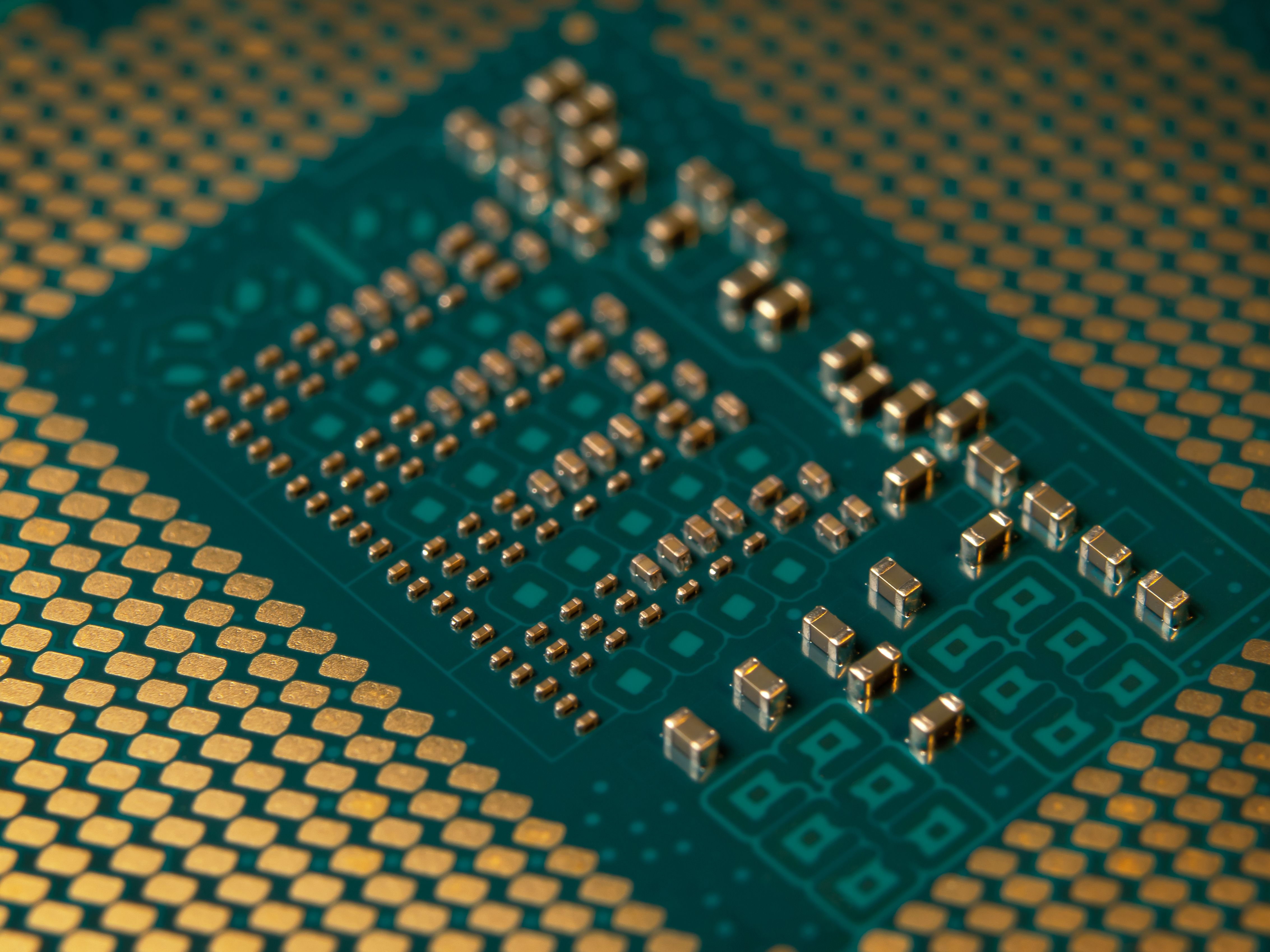
There is a number that Wall Street has been sitting with since Wednesday evening: 379. That is how many percent Micron Technology's quarterly revenue grew year-over-year in its fiscal fourth quarter of 2026 - a figure so large it barely registers as a percentage and starts to feel more like a geological event. The company reported $54.2 billion in revenue for the quarter ended August 29, beating analyst estimates by more than 7%, and guided for $61.5 billion in the current quarter. Micron's stock, already up more than 485% over the past year, barely moved in after-hours trading. That reaction - or lack of one - tells you something important about where the AI memory trade actually stands.
The Numbers Behind the Record
Micron's fiscal fourth quarter was, by almost any measure, an extraordinary result. Revenue of $54.2 billion represented a 31% sequential increase and a 379% surge from the same quarter a year earlier. For the full fiscal year 2026, revenue reached $133.2 billion - up 256% from the prior year and 3.5 times the company's previous annual record. Gross margin came in at 87.0%. Net income for the quarter was $38.4 billion. Cash from operations reached $43.97 billion, representing 81% of revenue. These are not the numbers of a cyclical memory company riding a temporary upcycle. They are the numbers of a business that has been structurally transformed by a single force: artificial intelligence.
The breakdown by product tells the story precisely. DRAM revenue - the category that includes high-bandwidth memory, the specialized chips that power AI accelerators - totaled $39.8 billion in the quarter, up in the high-teens percentage range on average selling prices alone. NAND revenue reached $14.1 billion, with average selling prices up approximately 30% sequentially. In data center SSDs, Micron reported nearly $10 billion in revenue for the quarter - more than 10 times the year-ago period. The company is on track for its fifth consecutive year of record market share in data center SSDs.
The HBM Story Is the Real Story
High-bandwidth memory is the product category that has redefined Micron's competitive position and its valuation. HBM chips sit inside Nvidia's AI accelerators and make large-scale AI inference possible. Without them, the data centers running every major AI application cannot function at scale. Micron disclosed that HBM revenue in fiscal Q4 2026 grew faster than total company revenue - which itself grew 379% year-over-year. The company has already secured agreements for the vast majority of its calendar 2027 HBM bit supply, at significant year-over-year price increases.
The strategic dimension of the HBM business is equally significant. Micron is collaborating with Nvidia on the industry's first custom HBM4E implementation - internally called NVHBM - for next-generation GPUs. That partnership is not just a supply agreement. It is a co-development relationship that embeds Micron's technology roadmap directly into Nvidia's product planning. For a company that was fighting for relevance in the memory market just three years ago, that is a remarkable position to occupy.
CEO Sanjay Mehrotra was explicit about the supply outlook on the earnings call. The company's president and COO Manish Bhatia stated: "We really do not have line of sight to when supply and demand balances," adding that "DRAM is the principal constraint versus logic or power to the data center." That is not a hedge. It is a structural assessment from the company that makes the chips the entire AI industry depends on. Micron's own projections show the memory industry remaining supply-constrained through at least 2028.
The Strategic Customer Agreement Model Changes the Business
Perhaps the most underappreciated development in Micron's results is the transformation of its business model through Strategic Customer Agreements. The company has now signed 26 SCAs, covering an estimated 35% or more of its revenue through 2030. Financial commitments from customers have reached $32 billion - the vast majority in cash deposits. Three-quarters of the estimated SCA revenue has a defined pricing framework, with most incorporating pricing bands that protect both Micron and its customers from extreme volatility.
This is a fundamentally different business than the Micron of five years ago, when memory prices swung violently with the commodity cycle and the company's earnings were notoriously difficult to forecast. The SCA model introduces a degree of revenue visibility that memory companies have historically never had. Several customers are now seeking supply assurance beyond 2030, and Micron has already signed agreements extending into 2031. When customers are locking in supply five years out and paying cash deposits to do it, the demand signal is not ambiguous.
What the Muted Stock Reaction Actually Means
Micron shares closed flat in after-hours trading following the results, at approximately $1,065. That reaction puzzled some observers, given the magnitude of the beat. But it reflects a market that has already done significant work pricing in the AI memory boom. The stock is up more than 485% over the past year. At current prices, Micron trades at a valuation that assumes the structural supply tightness persists and the revenue trajectory continues. The earnings report confirmed both. It did not surprise them.
The more interesting question is what the guidance implies for the broader AI trade. Micron's Q1 FY2027 guidance of $61.5 billion in revenue - with EPS of $38.15 - represents continued sequential growth into a quarter that has historically been seasonally weaker. The company expects fiscal 2027 to be another record year, with sequential revenue growth in every quarter. That forward visibility, backed by $32 billion in customer commitments, is the kind of demand signal that the entire semiconductor supply chain - from equipment makers to packaging specialists to power providers - will be watching closely.
The Constraint That Defines the AI Economy
Micron's results arrive at a moment when the AI infrastructure buildout is running into real-world constraints on multiple fronts. Oracle's force majeure notice on its New Mexico data center, covered here last week, highlighted the power and permitting bottlenecks facing the physical infrastructure layer. Micron's earnings highlight a different but equally fundamental constraint: the memory layer. The company is accelerating capital expenditures in fiscal 2027 specifically to add cleanroom space, because even with planned industry-wide additions, there is no clear path to supply-demand balance before 2028 at the earliest.
That constraint has a direct implication for every company building AI systems. The hyperscalers - Microsoft, Google, Amazon, Meta - are competing not just for GPU allocations but for HBM allocations. The cloud providers signing Micron's Strategic Customer Agreements are not doing so because they expect demand to moderate. They are doing so because they cannot afford to be caught without supply in a market where the principal bottleneck is the memory that makes AI inference possible at scale.
For investors, the Micron quarter is a data point in a larger argument about where value is accumulating in the AI economy. The narrative has focused heavily on the model layer - the Anthropics and OpenAIs - and the GPU layer - Nvidia's dominance. The memory layer has received less attention, partly because Micron's transformation has happened so rapidly that the market is still calibrating what a 379% revenue growth rate means for a company that was considered a commodity cyclical just three years ago. The answer, based on Wednesday's results, is that it means something structural has changed - and that the change is not finished.