Netflix's 9% Drop: What the Q3 Guidance Miss Reveals About the Streaming Economy
Netflix's Q2 earnings beat expectations, but Q3 guidance miss sent shares down 9%. What the numbers reveal about the streaming economy's transition from growth to profitability.


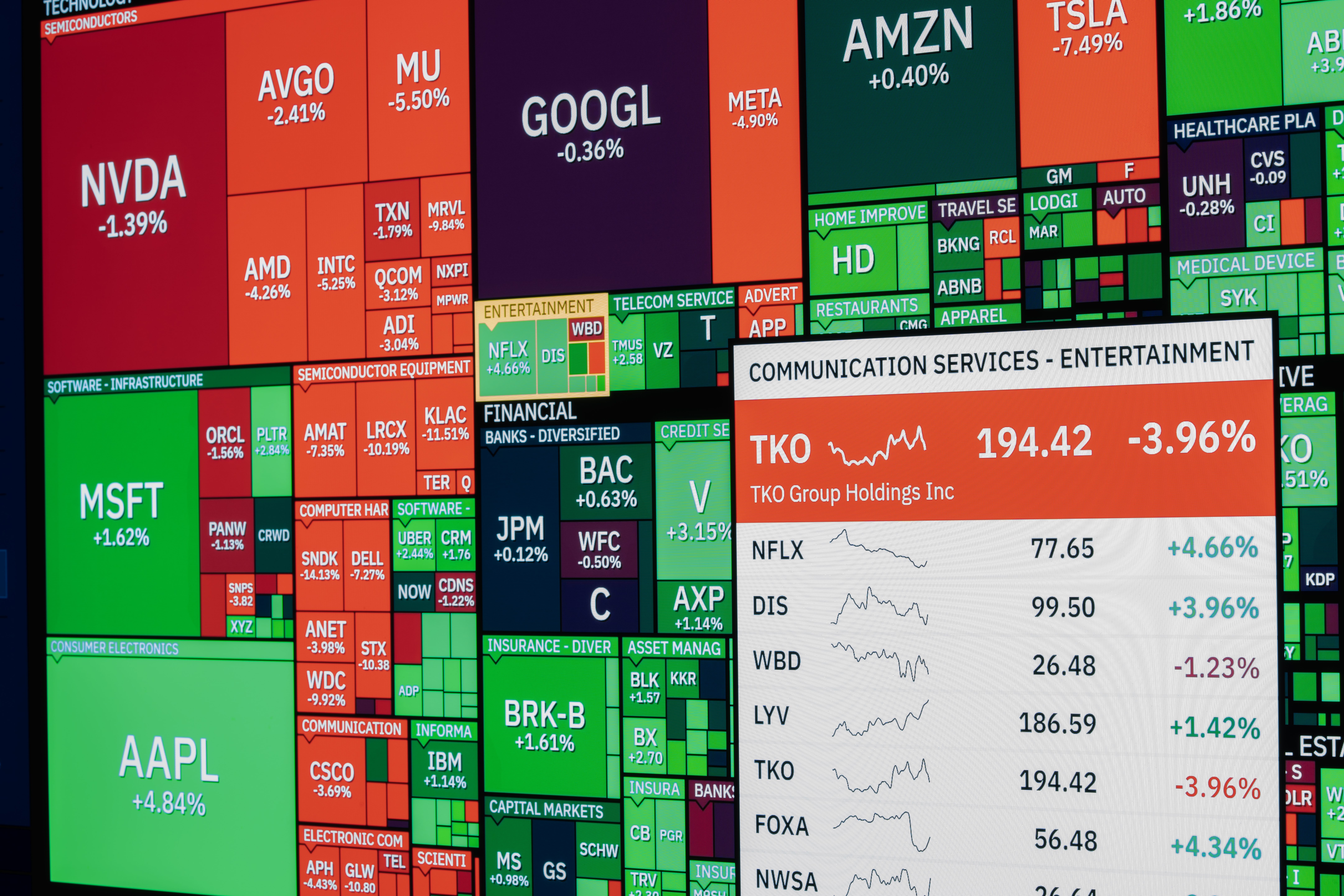
There is a number that captures the tension inside Netflix's second-quarter 2026 earnings report: 9. That is how many percentage points the stock fell in after-hours trading on Thursday after the company delivered results that were, by almost every measure, perfectly fine - and then issued guidance that was not.
Netflix reported Q2 revenue of $12.56 billion, up 13.4% year over year, and net income of $3.4 billion, translating to earnings of 80 cents per share. Wall Street had penciled in $12.59 billion in revenue and 79 cents per share. The company beat on the bottom line, essentially matched on the top, and posted an operating margin of 33.4%. On paper, that is a solid quarter for a company of Netflix's scale.
The problem was what came next. For Q3 2026, Netflix guided to revenue of $12.86 billion - growth of 11.7% year over year. Analysts had expected closer to $13 billion. That gap of roughly $140 million, in a company generating more than $50 billion annually, was enough to send shares to their lowest level in more than a year.
The Guidance Gap and What It Signals
The market's reaction to Netflix's Q3 outlook is worth examining carefully, because it reveals something important about how investors are now pricing the streaming business. Netflix is no longer a growth story in the traditional sense - it is a margin and monetization story. The subscriber count question that dominated the company's narrative for years has been replaced by a more nuanced set of questions: How fast is the advertising business scaling? How durable are the recent price increases? And how much of the engagement slowdown is structural versus cyclical?
On the advertising front, Netflix said its ads business remains on track to deliver approximately $3 billion in revenue for full-year 2026. That is a meaningful number, but it is also a number the company has been citing for several quarters. The Q2 advertising revenue figure was not broken out separately in the shareholder letter, which itself is a data point worth noting. Netflix's decision to reduce transparency - the company also announced it will shift its twice-yearly viewership report to an annual publication starting in 2027 - is a pattern that tends to make analysts nervous.
The Transparency Question
The viewership report change is subtle but significant. Netflix framed it as a way to keep earnings calls focused on primary financial metrics - revenue and operating profit. That is a reasonable explanation. But the timing is awkward. Viewing hours grew just 2% in the first half of 2026, an improvement over the 1.5% growth in the comparable period of 2025, but still a modest figure for a platform that has spent aggressively on live sports, the NFL, WWE, and the 2026 Winter Olympics and World Cup. When engagement growth is modest, reducing the frequency of engagement data is a move that invites scrutiny.
The company's live programming strategy is also worth watching. Netflix said live events accounted for just over 5% of content spend in 2026 but only about 1% of view hours. That is an expensive ratio. The counterargument - and Netflix made it explicitly - is that live programming drove six of the top ten new member sign-up days over the past five years. If live content is a customer acquisition tool rather than a viewing volume driver, the economics look different. But that argument requires investors to trust a metric - sign-up attribution - that Netflix controls and does not independently verify.
The Buyback Signal
One number in the report that deserves more attention than it received is the buyback figure. Netflix repurchased approximately $4.7 billion of its own stock in Q2 2026, its largest single quarter of share repurchases in company history. The company currently has $27.1 billion remaining in its buyback authorization. That is an aggressive capital return posture for a company whose stock just fell 9% in after-hours trading - and it suggests management believes the current price represents genuine value, not just financial engineering.
For full-year 2026, Netflix narrowed its revenue guidance to $51.0 billion to $51.4 billion and held its operating margin target at 31.5%. Those are not the numbers of a company in distress. They are the numbers of a company in transition - from a growth-at-all-costs model to a profitability-and-returns model - navigating a moment when the market is not entirely sure which version of Netflix it is paying for.
What Comes Next
The Q3 guidance miss will likely reset expectations in a way that is ultimately healthy for the stock. Netflix has a history of guiding conservatively and then beating - the Q2 results themselves are evidence of that pattern. The advertising business, while not yet a dominant revenue driver, is growing into a more meaningful contributor as the ad-supported tier expands globally. And the $27 billion buyback authorization provides a substantial floor under the share price.
The more interesting question is whether the 9% after-hours drop reflects a genuine reassessment of Netflix's long-term earnings power, or simply the market's frustration with a company that delivered a good quarter and then refused to let investors feel good about it. Based on the underlying numbers, the answer looks closer to the latter. But in a market where guidance is the product, perception has a way of becoming reality faster than the fundamentals can catch up.