Nvidia's $500 Billion Bet: How the Chipmaker Is Reinventing AI Infrastructure Finance


There is a number that defines what Nvidia announced on Monday: 500. That is how many billion dollars the chipmaker is aiming to mobilize in third-party capital for AI infrastructure - a figure so large it would rank among the biggest financing initiatives in the history of American industry. But the more important number may be six. That is how many of Wall Street's most powerful institutions signed memorandums of understanding with Nvidia to make it happen: Apollo, BlackRock, Blackstone, Brookfield Asset Management, Goldman Sachs, and KKR.
Taken together, these six firms manage more than $6 trillion in assets. And on Monday, every one of them said yes when Jensen Huang came calling.
What Nvidia Is Actually Building
The announcement is being described as a financing deal, but that framing undersells what Nvidia is attempting. The company is not simply helping its customers borrow money to buy chips. It is trying to establish AI compute as a recognized, bankable asset class - something that institutional investors, pension funds, and insurance companies can underwrite the same way they underwrite toll roads, airports, or commercial real estate.
Huang framed it explicitly in those terms on CNBC Monday. "This is really the first time that technology chips have become an investable asset class," he said. "These are revenue-generating assets now. They're productive, they're long-lived, they're fungible, they're flexible." The official press release went further, describing Nvidia compute as offering "the lowest token cost, highest revenue and longest life" of any compute platform, with value extended continuously through CUDA software updates.
The structure of the deal reflects that ambition. Nvidia will work with each of the six partners to create "dedicated pools of capital at significant scale at attractive rates" for Nvidia customers - meaning hyperscalers, frontier AI labs, enterprises, and governments that want to build data centers but prefer not to fund the entire buildout from their own balance sheets. Nvidia itself has the option to backstop up to $125 billion, or 25 percent of the potential deals, according to Huang's post on X.
Why Wall Street Said Yes
The enthusiasm from the financial partners was not performative. BlackRock CEO Larry Fink called the initiative the start of the "next future for financial engineering," comparing it to the creation of mortgage-backed securities in the 1970s. Goldman Sachs CEO David Solomon said the firm was "excited for the new opportunity to create a market for credit backed by Nvidia compute." Blackstone President Jon Gray said AI compute would be seen as a "financeable asset class" in the same way mortgage lenders look at homes, noting that AI use at Blackstone portfolio companies had surged sevenfold this year alone.
These are not casual endorsements. They reflect a genuine conviction among the world's largest alternative asset managers that the AI infrastructure buildout represents a multi-decade capital deployment opportunity - and that Nvidia's dominant position in the GPU market makes its hardware the most defensible collateral available in the sector.
The Circular Financing Question
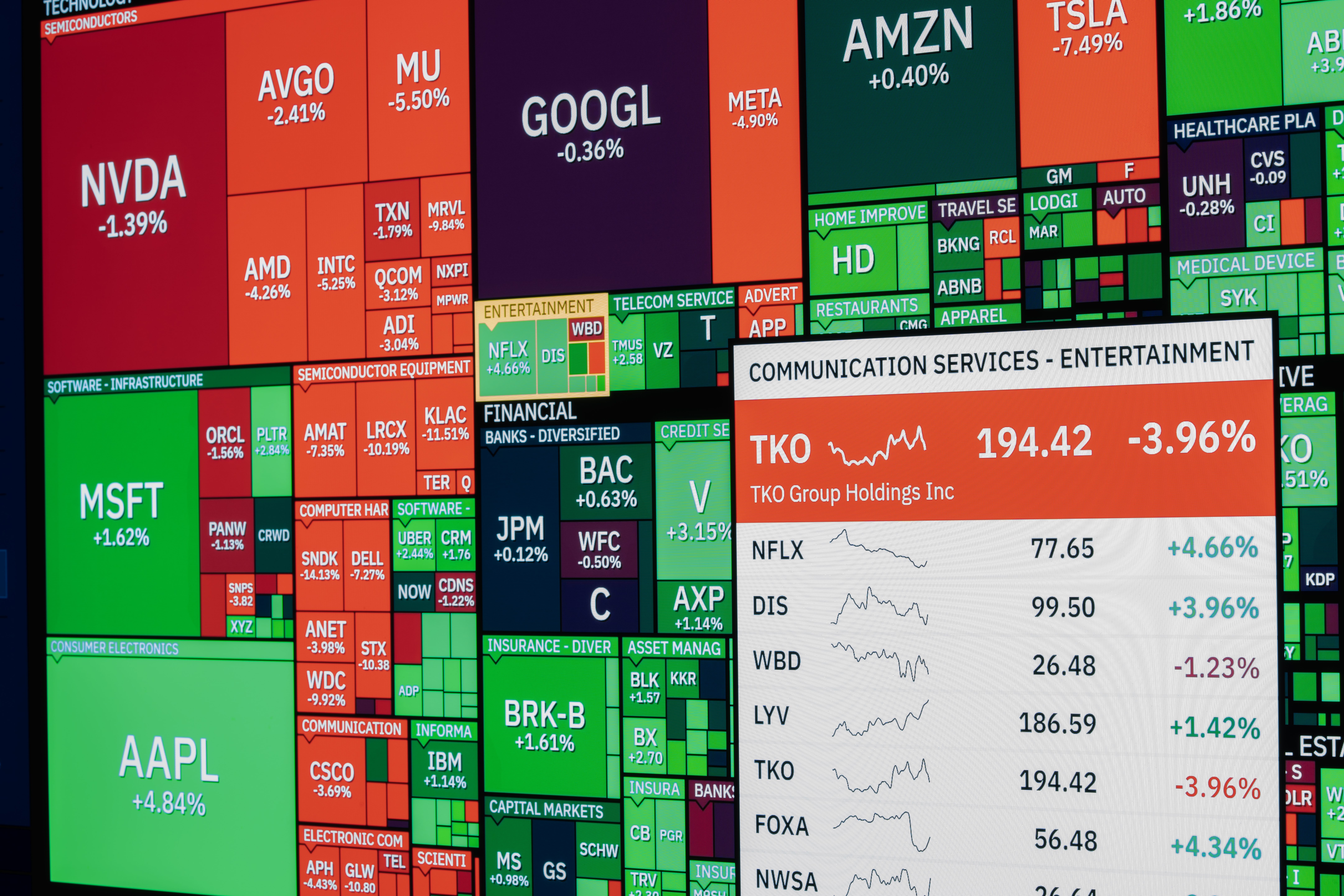
Not everyone read Monday's announcement as unambiguously positive. Nvidia shares fell roughly 3 percent on the news - a counterintuitive reaction that reflects a concern that has followed the company all year. Critics have raised the specter of circular financing: a structure in which Nvidia effectively guarantees the customers who buy its chips, creating a loop where the supplier funds the buyer who funds the supplier. The Bank for International Settlements flagged similar dynamics in a recent report comparing parts of the AI financing ecosystem to pre-2008 credit structures.
The involvement of six independent balance sheets is Nvidia's answer to that criticism. By bringing in Apollo, Blackstone, BlackRock, and the others as genuine underwriters rather than passive participants, the company is attempting to put real institutional capital between itself and the projects being financed. Whether that separation is sufficient - and whether AI chips can retain their collateral value as newer GPU generations emerge - are questions the market is still working through.
The Bigger Picture for Markets
Monday's announcement did not happen in a vacuum. It landed the same day Intel disclosed a $15 billion stock offering to fund its own AI expansion, and one day before the S&P 500 faces a week dominated by the July CPI report. The juxtaposition is instructive. While macro investors are bracing for a potential stagflation signal from Wednesday's inflation data, the AI infrastructure cycle is generating capital commitments at a pace that has no historical precedent.
Big Tech companies are on track to spend more than $730 billion on AI this year. Nvidia's $500 billion financing initiative, if it deploys as intended, would add another layer of institutional capital on top of that. The combined effect is a buildout that is increasingly self-reinforcing - and increasingly difficult to stop even if the macro environment deteriorates.
For investors, the Nvidia announcement raises a question that goes beyond any single stock or sector. When the world's most powerful chipmaker partners with the world's largest asset managers to turn GPU clusters into infrastructure bonds, the line between technology and finance has not just blurred - it has effectively disappeared. Whether that convergence ends in a new era of productive AI-driven growth, or in a credit cycle that looks uncomfortably familiar, is the defining question of the next several years. Monday's announcement made it considerably more urgent.