SpaceX's $1.4 Trillion Test: What Tonight's First Earnings Report Will Really Reveal
SpaceX reports its first earnings as a public company with a $1.4 trillion valuation on the line. Tonight's results will reveal whether the market's appetite for transformational, pre-profit technology companies has survived the macro environment of 2026.

There is a number that defines what Wall Street is watching when SpaceX reports its second-quarter 2026 results after the closing bell today: 1.4. That is how many trillion dollars the market has assigned to Space Exploration Technologies Corp. (NASDAQ: SPCX) since it completed the largest initial public offering in history just eight weeks ago. Tonight, for the first time, investors will get a look under the hood of the most hyped company to go public in a generation - and the question is whether the numbers justify the mythology.
SpaceX listed its shares on the Nasdaq in June 2026, raising capital at a valuation that placed it among the ten largest companies in the world by market capitalization. The IPO was a cultural event as much as a financial one. But since that debut, the stock has been in a sustained retreat, falling more than 50% from its post-IPO high and trading near $114 as of Monday's close - well below the $225 peak it touched in the weeks after listing. Tonight's earnings report is the first real opportunity for the company to either arrest that decline or accelerate it.
The Three Businesses Inside One Stock
Understanding SpaceX's earnings requires understanding that it is not one company - it is three businesses operating under a single ticker, each at a radically different stage of maturity, and each generating a radically different financial profile.
The first is Connectivity, anchored by Starlink. This is the earnings engine. Starlink ended the first quarter of 2026 with 10.3 million subscribers, up from roughly five million a year earlier - a 106% increase in twelve months. The connectivity segment generated $3.3 billion in Q1 revenue and approximately $1.2 billion in operating income. It is the only part of SpaceX that is currently profitable, and it is the financial foundation that allows the company to fund everything else. Wall Street expects connectivity revenue to grow 17.5% sequentially to $3.83 billion in Q2, with an operating margin near 36%.
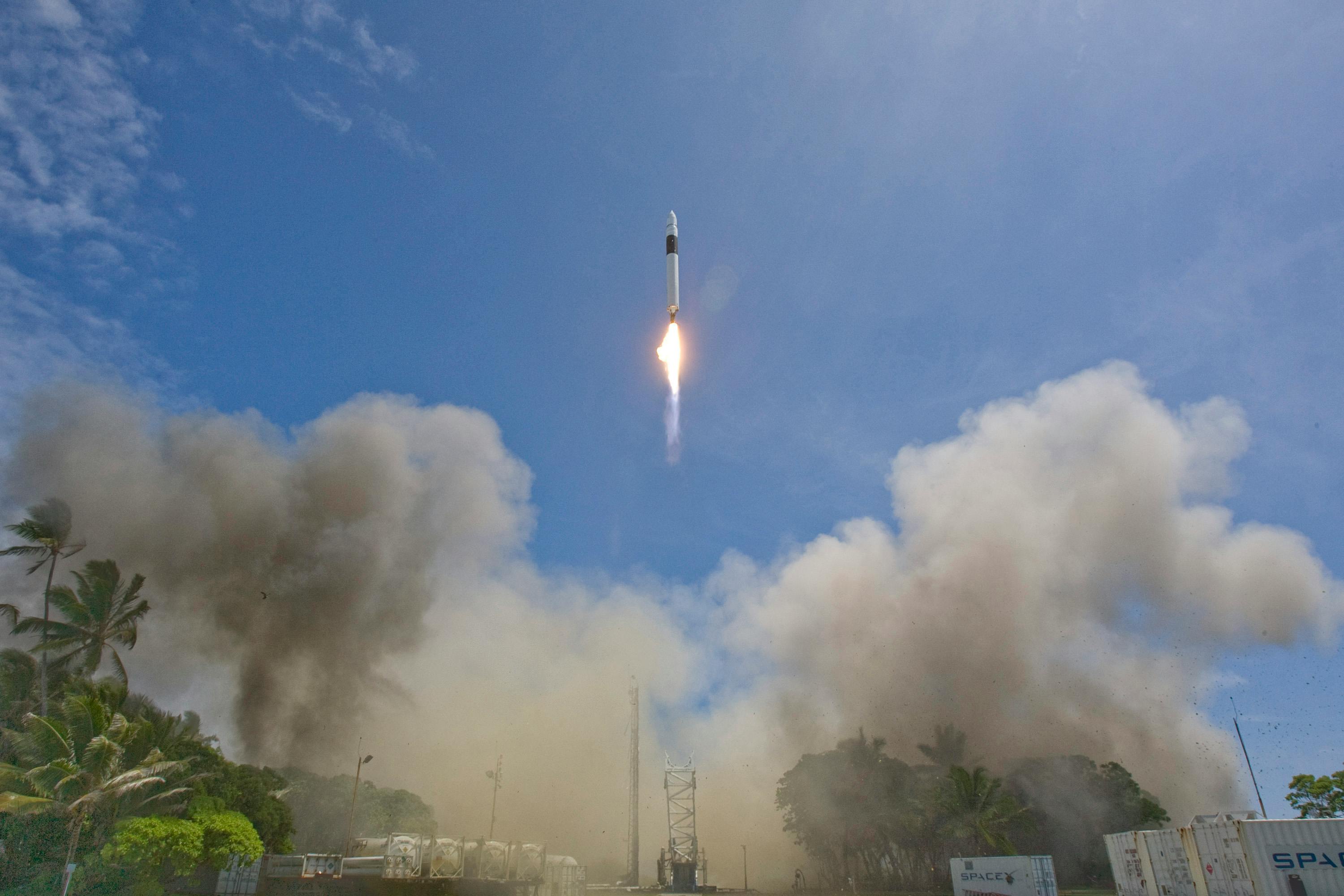
The second business is Space - the launch services operation that built SpaceX's reputation. Falcon 9 remains the most reliable orbital rocket ever built, and the company is pushing toward the first-ever tower catch of a Starship upper stage using the Mechazilla arms at Starbase. Space segment revenue is expected to reach $835 million in Q2, up nearly 35% from Q1. But the segment runs at an operating loss, as the capital intensity of developing Starship and scaling launch cadence consumes more than the launch business currently generates.
The third business is AI - the newest, the most expensive, and the most consequential for the long-term valuation debate. SpaceXAI generated $818 million in Q1 revenue but posted a $2.5 billion operating loss. The company has signed landmark compute deals: a $920 million per month contract with Google Cloud and a $1.25 billion per month agreement with Anthropic. Analysts expect AI segment revenue to jump to $2.18 billion in Q2 as those contracts ramp. But the capital expenditure required to support them is staggering - Q2 CapEx is expected to reach $12.94 billion, with full-year spending projected at $48.7 billion.
The Valuation Problem Nobody Can Solve
The honest answer to whether SpaceX deserves a $1.4 trillion valuation is that nobody knows - and tonight's earnings report will not resolve the debate. What it will do is provide the first set of audited, public financial data against which analysts can test their models.
The bull case rests almost entirely on the AI segment. SpaceX has estimated its total addressable market at $28.5 trillion, with $26.5 trillion of that attributed to AI initiatives. If SpaceXAI can capture even a fraction of the compute demand being generated by the AI infrastructure buildout - and the Google and Anthropic deals suggest it is already doing so - the revenue trajectory could justify a valuation that looks absurd against today's income statement. S&P Global's Visible Alpha consensus puts the analyst price target at $293, implying a 157% return from current levels.
The bear case is simpler: SpaceX lost approximately $4.28 billion in Q1 alone, following a full-year loss of roughly $4.9 billion in 2025. The company is burning cash at a rate that would be alarming for almost any other business. The AI segment is generating revenue but consuming capital at a pace that makes Meta's free cash flow collapse look modest by comparison. And the Starlink ARPU - average revenue per user - has been declining steadily, from roughly $99 per month in 2023 to approximately $66 per month in Q1 2026, as the company expands into lower-price markets outside North America.
The Lockup Overhang That Changes the Stakes
Tonight's earnings report carries an unusual structural dimension that has nothing to do with the financial results themselves. SpaceX set August 4 as its earnings date knowing that doing so would trigger the first tranche of its staggered insider share lockup expiration. That means that beginning this week, insiders who received shares at or before the IPO will be permitted to sell for the first time.
The timing creates a feedback loop. Strong earnings and strong guidance could support the stock price as insider selling begins, limiting the downward pressure. Weak earnings or disappointing guidance could combine with the lockup release to produce a sharper decline. This is not a hypothetical risk - it is the reason the stock has been under sustained pressure since the IPO, as investors have been pricing in the eventual supply of insider shares hitting the market.
Cathie Wood's Ark Invest has been buying the dip, adding to its SPCX position as the stock fell below its IPO price. Bill Ackman, meanwhile, has publicly said he believes in Elon Musk's ability to execute but has chosen to stay out of the stock, citing valuation uncertainty. The divergence between two of the most prominent active investors in the market captures the genuine ambiguity around SpaceX's risk-reward at current prices.
What to Watch Tonight
The revenue number matters, but it is not the story. Wall Street consensus puts Q2 revenue at $6.87 billion to $6.9 billion, up from $4.7 billion in Q1. A beat on that number is expected and largely priced in. What will actually move the stock are four things.
First, full-year guidance. SpaceX has never provided financial guidance before. Tonight will be the first time management tells investors what they expect the business to generate through the end of 2026. The current Wall Street projection is $39 billion in full-year revenue and $17.3 billion in EBITDA. Any guidance that comes in below those numbers will be treated as a miss regardless of the Q2 results.
Second, AI revenue and the pipeline beyond Google and Anthropic. Analysts will want to know whether SpaceXAI has signed additional mega-deals in the second half of 2026, and what the revenue backlog looks like. The AI segment is the primary driver of the long-term bull case, and any concrete update on new contracts would be the most positive catalyst available.
Third, Starlink ARPU. If the average revenue per user continues to decline faster than subscriber growth can offset it, the connectivity segment's profitability - the only thing keeping SpaceX's consolidated financials from looking catastrophic - comes under pressure.
Fourth, CapEx trajectory. SpaceX is expected to spend $48.7 billion this year and potentially $118 billion by 2028. Investors will want to understand how that spending is being prioritized and what the return timeline looks like. In a market where the Federal Reserve has held rates at 3.5% to 3.75% with three dissenters pushing for hikes and the 30-year Treasury yield above 5.2%, the cost of capital is not going down. A company burning cash at SpaceX's rate needs to show a credible path to profitability - or at least a credible path to the AI revenue that would justify the current valuation.
The Bigger Picture
SpaceX's first earnings report as a public company is not just a corporate event. It is a referendum on whether the market's appetite for transformational, pre-profit technology companies has survived the macro environment of 2026. The AI infrastructure spending cycle is real - the Google and Anthropic deals prove that. But the question of whether SpaceX can convert that spending into durable, scalable returns is one that tonight's numbers will begin to answer, without fully resolving.
The $1.4 trillion question gets its first partial answer after the bell. Whether the answer is reassuring or unsettling will depend less on the revenue line and more on what management says about the path from here to profitability - and whether the market, after eight weeks of selling, is ready to believe them.