The Parabolic 7 Cracks: What the Chip Sector's Worst Day in Six Years Is Really Telling Investors
The semiconductor sector's worst day in six years reveals deeper concerns about valuation extremes and supply dynamics in the AI chip trade.

There is a number that captures the severity of what happened to the semiconductor sector on Friday, June 5: 10.3. That is how much the PHLX Semiconductor Index, known as the SOX, fell in a single session - its largest one-day percentage decline since March 16, 2020, when COVID-19 was shutting down the global economy. The comparison is not flattering. Back then, the world was facing an unprecedented demand collapse. This time, the fundamentals are arguably the strongest in the sector's history. And yet the selling was just as brutal.
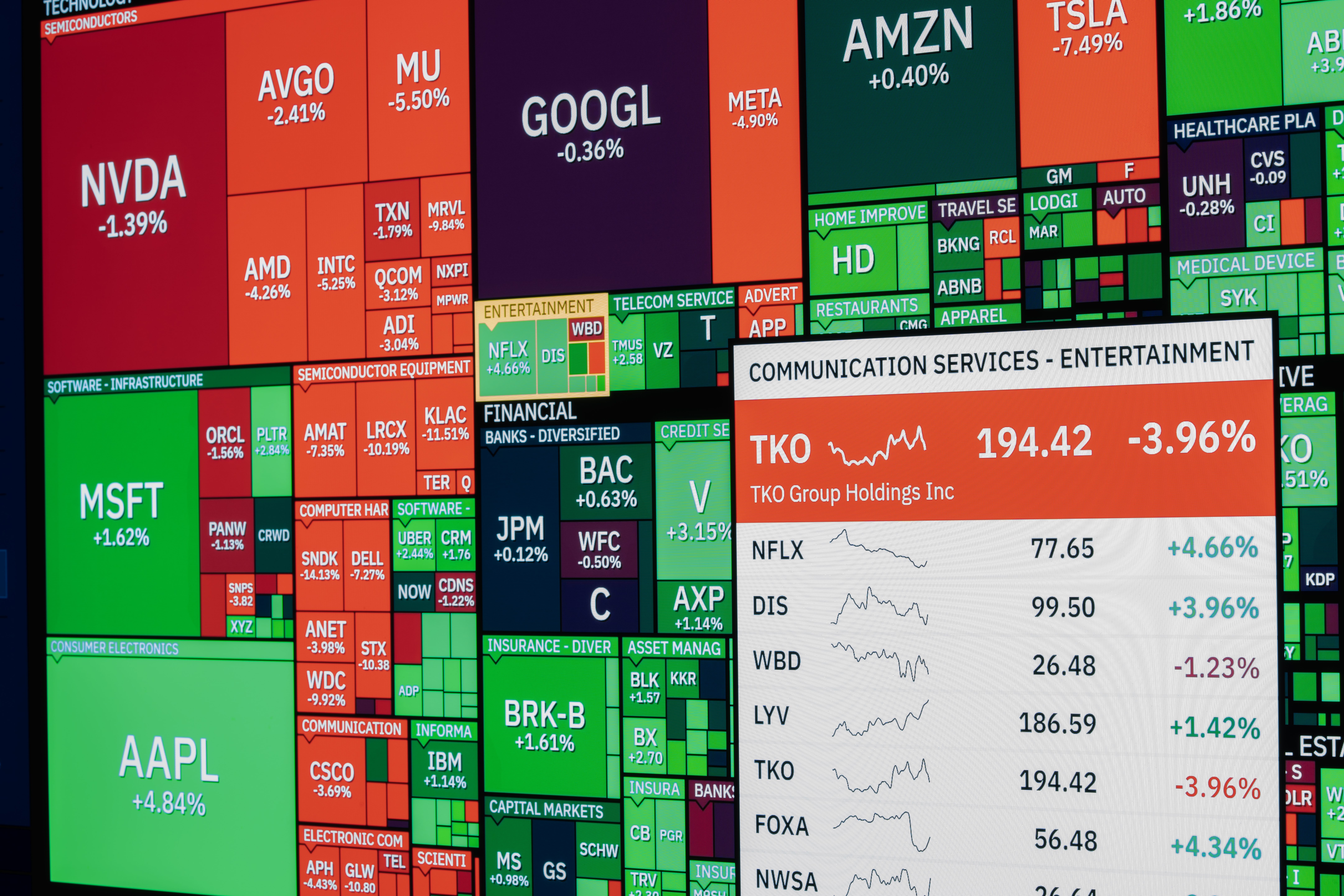
Marvell Technology fell 16.7%. Micron Technology dropped 13.3%. Advanced Micro Devices shed 10.9%. Intel lost 11.3%. Broadcom gave back 7.9%. Even Nvidia, the undisputed flagship of the AI chip trade, slid 6.2%. The S&P 500, by contrast, fell just 2.6%. This was not a broad market selloff. It was a targeted, concentrated unwind of the most crowded trade in the market.
Meet the Parabolic 7
The selloff has a name, or at least the basket at its center does. Strategist Ben Emons of Highline Asset Management coined the term "Parabolic 7" to describe a group of semiconductor and AI hardware stocks that have vastly outperformed both the Magnificent 7 and the broader SOX index since mid-2025. The group includes SanDisk, Marvell, Micron, Intel, Dell Technologies, Advanced Micro Devices, and Broadcom. Bloomberg's Joe Weisenthal amplified the concept, and it quickly became shorthand for the most extreme momentum trade in the market.
The numbers behind the label are staggering. Through Tuesday's close, SanDisk stock was up 623% year to date. Micron was up 273%. Marvell had gained 243%. These are not the returns of a sector in a normal bull market. They are the returns of a sector that has been pricing in a future that, by most measures, has not yet fully arrived - and doing so at a pace that has left valuation frameworks struggling to keep up.
Emons warned that "parabolic moves are reaching extremes" and flagged what he described as the mathematical chance of one of these stocks crashing by nearly 100% across the cohort. Strategist Barry Knapp separately labeled the broader setup an "earnings bubble," a characterization that gained traction once retail leverage became visible in options flow. When two respected strategists independently reach for bubble language to describe the same trade, it is worth paying attention.
Two Triggers, One Unwind
The proximate causes of Friday's selloff were twofold, and neither was a surprise in isolation. The first was the May jobs report, which showed 172,000 new payrolls against a consensus estimate of roughly 85,000 to 89,000. A labor market that strong gives the Federal Reserve less reason to cut rates and more reason to consider raising them. Higher rates are a direct headwind to the kind of long-duration, high-multiple valuations that the Parabolic 7 stocks carry. The CME FedWatch tool, as of Friday morning, showed a 43% probability that rates will be higher by year-end - a dramatic shift from the rate-cut expectations that had dominated market pricing just weeks earlier.
The second trigger was Broadcom's earnings report from earlier in the week. The company posted record AI semiconductor revenue of $10.8 billion for the quarter, up 143% year over year, and guided for Q3 AI revenue of $16 billion. By almost any conventional measure, those are extraordinary numbers. But Broadcom declined to raise its fiscal 2027 AI semiconductor revenue outlook beyond the existing target of more than $100 billion. In a market that has been conditioned to expect continuous upward revisions from AI infrastructure names, the absence of one was read as a miss. The stock fell 12% in after-hours trading following the report, and the damage spread across the sector through the end of the week.
Brian Mulberry, chief market strategist at Zacks Investment Management, described the dynamic plainly: the jobs report is "a key element for the Fed to perhaps increase rates," and a higher cost of capital is a direct headwind to future earnings growth. The combination of a hawkish macro signal and a guidance non-raise from the sector's bellwether was enough to break the momentum.
The Supply Side Enters the Picture
Beneath the macro triggers, a more structural concern is beginning to surface. Wedbush analyst Matt Bryson noted that investors may increasingly be worried about shifting fundamentals in the memory market - specifically, the prospect of supply coming to outstrip demand. The AI chip trade has been built, in part, on the assumption that supply shortages in memory and storage will persist long enough for companies like Micron and SanDisk to sustain elevated pricing power.
That assumption is now being tested. Bloomberg reported that South Korean memory giant SK Hynix is preparing to double its DRAM wafer production capacity by 2031. TrendForce separately reported that Samsung Electronics is planning to expand its DRAM investments and purchase orders for next year. Neither development will impact the market before 2029 at the earliest, according to Bryson. But the market is a discounting mechanism, and the direction of travel matters as much as the timeline.
Bryson framed the risk simply: "There are two ways the supply-demand dynamic could get screwed up. Either you get demand destruction, or you have more supply." The demand side of the AI infrastructure trade remains intact - hyperscalers are spending at historic rates, and order books at Micron and Marvell stretch well into 2027. But the supply side is no longer a one-way story, and that changes the calculus for investors who have been paying premium multiples on the assumption that pricing power is permanent.
Perspective, and What Comes Next
It is worth keeping Friday's selloff in context. Despite the 10.3% single-session decline, the SOX index is still up more than 70% year to date. Bernstein analyst Stacy Rasgon offered the most measured read of the day: "Nothing keeps going up every single day." He noted that the semiconductor trade has become crowded because it is "the only thing that's working," and suggested that some of the selling may reflect investors taking profits in winning positions to fund purchases of newly public companies - including SpaceX, which is set to debut on June 12.
David Nicholas of Nicholas Wealth Management observed that the selloff was concentrated rather than systemic: "The fact that many nontech sectors are holding up reasonably well suggests this is a semiconductor correction rather than a broad risk-off event." Healthcare, consumer staples, utilities, and financials all gained ground on Friday. The selling was surgical, not panicked.
For investors, the Parabolic 7 selloff is a reminder that momentum trades carry a specific kind of risk that is distinct from fundamental risk. The underlying demand for AI chips is real. The order books are full. The revenue growth is genuine. But when a basket of stocks has returned 200% to 600% in a single year, the margin for disappointment narrows to near zero. A jobs report that is too strong, a guidance that is merely good rather than exceptional, a supply expansion that is years away - any of these can be enough to break the spell. Friday was the day the spell broke, at least temporarily. Whether it holds or reasserts itself will depend on what the next round of data and earnings reveals. The fundamentals have not changed. The price at which investors are willing to hold them has.