The Q4 Gauntlet: What Earnings Season, 24-Year High Bond Yields, and the Midterms Mean for Your Portfolio

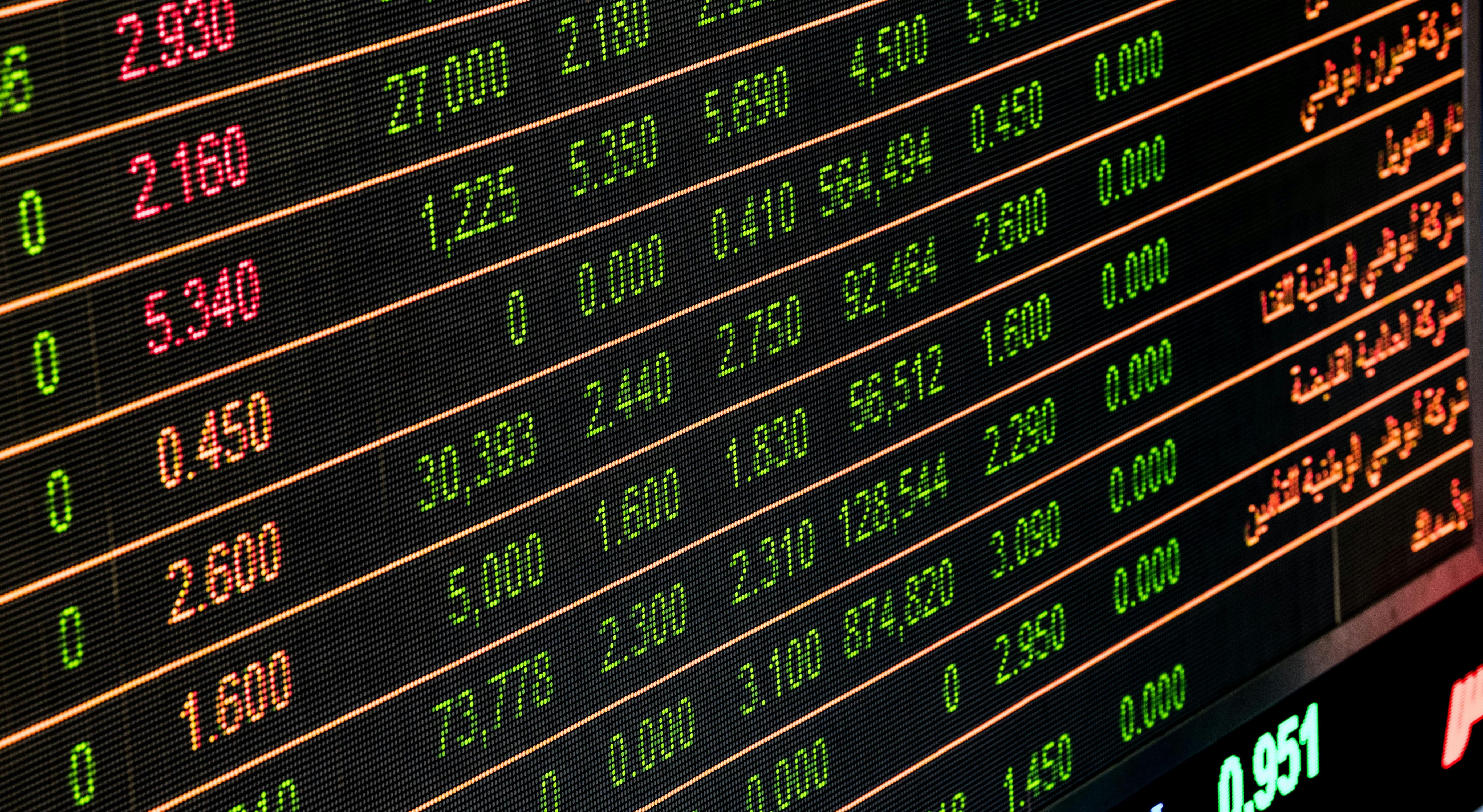
There is a number that Wall Street is sitting with as it enters the fourth quarter of 2026: 5.34. That is how many percent the benchmark 10-year Treasury yield reached on Thursday, October 2 - its highest level in 24 years. It is the number that sits above every other conversation heading into what promises to be one of the most consequential months of the year for investors. Because October 2026 does not just bring earnings season. It brings earnings season, a Federal Reserve meeting, and a midterm election all arriving within weeks of each other. The market has to navigate all three simultaneously, and the outcome of each one will shape the trajectory of stocks through year-end.
The Earnings Bar Is Extraordinarily High
Start with the numbers. According to FactSet, S&P 500 companies are expected to report earnings growth of 29.5% year-over-year for the third quarter - the third consecutive quarter of growth above 25% and the eighth straight quarter of double-digit earnings expansion. That is not a low bar. It is a bar set by a market that has been repeatedly surprised to the upside, and one that has now been baked into valuations.
What makes this earnings season unusual is the direction of estimate revisions heading into it. In a typical quarter, analysts lower their earnings forecasts by roughly 2.2% to 2.5% during the quarter itself. In Q3 2026, they raised them by 1.4%. That upward revision cycle reflects genuine corporate confidence: 62% of S&P 500 companies that issued EPS guidance for Q3 issued positive guidance, compared to a 5-year average of 40% and a 10-year average of 41%. Companies are not sandbagging. They are telling analysts the business is better than expected.
The season kicks off in earnest this week with PepsiCo and Delta Air Lines, two companies that serve as useful proxies for the consumer and travel economy respectively. The real fireworks begin the following week, when JPMorgan Chase, Goldman Sachs, Bank of America, Citigroup, and Wells Fargo all report on October 13 and 14. The major banks are the first comprehensive read on the health of the credit cycle, the state of investment banking activity, and the impact of the Fed's September rate hike on net interest margins. Their results will set the tone for everything that follows.
The Yield Problem That Will Not Go Away
The complication is the bond market. The 10-year Treasury yield at 5.34% is not just a number - it is a gravitational force acting on every equity valuation in the market. Higher yields compress the present value of future earnings, raise the cost of capital for companies carrying debt, and offer investors a risk-free alternative that did not exist when yields were near zero. The forward price-to-earnings ratio for the S&P 500 currently sits at 19.0 times - below the 5-year average of 19.8 and below the 10-year average of 19.1. That compression is the yield doing its work.
The yield surge has been driven by three forces operating simultaneously. First, the economy is growing faster than the Fed expected: the Atlanta Fed was tracking third-quarter GDP growth at 3.7% heading into the quarter. Second, energy prices have remained elevated, keeping inflation stickier than the consensus projected. Third, companies issuing debt to fund AI infrastructure buildouts are competing with the Treasury for capital, pushing yields higher at the margin. The result is a bond market that is pricing in a world of persistent rate pressure even as the jobs data - September's 29,000 payroll print - suggests the labor market is cooling.
The Federal Reserve's September meeting minutes, due for release on Wednesday, October 7, will be closely watched for any signal about the October 27-28 FOMC meeting. Following the weak jobs report, markets have priced the probability of an October hike at roughly 17%. But the minutes will reveal how divided the committee was in September, and whether the hawks on the committee see the yield surge as doing some of the tightening work for them - or as a reason to stay the course.
The AI Capex Question That Defines the Season
Beyond the headline earnings numbers, the single most important variable this earnings season is what the hyperscalers say about capital expenditure. Microsoft, Alphabet, Amazon, and Meta collectively account for a disproportionate share of S&P 500 earnings growth in 2026, and their AI infrastructure spending has been the engine driving profits at Nvidia, Micron, and the broader semiconductor supply chain. Nelson Yu, head of equities at AllianceBernstein, put it directly: the number one thing to watch for is capex revisions from the hyperscalers, because that does kind of start the whole chain.
If the hyperscalers signal any deceleration in AI spending - whether due to yield-driven cost-of-capital concerns, regulatory pressure, or simply the natural digestion of a massive buildout - the ripple effects would be felt across the entire technology sector. Conversely, if they maintain or accelerate their spending commitments, it validates the AI infrastructure thesis that has driven the market's 13% gain year-to-date. The earnings calls in late October will be the first real test of whether the AI capex cycle has legs into 2027.
The Midterm Wild Card
Layered on top of all of this is the November 3 midterm election, which will determine control of the US Congress. History is instructive here. Since 1945, the S&P 500 has averaged a gain of 4.2% in the fourth quarter, with positive returns 85% of the time. In midterm election years specifically, that average rises to 6.4%, as markets benefit from the lifting of election uncertainty, according to CFRA chief investment strategist Sam Stovall. The pattern is consistent: uncertainty peaks before the election, and markets tend to rally once the outcome is known - regardless of which party wins.
The risk scenario is a split outcome that produces genuine policy uncertainty. Wells Fargo Investment Institute is on high alert for a pullback between now and election day, particularly if polling suggests Democrats could take full control of Congress. A change in congressional leadership would have direct implications for the tax policy, regulatory environment, and spending priorities that underpin corporate earnings forecasts. That is not a base case, but it is a tail risk that the market has not fully priced.
What Investors Should Watch
The setup for Q4 2026 is genuinely unusual. The earnings backdrop is strong - 29.5% expected growth, positive guidance revisions, a forward P/E below historical averages. The macro backdrop is complicated - a 24-year high in yields, a Fed that has not finished its work, and an election that introduces policy uncertainty. The two forces are pulling in opposite directions, and the resolution of that tension will define the market's trajectory through year-end.
The specific signals to watch in the coming weeks are clear. First, whether the major bank earnings on October 13-14 confirm that credit quality is holding and net interest margins are expanding as expected. Second, whether the Fed minutes on October 7 reveal a committee that is genuinely pausing or one that is merely waiting for more data before hiking again. Third, whether the hyperscaler earnings calls in late October show AI capex commitments holding firm. And fourth, whether the yield on the 10-year Treasury stabilizes below 5.5% or continues its march higher. Each of those data points will arrive before the midterm election on November 3. Together, they will tell investors whether the seasonal tailwind of Q4 is strong enough to overcome the headwinds that have been building since September. The history says it usually is. The current environment is testing that history in real time.