Warsh Draws a Line at Jackson Hole: What a 60% Rate Hike Probability Means for Markets
Fed Chair Kevin Warsh's Jackson Hole speech sent September rate hike odds from 35% to 60%. Here is what the new Fed regime means for bond markets, equities, and investors.


There is a number that Wall Street spent Friday recalibrating around: 60. That is how many percent the market now assigns to the probability of a Federal Reserve rate hike at the September 16 meeting - up from 35 percent before Fed Chair Kevin Warsh took the podium at Jackson Hole, Wyoming. In a single speech, the new Fed chair moved the needle on the most consequential monetary policy question of the year, without once committing to a specific action.
That is the Warsh method. And after Friday, the market has a much clearer picture of what it means in practice.
What Warsh Actually Said
Warsh's debut address at the Kansas City Fed's annual economic symposium was the most anticipated speech of his brief tenure as chair. He had frustrated markets at the July FOMC press conference by refusing to provide forward guidance and offering what many analysts described as a muddy picture of his policy intentions. Friday was his opportunity to clarify - and he did, in his own carefully constructed way.
The key line came near the center of the speech: "We must be confident that underlying inflation is moving to our objective, clearly and at sufficient speed. Otherwise, we have work to do." That phrase - "we have work to do" - is as close to a conditional rate hike signal as Warsh is likely to offer. He reinforced it by noting that 54 percent of goods and services in the PCE basket are currently running above 3 percent year-over-year, a share far higher than pre-pandemic norms. He also stated plainly that "this summer's inflation readings were better than expected" but that they "do not tell me that underlying trends have meaningfully improved."
He reaffirmed the 2 percent PCE target as non-negotiable - a point that mattered more than it might appear, given speculation that the new administration might quietly tolerate a higher inflation ceiling. He declared that "short-term interest rates are the predominant tool to achieve the dual mandate," ruling out the idea that balance sheet management could substitute for rate action. And he described current financial conditions as not restrictive - a hawkish framing that implies the current rate level is not doing enough work.
The Market's Verdict
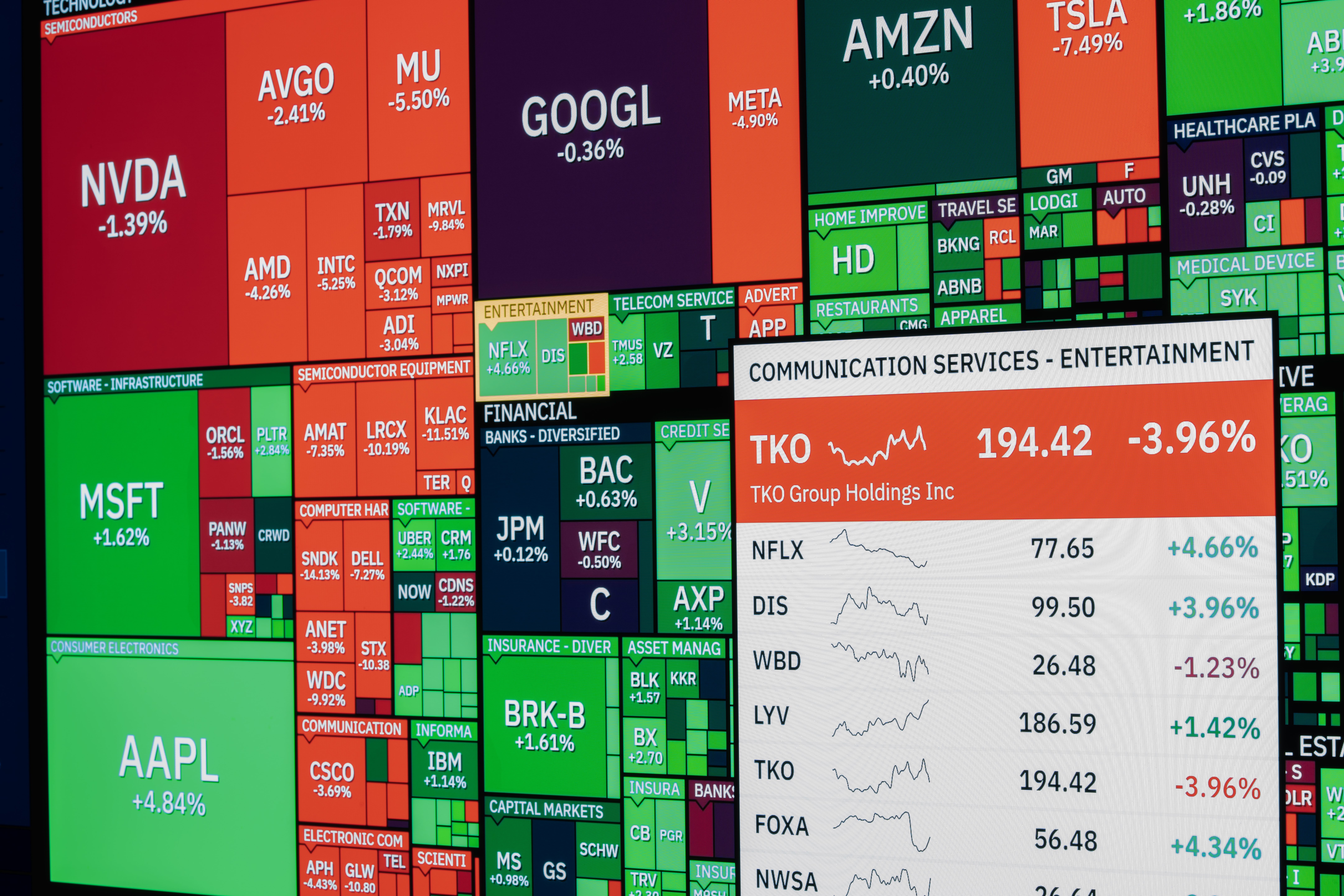
Bond markets moved immediately. The 2-year Treasury yield, the most policy-sensitive point on the curve, rose 11 basis points to 4.34 percent - its highest level in a month. The 10-year yield climbed 5 basis points to 4.72 percent. The dollar index rose 0.6 percent to 99.66. The CME FedWatch tool showed September rate hike odds jumping from 35 percent to 60 percent during the speech itself.
Equity markets were more measured. The S&P 500 ended the day down 0.25 percent, the Nasdaq fell 0.52 percent, and the Dow was essentially flat. For the week, all three indexes posted gains - the S&P 500 up 0.49 percent, the Nasdaq up 0.85 percent, the Dow up 0.53 percent - suggesting that investors are not yet treating a September hike as a market-breaking event. The question is whether that composure holds if the August CPI and jobs data, due in the two weeks before the September meeting, come in hotter than expected.
A New Fed Regime
The more significant story from Jackson Hole is not the September probability. It is the operating philosophy Warsh is installing at the Fed. He used the speech to defend his decision to eliminate forward guidance - the practice of telegraphing future rate moves that defined the Powell and Yellen eras. His argument is that forward guidance ties the central bank's hands and distorts the market signals the Fed itself relies on to make decisions. "A quieter Fed, more purposeful in its communications, is better able to meet its objectives," he said.
That is a fundamental shift in how the Fed communicates with markets. For more than a decade, investors have been trained to read Fed statements, dot plots, and press conference language as a roadmap. Warsh is telling them the roadmap is gone. The data is the roadmap. As Peter Andersen of Andersen Capital Management put it after the speech: "Investors were looking for a GPS on the economy, and instead, the Fed gave them a compass."
The practical implication is more volatility around data releases. If the August CPI print on September 10 comes in above expectations, the September hike probability will move sharply higher. If it comes in soft, it will fall back. Every data point between now and September 16 carries more weight than it did under the old forward-guidance regime, because there is no Fed communication to anchor expectations in between.
The Political Dimension
Warsh's speech also navigated a political minefield without acknowledging it. President Trump has been vocal about wanting lower interest rates. Warsh, his appointee, is now signaling that rates may need to go higher. He did not address Fed independence directly - a notable omission that several analysts flagged - and he did not comment on the Treasury's recent bond buyback program, which the market has been reading as an attempt to suppress long-term yields from outside the Fed.
That silence is itself a signal. Warsh is choosing to fight the inflation battle on his own terms, without publicly engaging the political pressure or the Treasury's parallel operations. Whether that posture is sustainable depends on what the data shows over the next six weeks. If inflation proves sticky and the Fed hikes in September, Warsh will have established his credibility as an independent inflation fighter. If the data softens and the Fed holds again, the market will begin to wonder whether the hawkish rhetoric is real or performative.
What Investors Should Watch
The next two data points are the ones that matter most. The August jobs report, due September 5, will tell the Fed whether the labor market remains the "stable" backdrop Warsh described on Friday. The August CPI report, due September 10, will be the decisive input. Goldman Sachs chief economist Jan Hatzius wrote after the speech that a hike in September is possible if August CPI and PPI come in firmer, but that his base case remains a hold if core inflation prints around 0.2 percent month-over-month.
The bond market is already pricing in more than one hike by year-end. The December meeting now shows roughly 39 percent odds of rates at 4.00 to 4.25 percent or higher - up from lower levels before Friday. That is the market's way of saying it believes Warsh means what he says, even if it is not yet certain about the timing.
For equity investors, the calculus is straightforward but uncomfortable. A Fed that is genuinely prepared to raise rates into a 3.7 percent PCE environment is a Fed that is not coming to the rescue of stretched valuations. The S&P 500 is trading near 7,700, with earnings growth running at 28 percent for the second quarter. That combination has supported the market through five consecutive Fed holds. Whether it can survive a rate hike cycle - even a shallow one - is the question Jackson Hole just made urgent.