The $2.35 Trillion Unwind: Why the Yen's Sudden Surge Could Rattle Every Market on Earth
The yen carry trade has ballooned to a record $2.35 trillion. As the Bank of Japan and Federal Reserve prepare for rate decisions, a sharp yen appreciation is threatening to unwind one of the largest leveraged trades in global finance history.

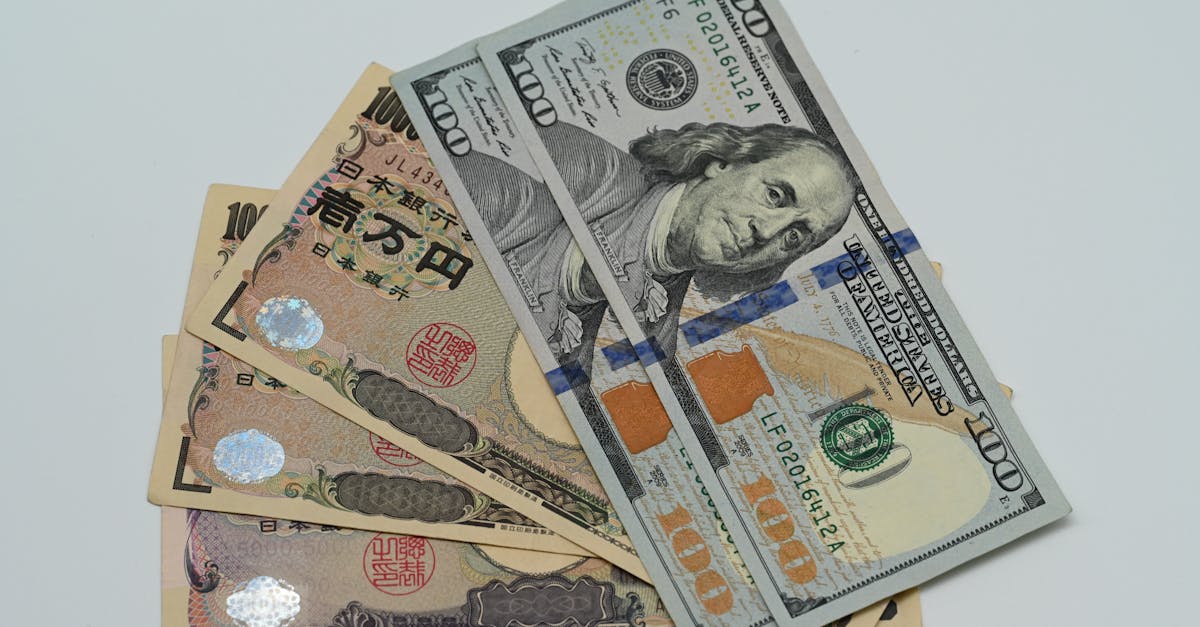
There is a number that Wall Street has been quietly watching all week: 152.89. That is how many yen it took to buy one U.S. dollar on Tuesday morning - a level that represents a stunning 4.5% appreciation of the Japanese currency in just seven days, and a reversal so sharp it is now threatening to detonate one of the largest leveraged trades in the history of global finance.
The yen carry trade - the strategy of borrowing cheaply in Japan to invest in higher-yielding assets elsewhere - has ballooned to a record 360 trillion yen, or roughly $2.35 trillion, according to a Jefferies analysis of Bank for International Settlements data. That figure, measured through cross-border yen borrowing as of March 2026, represents the largest carry-trade build-up of the past three decades. And right now, it is starting to unravel.
Two Central Banks, One Collision Course
The catalyst is a convergence of monetary policy decisions that markets have not faced simultaneously before. The Bank of Japan meets on September 17 and 18, with futures markets now pricing in a 97% probability of a 25-basis-point rate hike that would lift Japan's policy rate to 1.25%. Meanwhile, the U.S. Federal Reserve convenes just one day earlier, on September 15 and 16, with roughly 60% odds of its own rate hike - a decision that hinges almost entirely on the August Consumer Price Index report due Thursday, September 11.
The arithmetic of the carry trade depends on a wide and stable interest rate differential between Japan and the United States. When that gap narrows - or when traders simply fear it might narrow - the incentive to hold yen-funded positions collapses. Investors who borrowed yen to buy U.S. Treasuries, emerging market bonds, or technology stocks suddenly face a double squeeze: their funding costs rise and their currency exposure turns against them. The result is forced selling across asset classes that have nothing to do with Japan.
The 2024 Playbook, Revisited
Investors who lived through August 2024 know exactly what this looks like. When the BOJ raised rates by 25 basis points on July 31 of that year, the yen surged, carry traders scrambled to cover positions, and the Nikkei 225 plunged 12% in a single session - its worst day since 1987. U.S. equities fell sharply, Bitcoin dropped, and volatility spiked globally before the dust settled over several days.
The question now is whether 2026 rhymes with 2024. Analysts are divided. Charu Chanana, chief investment strategist at Saxo, warned this week that "the carry trade is vulnerable because this unwind is happening before the BOJ has even delivered its expected hike." She noted that while some yen short positions have been cut, overall positioning remains sizeable, meaning further yen strength could trigger a self-reinforcing unwind. Masahiko Loo of State Street Investment Management in Tokyo estimated that a sustained move could push USD/JPY toward the mid-140s - a roughly 6% further appreciation from current levels.
Others argue the setup is different this time. Unlike 2024, when the BOJ's hike was a genuine surprise, markets have been pricing in tightening for weeks. U.S. Treasury Secretary Scott Bessent has publicly told Japanese officials that rate hikes are necessary, effectively blessing the BOJ's path. And Japanese government bond yields are hovering near 30-year highs, meaning capital no longer needs to leave Japan to earn a return - a structural shift that could make any unwind more orderly.
What It Means for U.S. Markets
For Wall Street, the yen story is not an abstract currency trade. The carry trade has been a source of cheap global liquidity for years, quietly funding positions in U.S. technology stocks, high-yield bonds, and emerging market assets. A disorderly unwind drains that liquidity precisely when U.S. markets are already navigating elevated Treasury yields approaching 4.8% on the 10-year, a potential Fed rate hike, and the highest oil prices in years.
Nomura Securities has flagged the possibility of three consecutive BOJ hikes through December in an extreme scenario. If that path materializes alongside a Fed that also tightens, the interest rate differential that has sustained the carry trade for years could compress dramatically - and the $2.35 trillion sitting in yen-funded positions would need somewhere to go.
The next 10 days - spanning the CPI print on September 11, the Fed decision on September 16, and the BOJ meeting on September 18 - may be the most consequential stretch for global markets in 2026. Traders who survived 2024 are watching the yen with the same unease they felt then. The difference this time is that everyone can see it coming. Whether that makes the landing softer or simply delays the turbulence is the question no one can answer yet.