The $2 Trillion Disruptor: What SpaceX's Spectrum Deal Means for America's Wireless Giants

There is a number that Wall Street has been sitting with since Thursday evening: 13.3. That is how many percent T-Mobile shares fell on October 9, 2026 - the stock's worst single-day decline in years - after SpaceX announced it had agreed to acquire a nationwide portfolio of 800 MHz low-band spectrum licenses from investment firm Grain Management. AT&T dropped 9.8 percent. Verizon fell 8.7 percent. In a single announcement, Elon Musk's space company signaled that it intends to become not just a satellite internet provider, but a full-scale terrestrial mobile carrier competing directly with the three companies that have dominated American wireless for two decades.
The deal, announced on X on the evening of October 8, involves the acquisition of up to 14 megahertz of paired spectrum in the 817 to 824 MHz and 862 to 869 MHz bands - licenses that cover approximately 100 percent of the US population, according to the Federal Communications Commission. SpaceX was blunt about what it intends to do with them. "This prime low-band spectrum addresses one of the key remaining technical gaps that will pave the way for Starlink Mobile to become a major mobile carrier in the US," the company said in a statement. Elon Musk, posting on X, called it a "very big deal." The market agreed.
Why 800 MHz Changes Everything
To understand why the telecom sector repriced so sharply, you need to understand what 800 MHz spectrum actually does. Low-band spectrum in this range travels farther than higher-frequency bands and penetrates building walls with far less signal loss. It is the foundation of reliable indoor coverage - the kind of service that makes a mobile carrier genuinely useful in cities, not just in open fields. SpaceX's existing spectrum holdings, acquired through its EchoStar purchase, are concentrated in higher-frequency mid-band and S-band ranges. Those bands carry enormous data capacity but struggle with building penetration. The 800 MHz acquisition fills the one technical gap that had kept Starlink Mobile from being a credible standalone carrier rather than a satellite add-on to someone else's network.
The spectrum itself has a history worth noting. Grain Management acquired it from T-Mobile earlier this year for approximately $2.9 billion, plus a swap of Grain's own 600 MHz licenses. T-Mobile had held the spectrum since its 2020 acquisition of Sprint, and was required to divest it under merger conditions imposed by the US Department of Justice. The irony is not subtle: T-Mobile sold spectrum it was forced to give up, that spectrum was then purchased by SpaceX, and SpaceX is now using it to build a network that will compete directly against T-Mobile. The carrier that once partnered with SpaceX on Starlink satellite texting is now watching its former partner buy the tools to replace it.
The Competitive Landscape Has Shifted
The timing of the announcement was pointed. Just one week before SpaceX's spectrum deal, AT&T, T-Mobile, and Verizon announced a joint venture focused on using satellite technology to expand coverage in underserved areas - a direct response to SpaceX's growing ambitions in direct-to-device service. Starlink was conspicuously absent from that partnership. T-Mobile had also quietly removed references to Starlink from its T-Satellite promotional materials in the weeks prior. The joint venture now looks less like a competitive response and more like a defensive formation that arrived too late.
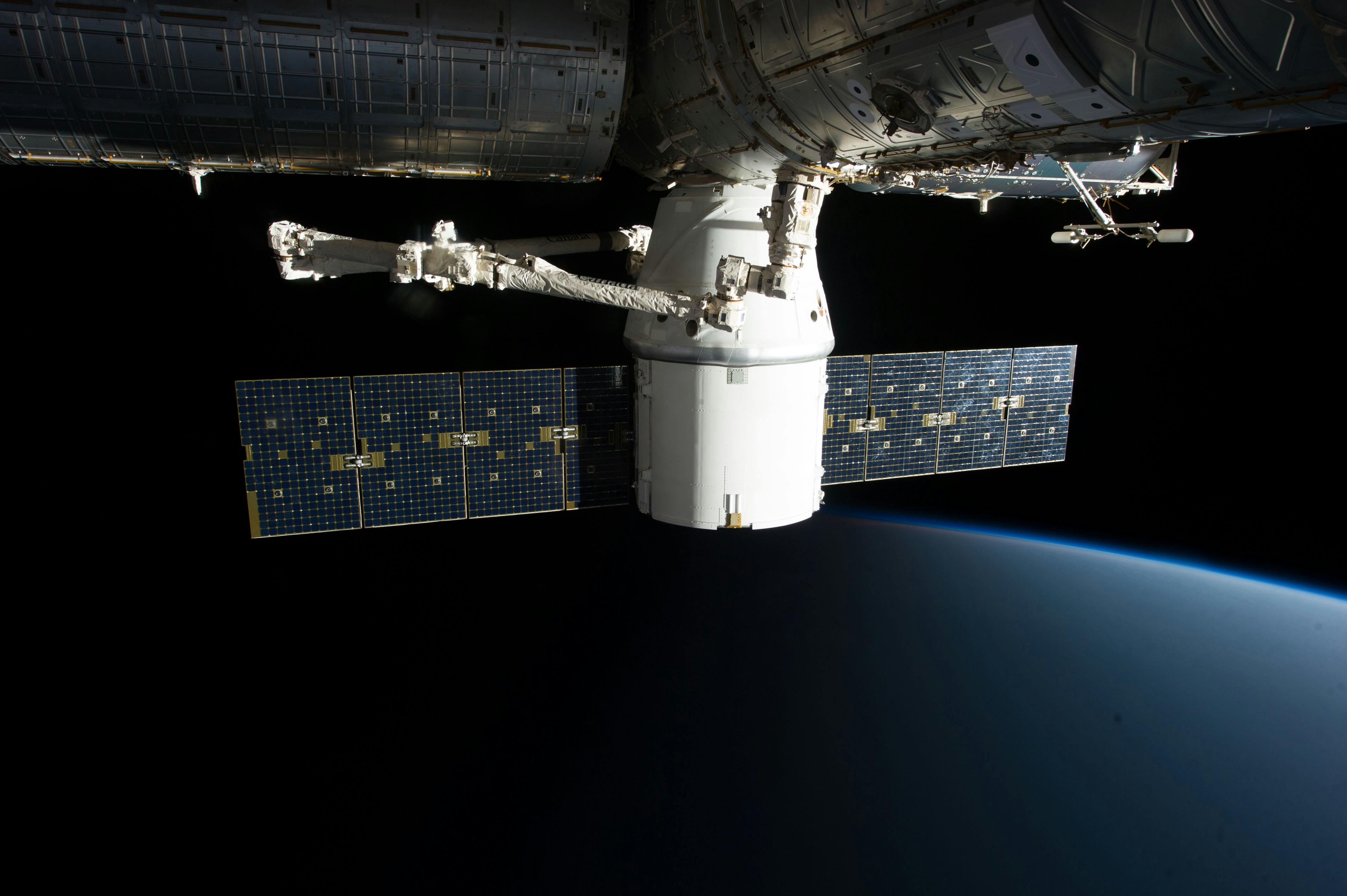
SpaceX's architecture, as described in its announcement, is genuinely novel. The company says Starlink Mobile will be "the first network operator to deploy both satellite and terrestrial spectrum" - combining its constellation of over 11,000 satellites in low Earth orbit with ground-based towers using the new 800 MHz licenses. The FCC also approved the launch of 15,000 additional next-generation Starlink Mobile satellites in the same week, satellites the company says will carry up to 100 times the data density of the current system. SpaceX has targeted 2027 for deployment of the upgraded constellation, with enhanced service expected by year-end.
What the Market Is Actually Pricing
The stock market's reaction on Friday was not a panic. It was a recalibration. AT&T, Verizon, and T-Mobile have spent decades building the spectrum portfolios, tower networks, and subscriber bases that give them pricing power in the US wireless market. That moat has always been considered nearly impenetrable - the capital requirements alone have historically kept new entrants out. SpaceX, which went public in June 2026 in a record IPO and is now valued at over $2 trillion, is one of the few entities on the planet with the capital, the regulatory relationships, and the technical infrastructure to attempt a genuine challenge.
Deutsche Bank analysts estimated this week that Starlink's global subscriber base reached 13.5 million at the end of September, including 4.1 million in the United States. Starlink's connectivity business generated $1.66 billion in operating income on $4.29 billion in revenue in the second quarter alone. That is not a startup burning cash to buy market share. It is a profitable business using its cash flows to fund an expansion into an adjacent market where the incumbents have been raising prices on a captive customer base for years.
The carriers are not standing still. The AT&T, T-Mobile, and Verizon joint venture is a real response, and the incumbents have spectrum depth, existing tower infrastructure, and retail distribution that SpaceX will need years to replicate. The FCC approval process for the Grain spectrum transfer adds another layer of regulatory uncertainty. SpaceX has not said when Starlink Mobile services backed by the new spectrum will reach customers.
But the direction of travel is clear. The 13.3 percent decline in T-Mobile shares is not a verdict on the company's current business. It is a verdict on the assumption that the US wireless market's competitive structure is permanent. That assumption, as of October 9, 2026, is no longer safe to make.