The AI Unwind: How Hedge Funds Got Caught on the Wrong Side of the Best Trade of 2026
Goldman Sachs data shows hedge funds suffered their worst underperformance vs the S&P 500 in over 20 years in July 2026. Here is what the AI crowding unwind means for markets heading into Jackson Hole.

There is a number that Goldman Sachs published this week that should make every institutional investor stop and think: 20. That is how many years of data Goldman's prime brokerage team has been tracking hedge fund performance relative to the S&P 500 - and July 2026 just produced the worst single-month underperformance in that entire history.
According to a note from Goldman strategists led by Ben Snider, the firm's Hedge Fund VIP list - a basket of the most popular long positions held by hedge funds - suffered its worst one-month underperformance versus the S&P 500 in more than two decades of recorded data. The culprit was not a macro shock, a surprise earnings miss, or a geopolitical escalation. It was the unwinding of the single most crowded trade in the market: artificial intelligence.
How Hedge Funds Got Here
To understand July's carnage, you have to understand what happened in the second quarter. Hedge funds entered Q2 2026 "all in on AI," in Goldman's words, with portfolio turnover at its highest level since 2021. Tech stocks accounted for 14 of the 20 so-called Rising Stars - the names with the largest increases in hedge fund popularity during the quarter. Crowding climbed to a record. The strategy worked brilliantly, right up until it did not.
The AI trade delivered strong gains through most of Q2 as the market was being fueled by a wave of earnings beats from semiconductor companies, hyperscaler capex announcements, and private AI lab revenue disclosures that defied expectations. Hedge funds rode that wave aggressively. Then July arrived, and the wave reversed.
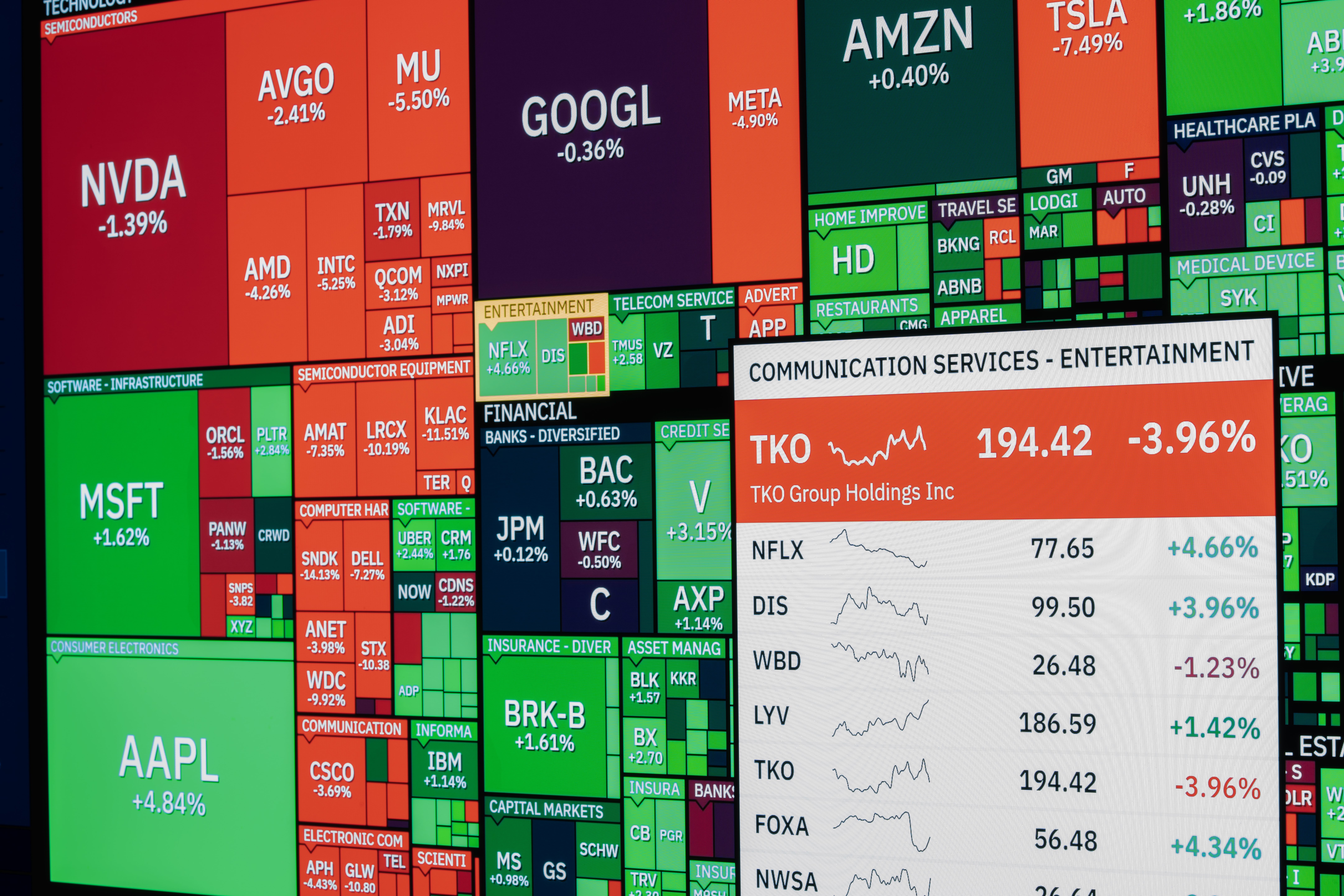
"July marked one of the sharpest hedge fund de-grossing episodes of the past decade," Goldman said. Funds trimmed positions in a number of AI stocks, including many semiconductors and most of the mega-caps. The de-grossing was not orderly. It was the kind of rapid, correlated selling that happens when too many funds own the same positions and the exit door is narrower than the entry.
The Crowding Problem Is Not New - But the Scale Is
Crowding risk is one of the oldest problems in the hedge fund industry. When too many sophisticated investors converge on the same thesis, the trade stops being a source of alpha and becomes a source of systemic risk. The positions that look most attractive on a fundamental basis are often the ones that will hurt the most when sentiment shifts, precisely because so many funds need to exit simultaneously.
What made July 2026 different was the scale of the AI crowding that had built up. This was not a situation where a handful of funds had overlapping positions in a niche sector. This was the dominant theme of the entire hedge fund industry, concentrated in the largest and most liquid stocks in the market. When the unwind came, there was nowhere to hide.
The irony is that the fundamental case for AI investment has not materially changed. Anthropic reported preliminary Q2 revenue above $11.5 billion, up from $787 million a year earlier. Hyperscaler capex commitments remain at record levels. The demand signal from the private AI ecosystem is as strong as it has ever been. But markets do not always move on fundamentals in the short term. They move on positioning - and July was a positioning story.
What the De-Grossing Tells Us About Market Structure
The Goldman data reveals something important about the current market structure that goes beyond the AI trade itself. Hedge fund gross leverage, net leverage, and AI exposure have each declined from their Q2 highs - but they still rank above longer-term averages. The de-grossing was significant, but it was not a complete reset. The industry is still more exposed to AI than it has historically been, which means the risk of further unwinds has not been fully eliminated.
This matters for the broader market because hedge fund positioning has become an increasingly important driver of short-term price action. When funds are adding leverage and concentrating in the same names, they amplify upside momentum. When they de-gross, they amplify downside moves. The S&P 500 is still near all-time highs, with the index up roughly 15 percent year-to-date and earnings growth running at 28 percent for Q2. But the divergence between index performance and hedge fund performance in July is a reminder that the market's headline numbers can mask significant stress underneath the surface.
The Jackson Hole Backdrop
The hedge fund de-grossing story does not exist in isolation. It is unfolding against a macro backdrop that is becoming more complex by the week. The 30-year Treasury yield is trading near 5.25 percent, its highest level since 2007. Treasury Secretary Scott Bessent doubled the government's bond buyback program this week in an attempt to provide relief to the long end of the curve - a move that JPMorgan's James Sullivan compared to "paying your mortgage with your credit card." The relief lasted less than 24 hours before yields climbed back above pre-intervention levels.
Federal Reserve Chair Kevin Warsh is scheduled to speak at Jackson Hole on August 27, in what will be his first major policy address since taking office in May. Markets are pricing in roughly a 72 percent probability of a rate hike at the September meeting, according to CME FedWatch data. In that environment, the asset allocation decision between equities and bonds is becoming genuinely difficult. Bond yields are now higher than the earnings yield on the S&P 500, according to JPMorgan data - a configuration that historically has not been friendly to equity multiples.
What Comes Next for Hedge Funds and the AI Trade
Goldman's data offers a nuanced picture of where hedge funds stand heading into the second half of August. Despite the historic underperformance in July, US equity long/short hedge funds have still returned 10 percent through mid-August - a respectable result in an environment where the macro backdrop has been genuinely challenging. The de-grossing reduced exposure but did not eliminate it. Funds are still long AI. They are just less long than they were.
The question for the remainder of 2026 is whether the AI trade can re-establish itself as a source of alpha rather than a source of crowding risk. That depends on two things: whether the fundamental revenue growth at AI companies continues to justify elevated valuations, and whether the macro environment - specifically the trajectory of long-term interest rates - allows growth stocks to maintain their multiples.
On the first question, the evidence remains compelling. On the second, the bond market is sending a different message. The tension between those two signals is what makes the current moment so difficult to navigate - and what made July 2026 the worst month for hedge fund relative performance in more than 20 years of data. The AI trade is not over. But it has become a much more complicated trade than it was three months ago.