The Market Picked Apple as Its AI Shelter. The Memory Bill Came Anyway.
Apple closed at a record high Wednesday as investors sought cover from the AI capex storm, but the same memory shortage that buildout created is squeezing the company's own margins into the December quarter.
Apple shares closed at $355.63 on Wednesday, up 2.04%, a new all-time closing high. The move came as investors rotated back into large-cap technology after CoreWeave's quarterly report eased anxiety about how the AI infrastructure buildout is being financed, and as China Renaissance upgraded the stock to Buy with a street-high $425 price target, reversing its August downgrade that had flagged sluggish Services growth and memory-driven margin pressure.
The same memory shortage the AI buildout created is now squeezing Apple's margins. The stock being bid as the shelter from AI capex carries a $33 billion jump in manufacturing purchase obligations in a single quarter, the cost of locking in memory supply while the data-center buildout bids for the same chips, and that cost is about to show up in the one number Wall Street is watching.
The commitments keep growing
Apple's fiscal 2026 10-K, for the fiscal year ended Sept 26, 2026, shows manufacturing purchase obligations of $89.7 billion, with $82.7 billion of it payable within 12 months. On the company's Nov 2 fiscal fourth-quarter call, COO Sabih Khan, the first Apple COO on an earnings call since Tim Cook held the role in 2010, said purchase obligations rose by $33 billion from the June quarter to the September period to secure memory supply. That is a buyer expecting supply to tighten, and the outlook says the same: pricing keeps rising beyond December.
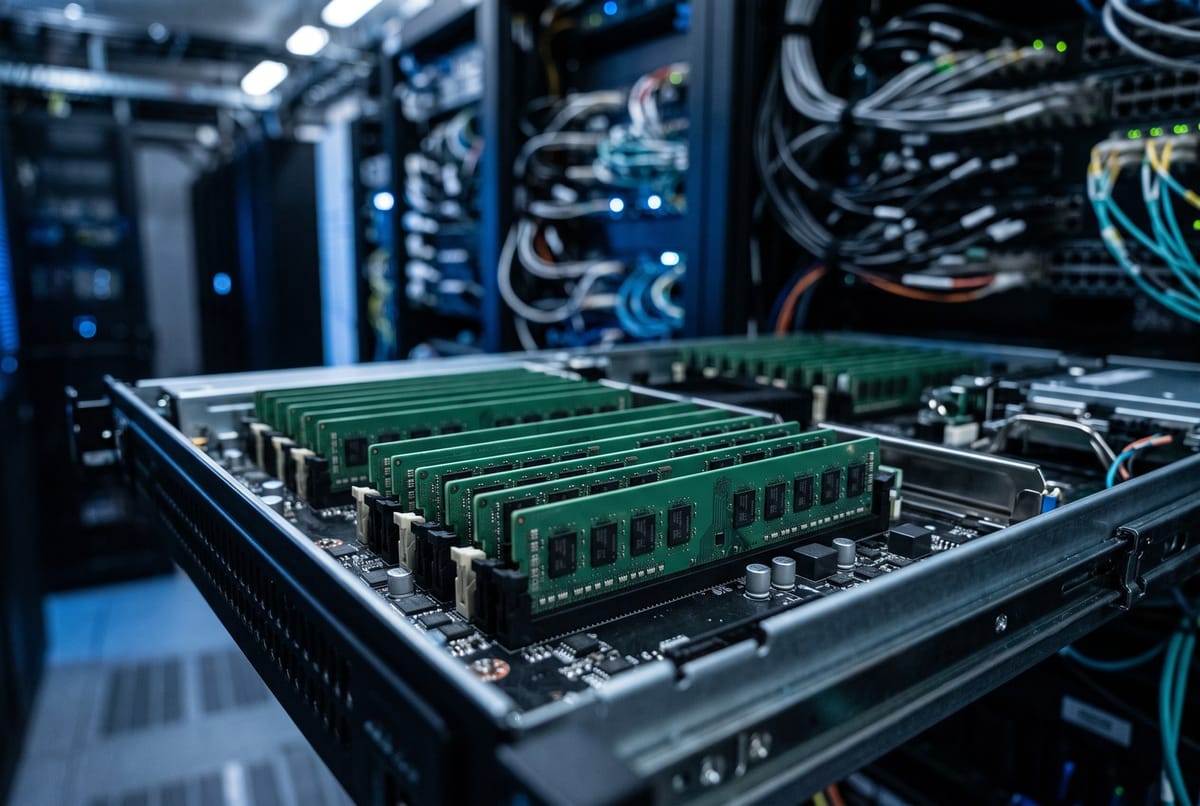
The pricing data shows the squeeze. Per IDC analyst Phil Solis, heavy AI and data-center investment has driven memory prices up by as much as 400% over the last two years, per Supply Chain Dive. Hyperscalers and AI server makers are buying RAM at a premium, leaving less for phone and PC makers; Apple expects supply constraints on iPhones and Macs in the December quarter, primarily driven by memory.
The bill arrives in the December quarter
The cost shows up first in Apple's margin guidance. CFO Kevan Parekh guided December-quarter gross margin to 45% to 46%, below the 46.3% analyst average per LSEG, citing higher memory costs and some Siri AI ramp costs. The path tells the story: gross margin ran 50.1% in the June period, slipped to 47.9% in the September quarter with help from about 1 point of tariff refunds, and the guided midpoint would leave Apple with its lowest gross margin since fiscal Q4 2023. CEO John Ternus, in his first earnings report since replacing Tim Cook on Sept 1, was blunt: "What we're seeing with memory pricing right now is unprecedented," he said, adding that "looking beyond the December quarter, we see the pricing for memory purchases continuing to increase." Tim Cook had set the tone in June, telling The Wall Street Journal the memory situation was a "hundred-year flood."
Apple has not absorbed all of it. The company raised iPhone prices by $100 in September, which Ternus said it did "reluctantly," after raising Mac, iPad and accessory prices across the board. Passing costs through is one lever, pre-buying supply is another; neither insulates a buyer of Apple's size from a market repricing this fast.
A shelter with its own exposure
Part of the shelter case is what Apple does not spend. The fiscal 2026 10-K shows total net sales of $478.8 billion, up 15% year over year, against about $9.0 billion of payments for property, plant and equipment for the full fiscal year. The contrast is stark: Amazon alone reported purchases of property and equipment of $77.3 billion in the single September quarter in its 10-Q, up from $35.1 billion a year earlier, and Amazon, Alphabet, Microsoft and Meta together spent $201.9 billion in the quarter ended Sept 30, 2026, about 2.1 times the $97.3 billion they spent a year earlier, per FigProof. Apple buys the outputs of that boom rather than funding it, which is why the market reached for the stock when financing fears spiked.
But the shelter trade's biggest name is exposed on the input side, and the exposure is worsening. Apple does have a response: it gained global market share for the quarter and the year, citing IDC, and never sold more Macs in a fiscal year, per Ternus. Demand held up as component costs climbed; the open question is whether price increases can keep up without blunting it.
The street is split on how this resolves. Evercore ISI raised its target to $380 on Nov 10, Wedbush sits at $400, and JPMorgan cut to $355 on Nov 3 while keeping Overweight, citing Services and gross margin concerns. That $70 spread between the street-high $425 and JPMorgan's is the market arguing with itself about this exact question.
The December-quarter margin number will settle a piece of it. If the guided 45% to 46% holds and memory pricing keeps rising beyond the quarter, the shelter trade will have to price in a company whose margins are being ground down by a shortage it did not cause but cannot escape. The stock just made its all-time high on the promise that Apple sits outside the AI capex storm. The December report is where investors find out whether the shelter leaks.