Warsh's Quiet Revolution: How the Fed's New Silence Is Costing Bond Investors Billions

There is a number that defines what is happening in the US bond market right now: 5.2. That is how many percent the 30-year Treasury yield briefly touched last month - its highest level since 2007, a 19-year peak that has rattled mortgage borrowers, corporate treasurers, and fixed-income managers across Wall Street. And the man most responsible for that move is not a hedge fund trader or a foreign central bank. It is the new chairman of the Federal Reserve.
Kevin Warsh, who was sworn in as Fed chair on May 22, 2026, has spent his first three months in office executing one of the most radical overhauls of central bank communications in modern American history. He has dropped forward guidance. He has shortened FOMC policy statements. He has stopped signaling the future path of interest rates. And according to a report in the New York Times, he has even floated the idea of reducing the number of scheduled Fed policy meetings - a break with nearly half a century of practice. The bond market, which spent decades learning to read the Fed's every word, is now being asked to navigate in the dark. It is not happy about it.
The Price of Silence
The logic behind Warsh's approach is not without merit. Since leaving the Fed in 2011, he has argued consistently that "forward guidance" - the practice of giving markets explicit clues about the future path of rates - left previous Fed chairs trapped by their own words. Jerome Powell, Janet Yellen, and Ben Bernanke all found themselves boxed in by commitments they had made in press conferences and policy statements, unable to respond nimbly to changing economic conditions. Warsh wants to break that cycle. He wants markets to focus on economic fundamentals rather than parsing Fed communiques for hidden signals.
The problem is that markets spent decades building that dependence - with the Fed's active encouragement. Entire risk-management frameworks, bond valuation models, and mortgage pricing mechanisms were constructed around the assumption that the Fed would provide regular, detailed guidance. Stripping that away does not simply make markets more self-reliant. It makes them more volatile, and it forces investors to demand a premium for the uncertainty. That premium is showing up directly in long-term Treasury yields.
"There is a lot of confusion which is showing up in long-term yields rising, long-term inflation expectations also ticking higher after the last Fed meeting," said Angelo Kourkafas, senior global investment strategist at Edward Jones. "Less information in this case is not necessarily better for markets... because markets are still trying to find out now how the new Fed will respond to the incoming data."
A Credibility Test at the Worst Possible Moment
Warsh's communications experiment is unfolding against a genuinely difficult macroeconomic backdrop. The Fed has now held interest rates steady at 3.75% for seven consecutive meetings. The central bank's preferred inflation gauge stood at 3.7% in June - well above the 2% target the Fed has missed for more than five years. Energy prices remain elevated following the Iran conflict earlier this year. And the 30-year fixed mortgage rate recently reached 6.58%, squeezing American homebuyers even as the Fed has not technically tightened policy.
The bond market's message is blunt: if the Fed will not tell us what it is thinking, we will price in the worst-case scenario. Steven Zeng, US rates strategist at Deutsche Bank, put it plainly - during any transition to a new framework, "bond yields likely will be higher to commensurate with greater policy uncertainty." That is not a criticism of Warsh's philosophy. It is simply a description of how risk pricing works when visibility is reduced.
Futures markets currently price in roughly a 55% chance of a quarter-point rate hike at the September meeting, according to CME Group data. That is an unusually high degree of uncertainty for a meeting that is only weeks away - a direct consequence of the Fed's new reticence. In the old regime, investors would have had a much clearer read on the likely outcome by now.
Jackson Hole: The Moment of Reckoning
All eyes are now on the Kansas City Fed's annual symposium in Jackson Hole, Wyoming, scheduled for August 27-29. This year's theme - "Financial Innovation: Implications for Payments and Policy" - is almost beside the point. What markets want to hear is Warsh's first major public address as Fed chair, and whether he will use the platform to clarify the intellectual framework behind his quiet revolution.
People close to Warsh told the Financial Times that he acknowledges making mistakes in his first ten weeks at the helm, including failing to reinforce his key messages on price stability and sowing confusion over whether his longer-term reform plans could affect near-term policy decisions. But they insist those errors do not warrant reversing course. Warsh is expected to use Jackson Hole to explain his thinking more fully - and potentially to signal whether a September rate hike is genuinely on the table.
The stakes are high. Torsten Slok, chief economist at Apollo Global Management, offered a nuanced verdict: "He was unfairly treated last week. There was already an emerging consensus that forward guidance was not a good idea and gave central banks too little flexibility." But Slok added that Warsh could do more to explain the Fed's plan to bring inflation down. That is the tightrope Warsh must walk at Jackson Hole - defending his communications philosophy while reassuring markets that the Fed remains a committed inflation fighter.
What It Means for Investors
The practical implications of Warsh's approach extend well beyond the bond market. Long-term Treasury yields are the reference rate for virtually every major borrowing decision in the US economy - from 30-year mortgages to corporate bond issuance to infrastructure financing. When those yields rise because of policy uncertainty rather than genuine economic strength, the cost is borne by homebuyers, businesses, and ultimately consumers.
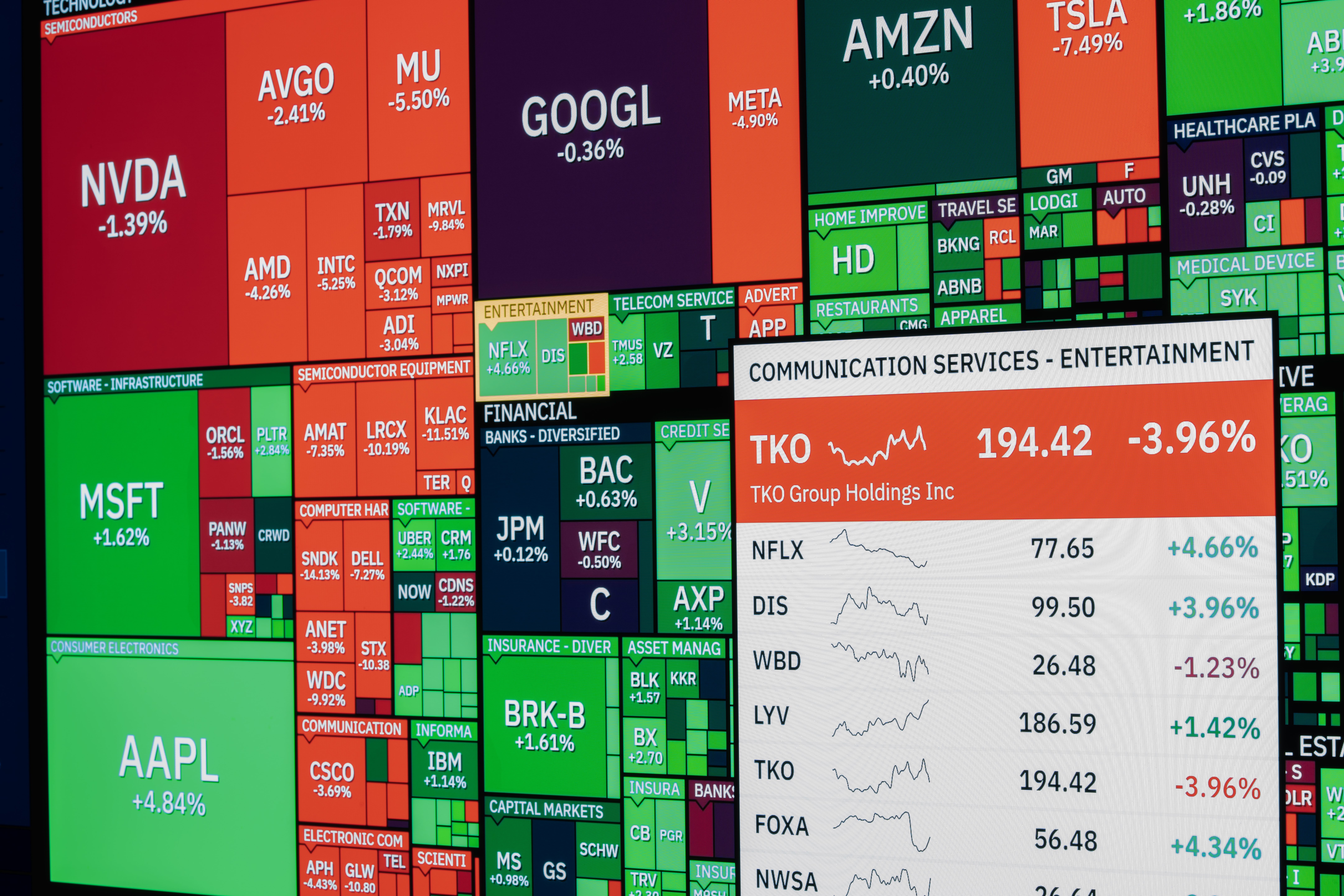
For equity investors, the calculus is more complex. The S&P 500 is hovering near all-time highs above 7,780, supported by a strong earnings season in which 87% of reporting companies beat EPS estimates. But a sustained rise in long-term yields compresses equity multiples, particularly for growth stocks. The Magnificent Seven are already showing signs of divergence - Microsoft surging on AI cloud strength while Meta and Apple have stumbled. A Fed that speaks less clearly is a Fed that introduces more tail risk into every earnings season.
The deeper question is whether Warsh's experiment will ultimately succeed. His predecessors created the forward guidance regime because markets demanded it - and because it worked, at least for a time, in anchoring expectations and reducing volatility. Dismantling it is a legitimate policy choice. But the bond market's verdict so far is that the transition costs are real, and that the bill is being paid in higher yields, wider term premiums, and a mortgage market that remains stubbornly expensive. Jackson Hole will be Warsh's first real opportunity to make the case that the pain is worth it.