America's Yen Rescue: Why the US Treasury Stepped Into Currency Markets for the First Time in Decades

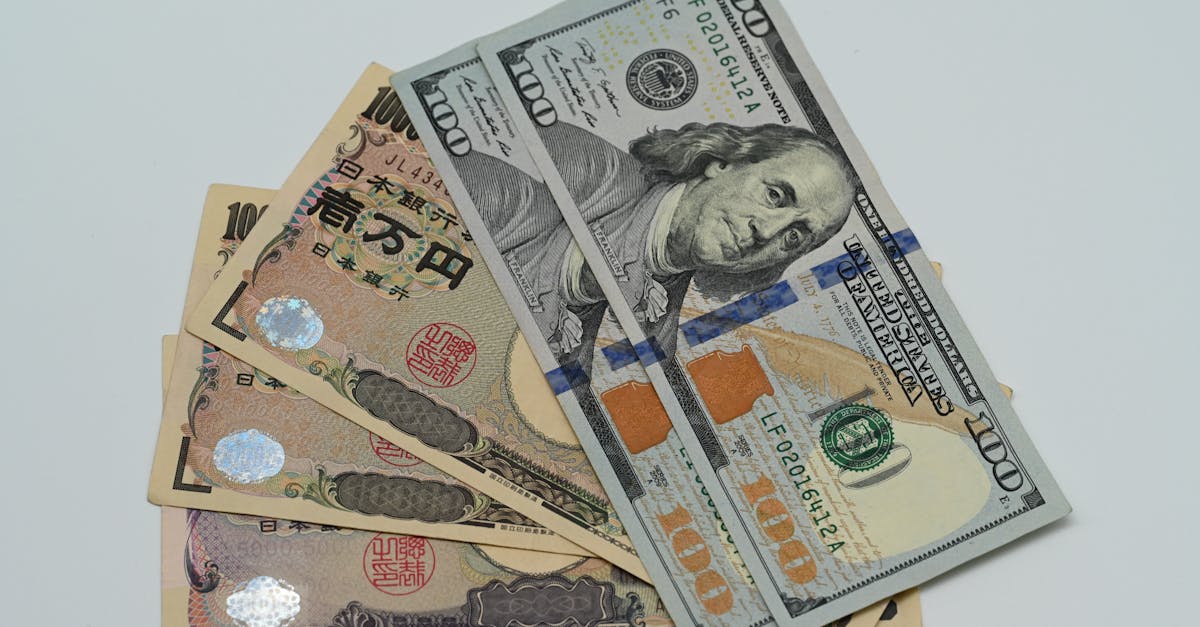
There is a number that defines what happened in currency markets last Friday: 163. That is how many yen it took to buy a single US dollar at the peak of the selloff on Thursday, July 31 - the weakest level for the Japanese currency in roughly four decades. By Friday afternoon, after a coordinated intervention by the US Treasury and Japan's Ministry of Finance, the yen had strengthened to 157.57. The move was historic. It was also, in several important ways, a window into the fragility of the global financial architecture that Wall Street is navigating right now.
What Actually Happened
Japan's Finance Ministry confirmed on Monday that it had conducted a coordinated yen-buying operation with the US Treasury on Friday, August 1. Treasury Secretary Scott Bessent confirmed the action in a public statement, saying that "Friday's coordinated foreign exchange actions countered disorderly yen movements." Both governments warned they "will not hesitate" to intervene again. Japan's Finance Minister Satsuki Katayama said Tokyo "remains attentive and in close communication with counterparts at US Treasury."
The intervention was the first joint US-Japan yen-buying operation since 1998 - a gap of 28 years. The last time the two countries coordinated on currency markets in this direction was in the aftermath of the Russian debt crisis and the collapse of Long-Term Capital Management, when global financial markets were in genuine distress. The fact that Washington felt compelled to act again in 2026 tells you something important about how serious the yen's decline had become.
The Treasury Market Problem Nobody Wants to Say Out Loud
The official explanation from both governments framed the intervention as a response to "excessive volatility and disorderly movements." That is the standard diplomatic language. The real explanation is more specific - and more consequential for US investors.
Japan is the largest foreign holder of US Treasury securities, with roughly $1.1 trillion on its books. When the yen weakens sharply, Japan faces pressure to sell those Treasuries to raise dollars and fund unilateral intervention. A large-scale Japanese Treasury selloff would push US yields higher at precisely the moment when the Federal Reserve is already struggling with a 30-year yield above 5.2% and three FOMC dissenters pushing for rate hikes. The last thing the US bond market needs is its largest foreign creditor becoming a forced seller.
Louise Loo of Oxford Economics put it plainly: "There is a self-preservation element here. Volatile markets driven by potentially fiscally-aggressive policies from Japan could extend to the US Treasury markets, destabilizing the dollar." The coordinated intervention was, in part, Washington protecting its own bond market by giving Tokyo a way to act without dumping Treasuries.
That is why Japan's Finance Ministry simultaneously announced plans to use the Federal Reserve's FIMA repo facility for future interventions - a mechanism that allows foreign central banks to obtain dollar liquidity by temporarily pledging US Treasuries as collateral, rather than selling them outright. Masahiko Loo of State Street called that signal "bigger than the intervention itself."
The Euro Twist That Raised More Questions Than It Answered
Here is where the story gets genuinely unusual. Reports emerged that the US sold euros - not dollars - to buy yen. That is not how coordinated intervention has traditionally worked. The standard playbook involves selling dollar assets to purchase the currency being supported. Selling euros instead suggests the US was trying to avoid adding to dollar supply in a way that might complicate its own monetary policy, or that it was drawing on the Exchange Stabilization Fund's euro holdings rather than its dollar reserves.
Robin Brooks of the Brookings Institution argued the move "undercuts the efficacy of US participation, because it invariably will have markets wondering why the US did not just fund yen buying out of dollars." His concern is legitimate: if markets perceive the intervention as structurally limited, the deterrent effect against speculative yen selling is weakened. Intervention works best when it is credible and unlimited. Selling euros rather than dollars introduces a question mark about the scale of Washington's commitment.
What This Means for the Macro Picture
The yen intervention does not exist in isolation. It is the latest chapter in a macro environment that has become genuinely difficult to navigate. The Federal Reserve held rates steady at 3.5% to 3.75% last week with three dissenters pushing for hikes. The 30-year Treasury yield hit its highest level since 2007. Oil prices remain elevated despite a partial ceasefire in the US-Iran conflict. And now the world's third-largest economy is experiencing currency instability severe enough to require the first US-Japan joint intervention in nearly three decades.
The structural driver of yen weakness is not going away. As long as the Bank of Japan keeps Japanese government bond yields below where free markets would set them, the interest rate differential between Japan and the US creates persistent pressure on the yen. Intervention can buy time. It cannot change the fundamental math. State Street's Loo put it directly: "Intervention may shape the next few months. BOJ normalization and hedging flows will shape the next few years."
For US investors, the implications are layered. A stronger yen reduces the competitiveness of Japanese exports, which matters for global trade flows. It also reduces the pressure on Japanese institutions to sell US Treasuries, which is directly supportive of the US bond market at a moment when that support is badly needed. And it signals that Washington is willing to use its financial tools in coordination with allies in ways that go beyond the traditional playbook - a shift in posture that has geopolitical dimensions as well as financial ones.
The Bigger Signal
Trump framed the intervention as "a signal of friendship," and in one sense he is right. But the more durable signal is about the interconnectedness of global financial markets in 2026. The US bond market, the Japanese yen, the Bank of Japan's yield curve policy, and the Federal Reserve's inflation fight are not separate stories. They are the same story, playing out across different asset classes simultaneously.
The coordinated intervention bought the yen roughly six points of appreciation in a single session. Whether it holds depends on whether the Bank of Japan moves toward genuine policy normalization - and whether the US-Iran situation, oil prices, and the Fed's September decision create the kind of macro stability that allows currency markets to settle. For now, the message from Washington and Tokyo is clear: they are watching, they are coordinating, and they are prepared to act again. The question is whether the market believes them.