Broadcom's Record Quarter and the 12% Selloff: What the Market Is Really Saying About AI Chips
Broadcom posted record revenue and guidance that would have seemed like science fiction two years ago. Then the stock fell 12% in after-hours trading. Welcome to the AI chip market in 2026, where extraordinary is no longer enough.


There is a number that captures the strange logic of modern AI investing better than almost any other: 143. That is how much Broadcom's AI semiconductor revenue grew year-over-year in the second quarter of fiscal 2026, reported after the bell on Tuesday, June 3. The company posted record revenue, record free cash flow, and guidance that would have seemed like science fiction two years ago. Then the stock fell 12% in after-hours trading. Welcome to the AI chip market in 2026, where extraordinary is no longer enough.
The Numbers That Should Have Sent the Stock Higher
Broadcom's Q2 FY2026 results were, by almost any conventional measure, exceptional. Total revenue came in at $22.19 billion, up 48% year-over-year and slightly ahead of the analyst consensus of $22.13 billion. Non-GAAP earnings per share of $2.44 beat the $2.39 estimate. Free cash flow hit $10.26 billion, representing 46% of revenue - a margin that most industrial companies would consider a fantasy. Adjusted EBITDA reached $15.24 billion, or 69% of revenue, up 52% from the prior year.
The AI story inside those numbers was even more striking. Semiconductor revenue from AI reached $10.8 billion for the quarter, up 143% year-over-year and above the company's own forecast. CEO Hock Tan was direct about the momentum: "The momentum continues and in Q3 we expect semiconductor revenue from AI to grow over 200 percent year-over-year to $16.0 billion." For the full fiscal year 2026, Broadcom now expects AI semiconductor revenue of $56 billion, up approximately 180% from fiscal 2025. These are not incremental revisions. They are the kind of step-function upgrades that signal a company operating in a demand environment that keeps outrunning its own projections.
So Why Did the Stock Fall?
The answer lies in the gap between what Broadcom delivered and what the market had quietly priced in. Through market close on Tuesday, Broadcom shares had climbed 38% year to date, reaching an all-time high of $446.77 just days before the report. At that valuation, investors were not paying for a good quarter. They were paying for a perfect one - and then some.
Two specific signals triggered the selloff. First, Broadcom guided for Q3 non-GAAP operating margin of approximately 67% of projected revenue. That compares to an adjusted EBITDA margin of 69% in Q2. The compression is modest in absolute terms, but in a market where AI chip companies have been rewarded for expanding margins alongside exploding revenue, any hint of cost pressure reads as a warning sign. The implication is that as Broadcom scales its custom AI accelerator business - serving hyperscalers including Google, OpenAI, and Meta - the cost of delivering that growth is rising alongside the revenue.
Second, and arguably more important, Broadcom left its fiscal 2027 AI semiconductor revenue outlook unchanged at more than $100 billion. After a quarter in which AI revenue came in above forecast and Q3 guidance implied 200% year-over-year growth, investors had expected an upgrade to the 2027 number. The decision to hold it steady was read as a signal that the company sees the current acceleration as a pull-forward rather than a permanent step-up in the trajectory. Whether that reading is correct is debatable. But in a market that has been conditioned to expect continuous upward revisions from AI infrastructure names, the absence of one is treated as a miss.
The Custom Chip Advantage - and Its Limits
Broadcom's AI business is structurally different from Nvidia's. Where Nvidia sells general-purpose GPUs that any customer can deploy, Broadcom designs custom AI accelerators - known as XPUs - specifically for individual hyperscalers. Google's Tensor Processing Units are the most prominent example. This model generates deep customer relationships and high switching costs, but it also creates concentration risk. Broadcom's AI revenue is heavily dependent on a small number of very large customers, and the pace of that revenue is tied directly to the capital expenditure cycles of those customers.
The Q2 results confirm that those customers are spending aggressively. Alphabet's $80 billion equity raise, announced just days before Broadcom's earnings, was explicitly framed as AI infrastructure investment. Amazon and Meta have made similar commitments. The demand side of Broadcom's business is not in question. What the market is wrestling with is whether the margin profile of serving that demand will remain as attractive as it has been, and whether the 2027 revenue target - which implies continued acceleration from an already extraordinary base - is achievable or aspirational.
The Broader Signal for AI Infrastructure
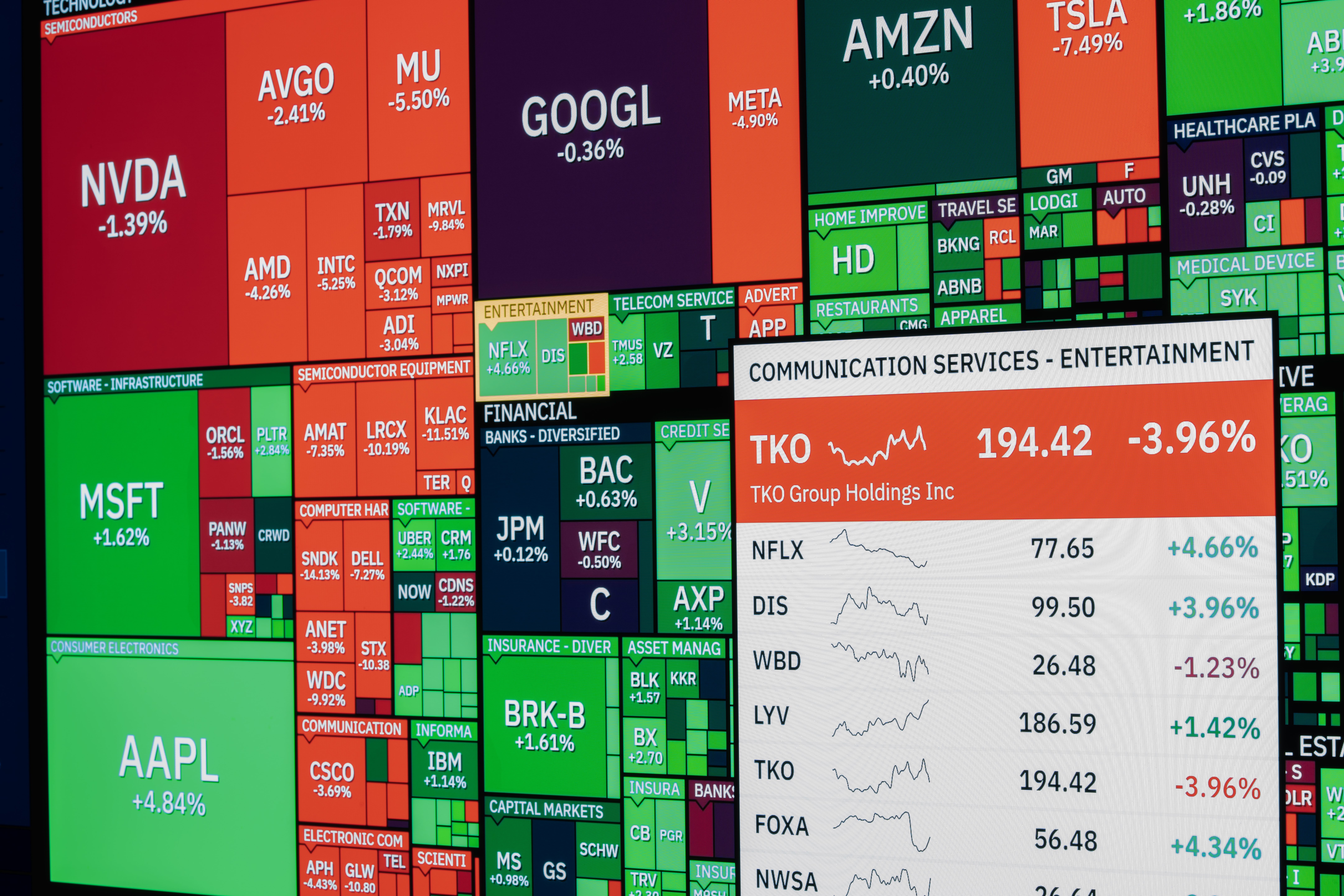
Broadcom's quarter does not exist in isolation. It follows Dell's 757% AI server revenue surge, Marvell's fourth consecutive guidance raise, and a broader pattern of AI infrastructure companies delivering results that beat estimates while simultaneously disappointing a market that has priced in perfection. The dynamic is not unique to semiconductors. It is a feature of any sector where valuations have run far ahead of near-term earnings, leaving companies in the uncomfortable position of having to exceed already elevated expectations just to hold their stock price.
The more durable takeaway from Broadcom's Q2 is not the after-hours selloff. It is the underlying demand signal. AI semiconductor revenue of $10.8 billion in a single quarter, growing at 143% year-over-year, with Q3 guidance implying another step up to $16 billion - these are not the numbers of a cycle that is slowing down. They are the numbers of a buildout that is still in its early innings, even if the stock market has been pricing the final score for some time.
For investors, the Broadcom selloff is a reminder that in the AI trade, the question is rarely whether the technology is real or the demand is genuine. Both clearly are. The question is always whether the price you are paying today reflects a reasonable expectation of the future - or whether you are paying for a future that has already arrived and been fully discounted. On Tuesday night, the market decided it had been paying for the latter. The next quarter will tell us whether it was right.