Eight Weeks and Counting: What the S&P 500's Longest Rally Since 2023 Is Really Telling Us


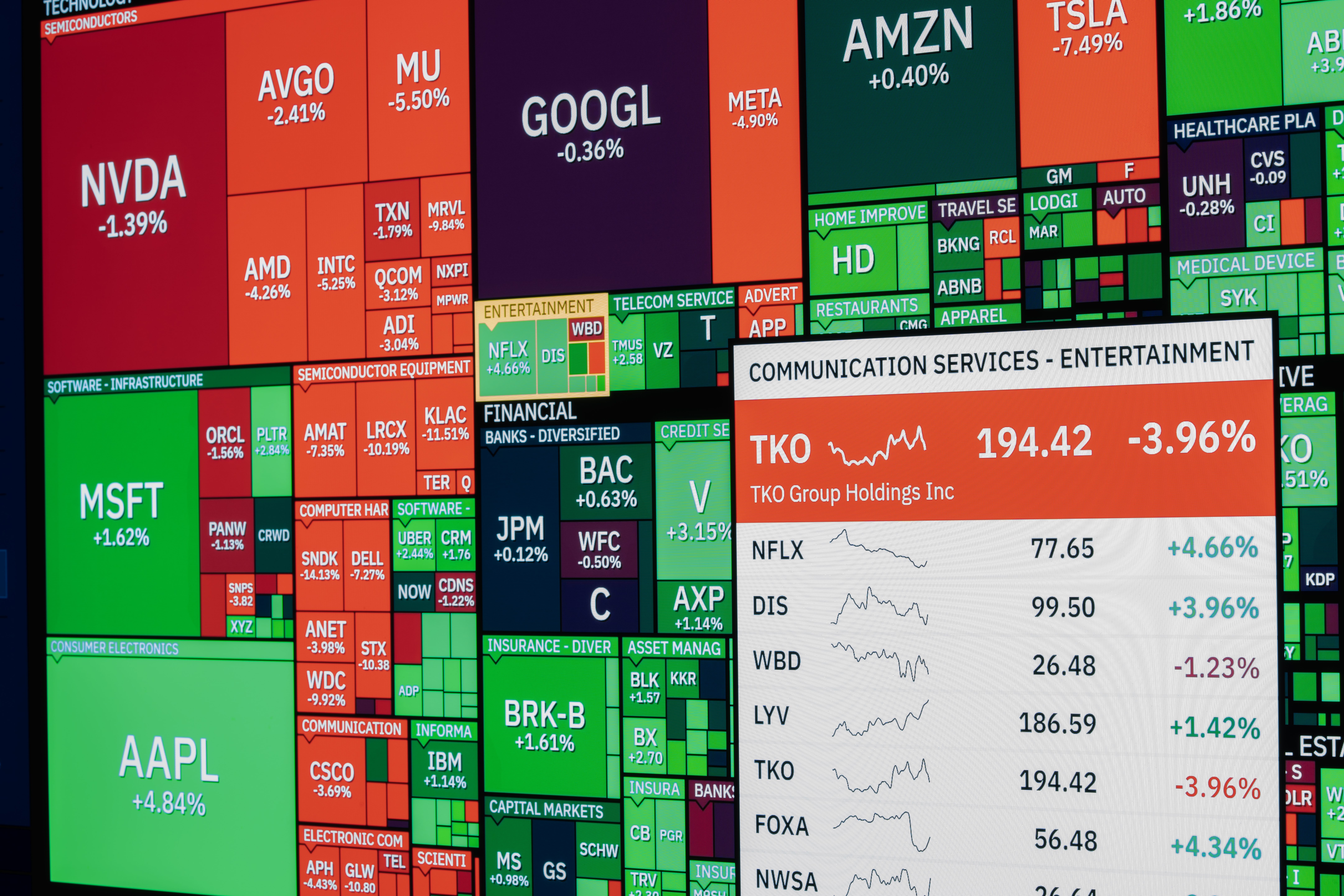
The S&P 500 closed out its eighth consecutive week of gains on Friday, its longest winning streak since December 2023, and the market's mood heading into the Memorial Day weekend is about as good as it has been all year. The Dow Jones Industrial Average set both an intraday and closing record above 50,579. The Nasdaq posted its seventh green week in eight. For the year, the Nasdaq is up more than 13%, the S&P 500 up 9%, and the Dow up 5%. On the surface, this looks like a straightforward bull market doing what bull markets do. Look a little closer, and the picture is considerably more complicated.
The week's defining tension was the gap between what the market is doing and what the economy is telling consumers. On Friday morning, the University of Michigan released its final May consumer sentiment reading: 44.8, a fresh all-time record low, the worst reading since the survey began in 1952, and well below the 48.2 that forecasters had expected. Gas prices are running at a national average of $4.55 per gallon, up 53% since the Iran war began in late February, according to AAA. Public transit ridership has grown 16% since the conflict started as lower-income households shift away from driving. Walmart's CFO said last week that the quantity of gas its customers were buying suggested they were "navigating financial distress." And yet the S&P 500 just posted its longest winning streak in two and a half years. That is not a contradiction that resolves itself easily.
What Is Actually Driving the Rally
The honest answer is that several things are happening at once, and they do not all point in the same direction. The most important driver is earnings. With roughly 95% of S&P 500 companies having reported first-quarter results, earnings growth is running at nearly 28% year-over-year, the fastest pace in four years. Companies have beaten estimates on both the top and bottom lines at an extraordinary rate. UBS raised its year-end S&P 500 target to 7,900 from 7,500 on Thursday, citing strong corporate earnings growth and their expectation that oil prices will not derail the expansion. "The recent rally has validated our approach of remaining focused on fundamentals rather than being swayed by headlines," wrote Mark Haefele, UBS's chief investment officer, in a note to clients.
The second driver is AI. Nvidia reported record first-quarter revenue of $81.62 billion on Wednesday, beating the $78.86 billion analyst consensus, with profit tripling year-over-year. The stock fell nearly 2% on Friday anyway, extending Thursday's post-earnings decline, which is a pattern that has become familiar: the numbers are extraordinary, but the bar is set so high that even extraordinary is not enough to surprise. What did move on the Nvidia print were the downstream beneficiaries. Dell Technologies surged 16% on Friday, HP gained 15%, and Arm Holdings jumped more than 16% on Thursday before giving some back. The AI infrastructure trade is alive, but it has migrated from the chip designer to the companies building the servers and systems that run on those chips.
The third driver is the 10-year Treasury yield, which ticked down to 4.56% on Friday after touching 4.69% intraday on Tuesday, its highest level since January 2025. The brief spike rattled markets mid-week before easing, and the pattern is instructive: the rally is sensitive to rates in a way that suggests valuations are already stretched. The S&P 500's forward price-to-earnings ratio has expanded to around 21 times, well above the long-term historical average. That is not a reason to sell, but it is a reason to pay attention to what happens if yields move sustainably higher.
The Warsh Variable
Kevin Warsh was sworn in as the 17th Federal Reserve chair at the White House on Friday, and markets are already grappling with what his tenure means for the communication playbook that investors have spent decades learning to decode. Warsh has argued publicly that the Fed overcommunicates, giving markets too many hints about future rate decisions and boxing itself in. He wants to say less. "Woe with us! What are we going to do for a living?" joked Ed Yardeni, the veteran Fed watcher and president of Yardeni Research, in a note to clients. The joke lands because it captures a real anxiety: a Fed that is harder to read is a Fed that introduces more uncertainty into asset pricing, and uncertainty is not what a market trading at 21 times forward earnings needs more of.
The more immediate question is what Warsh does with rates. The consensus on Wall Street has shifted decisively toward a hold, with some analysts now pricing in a hike as the next move rather than a cut. The June FOMC meeting will be his first as chair, and the language he uses, the projections he endorses, and the framework he begins to articulate will matter as much as the rate decision itself. A hawkish tone in June could be the catalyst that finally interrupts the winning streak.
The Bubble Warning Nobody Wants to Hear
Bank of America's Michael Hartnett published a note this week warning that the current wave of mega-IPOs, led by SpaceX's planned $75 billion offering, risks creating a bubble reminiscent of the Roaring Twenties. The comparison is pointed: the 1920s bull market ended in the crash of 1929, and Hartnett's concern is that a market already trading at elevated valuations, fueled by AI optimism and a flood of new issuance, could be setting up for a similar reckoning. The SpaceX S-1, filed Wednesday, revealed a company spending $7.7 billion on AI in a single quarter while posting a net loss of $4.9 billion for the full year 2025. The market is being asked to value that at close to $2 trillion.
Whether Hartnett is right depends on whether the AI earnings cycle delivers on its promise. Oxford Economics published analysis this week arguing that the US economy faces near-zero labor force growth over the coming decade as baby boomers retire and immigration slows, leaving AI productivity gains as the primary engine of real GDP growth above 2%. That is a structural argument for why AI investment is not a bubble but a necessity. The counterargument is that necessity does not guarantee returns, and that the gap between what AI needs to deliver and what current valuations assume is uncomfortably wide.
What the Streak Is Actually Saying
Eight consecutive weeks of gains is a statement of confidence, but it is worth being precise about what the market is confident in. It is not confident that consumers are doing well — the record-low sentiment reading makes that clear. It is not confident that the Iran war is over — oil is still above $100 a barrel and the Strait of Hormuz remains closed. It is not confident that rates are coming down — the Fed is more likely to hike than cut. What the market is confident in is that corporate earnings will keep growing, that AI infrastructure spending will keep accelerating, and that the economy is resilient enough to absorb the war premium without tipping into recession. That is a coherent thesis. It is also a thesis that requires a lot of things to keep going right simultaneously. Eight weeks in, the market has earned the benefit of the doubt. The question is how many more weeks that benefit extends.