Growth Is Back, But So Is Inflation: What the Q1 GDP Report and Powell's Final Fed Meeting Mean for Markets
Two major economic reports landed on Wednesday: real GDP grew at 2.0% in Q1 2026, but inflation surged to 4.5% annualized. The Federal Reserve held rates steady in an 8-4 vote—the most divided decision since 1992—as Jerome Powell chaired his final meeting.

Two major economic reports landed on Wednesday within hours of each other, and together they painted a picture of an American economy that is simultaneously more resilient and more troubled than most forecasters expected at the start of the year. The Bureau of Economic Analysis reported that real GDP grew at a 2.0% annualized rate in the first quarter of 2026, a sharp rebound from the 0.5% growth recorded in the fourth quarter of 2025. Hours later, the Federal Reserve held its benchmark interest rate steady at 3.5% to 3.75% in an 8-4 vote - the most divided FOMC decision since October 1992. Jerome Powell chaired the meeting. It was his last.
The juxtaposition of those two data points captures the central tension in the US economy right now. Growth has returned. Inflation has returned faster. And the institution responsible for managing that tradeoff is more internally fractured than it has been in more than three decades, just as it prepares to hand the keys to a new chair.
The GDP Number: Better Than Q4, Worse Than Expected
The 2.0% advance estimate came in below the 2.3% consensus forecast, but the composition of the growth matters more than the headline. Investment was the primary driver, led by a surge in information processing equipment - computers and peripherals - that reflects the ongoing AI infrastructure buildout. Intellectual property products, primarily software, also contributed. Consumer spending grew but decelerated compared to the fourth quarter, a pattern consistent with households beginning to feel the pinch of higher energy costs as the Iran war pushed gasoline prices sharply higher through the quarter.
Government spending contributed positively, partly a mechanical rebound from the federal government shutdown that weighed on Q4 2025 figures. Exports rose, as did imports - the latter being a subtraction from GDP - with both sides of the trade ledger reflecting increased flows of computers and peripherals. Nonresidential structures declined, led by manufacturing, a sign that the tariff environment is creating hesitation around new factory investment even as data center construction accelerates.
The number that will command the most attention from policymakers is not the 2.0% real growth figure but the inflation readings embedded in the same report. The PCE price index - the Fed's preferred inflation gauge - rose at a 4.5% annualized rate in the first quarter, up sharply from 2.9% in Q4 2025. Core PCE, which strips out food and energy, came in at 4.3%, up from 2.7%. Those are not numbers that give a central bank room to cut rates. They are numbers that, in a different political environment, would be prompting serious discussion of hikes.
Powell's Exit: A Fed More Divided Than at Any Point Since 1992
The FOMC vote to hold rates at 3.5% to 3.75% was 8-4, with four members dissenting in favor of a rate increase. The last time the Fed recorded four dissents at a single meeting was October 1992, when the committee was navigating the aftermath of the early 1990s recession. The current dissents reflect a genuine and deepening disagreement within the committee about whether the Iran war's inflationary impact is transient - and therefore something to look through - or structural, and therefore something that requires a policy response.
The hawks on the committee have a straightforward case. Core PCE at 4.3% is more than double the Fed's 2% target. The Strait of Hormuz remains effectively closed. Fertilizer prices are rising because natural gas is no longer flowing freely through the region. The energy shock is not a one-quarter event; it is a sustained supply disruption with no clear resolution timeline. In that environment, waiting for inflation to come down on its own is a bet that the war ends quickly and cleanly - a bet that the past two months of failed negotiations have not validated.
The doves have their own case. The labor market, while showing some softening at the margins, has not broken. Consumer spending is decelerating but not collapsing. The AI investment boom is generating real productivity gains that could, over time, offset some of the inflationary pressure. And hiking rates into a supply shock risks triggering a recession without actually solving the underlying problem, which is a geopolitical one rather than a demand-driven one.
Powell, in what turned out to be his final press conference as Fed chair, acknowledged both sides of the argument without resolving it. He described the committee as "carefully monitoring" the inflation data and said the Fed remained "data dependent." That language, which has served as the Fed's diplomatic cover for years, is beginning to sound less like a policy framework and more like an admission that the committee does not yet have consensus on what to do next.
The Transition That Arrives at the Worst Possible Moment
Kevin Warsh, who was confirmed by the Senate Banking Committee earlier this week and is expected to be sworn in as the 17th Fed chair in mid-May, inherits a situation that would test any central banker. He takes over a committee that is openly divided. He inherits a balance sheet of roughly $6.8 trillion that he has publicly described as "bloated." He faces an inflation problem that is partly structural and partly geopolitical, and a political environment in which the president who appointed him has repeatedly demanded lower rates.
Warsh's own views are well documented. He dissented from the Fed's quantitative easing programs during his previous tenure on the board, arguing that asset purchases were distorting markets and creating risks that would be difficult to unwind. He has argued for a smaller Fed footprint in day-to-day markets and a return to something closer to the pre-2008 framework of scarce reserves. Those views are coherent and defensible. They are also views that, if implemented aggressively, could add volatility to a market that is already navigating an oil shock, a divided central bank, and the largest wave of corporate earnings in years.
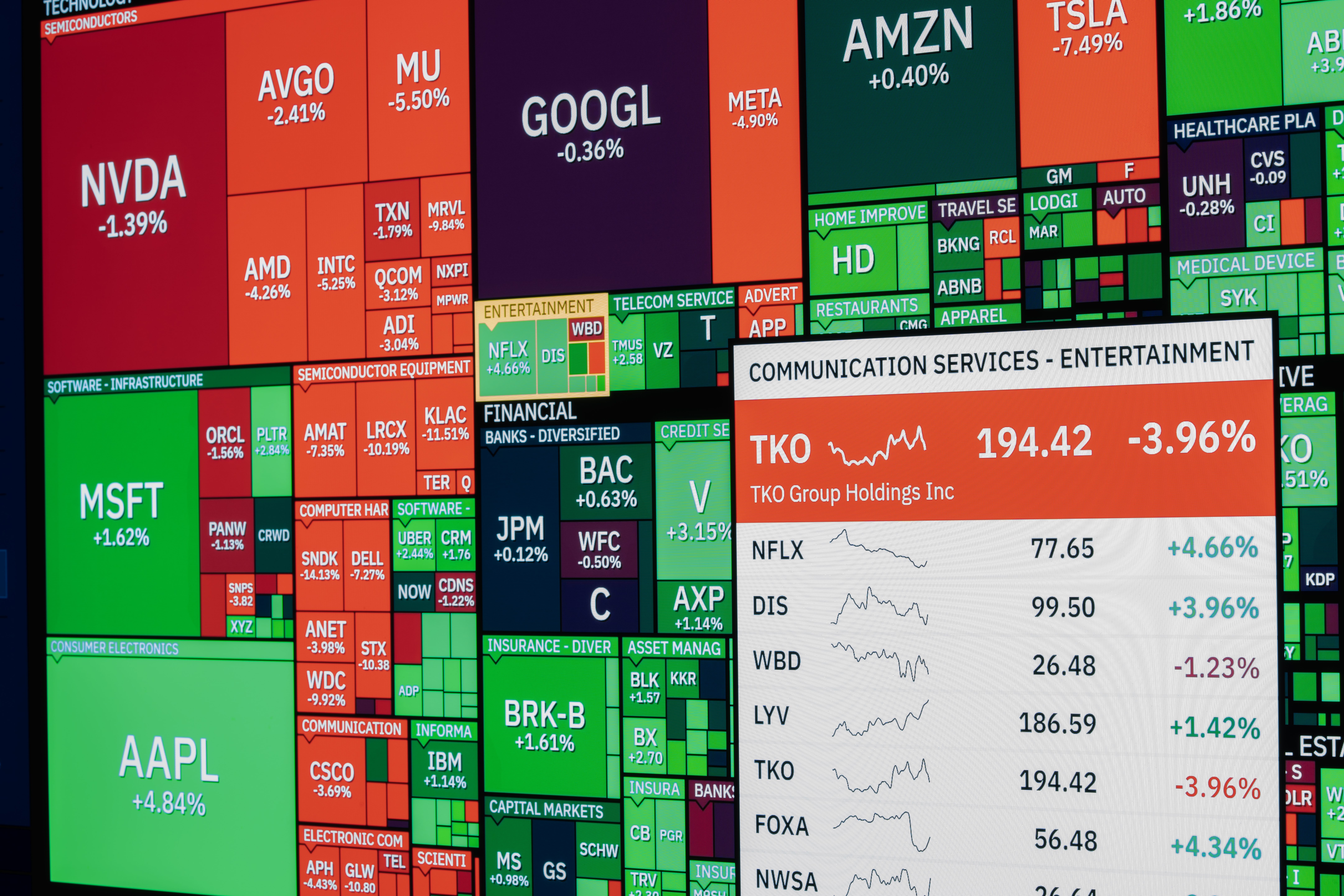
The stock market, for its part, has been remarkably sanguine about all of this. April was the best month for US equities since 2020: the Nasdaq rose more than 15%, the S&P 500 gained more than 10%, and the Dow added more than 7%. The rally was driven by AI earnings optimism, a brief period of relative calm in the Iran conflict, and the simple fact that corporate America has been generating strong profits despite the macro headwinds. The S&P 500 and Nasdaq both set fresh closing records on Wednesday, even as the GDP and FOMC data were being digested.
What Investors Should Watch Next
The April rally has been built on a specific set of assumptions: that the Iran war will eventually end, that AI investment will continue to drive earnings growth, and that the Fed will not tighten aggressively enough to choke off the expansion. Wednesday's data tested all three of those assumptions simultaneously. The GDP report confirmed that growth is real. The inflation data confirmed that the price of that growth is rising. And the 8-4 FOMC vote confirmed that the Fed is not of one mind about what to do about it.
The next major data points - the April jobs report, the April CPI reading, and Warsh's first FOMC meeting in June - will go a long way toward determining whether the current market consensus holds. If inflation continues to run above 4% and the labor market stays tight, the case for a rate hike becomes harder to dismiss. If the Iran situation shows genuine signs of resolution and energy prices begin to fall, the Fed may find the breathing room it needs to hold steady through the summer. The range of outcomes is unusually wide, and the institution that is supposed to navigate between them is changing leadership at exactly the moment when clarity matters most.