Home Depot Beat the Quarter, Then Trimmed the Profit It Expects to Keep
Home Depot beat on sales and comps and lifted the top of its sales guidance. It also cut the profit it expects to keep, because the business is being rebuilt around lower-margin distribution.
Home Depot beat the quarter, then cut the profit it expects to keep. The company reported third quarter sales of $43.4 billion, up 4.9% from a year earlier, with comparable sales rising 2.2% and adjusted earnings per share of $3.86 against the $3.84 analysts expected. At the same time, it lowered its full year profit outlook: diluted earnings per share are now guided to grow approximately 1.5%, against prior guidance of approximately flat to 4.0%, and adjusted operating margin is now pinned at approximately 12.8%, the bottom of the 12.8% to 13.0% range laid out in February. Gross margin guidance slipped to approximately 33.0% from approximately 33.1%. Shares sank more than 3% in early trading.
The bull case is real, and it is visible in the comp trajectory. Comparable sales started the fiscal year at 0.6% in the first quarter, then accelerated to 1.7% in the second, then to 2.2% in the third, with U.S. comps matching the total in the most recent quarter. Online comparable sales grew around 13%, the sixth straight quarter of double-digit growth for that metric, and 13 of 16 merchandising departments posted positive comps. Richard McPhail, the incoming chief executive officer, said results "exceeded our expectations." For a retailer whose comparable sales managed only 0.3% for all of fiscal 2025, three consecutive quarters of improving comps is the argument that the customer is coming back.
The math on a dollar of new sales
Where the full year is headed, sales growth and profit growth point in different directions. Home Depot's own guidance implies roughly $172 billion of fiscal 2026 sales, applying the guided 4.5% growth to fiscal 2025 sales of $164.7 billion. At the guided 12.4% operating margin, that arithmetic implies operating income of roughly $21.3 billion, about 2% above fiscal 2025's $20.90 billion. The company would grow sales about 4.5% while operating income grows about 2%. And there is a structural clue in the gap between the two growth lines: 4.5% total sales growth against 1.4% comparable sales growth implies roughly 3 percentage points of growth from something other than existing stores.
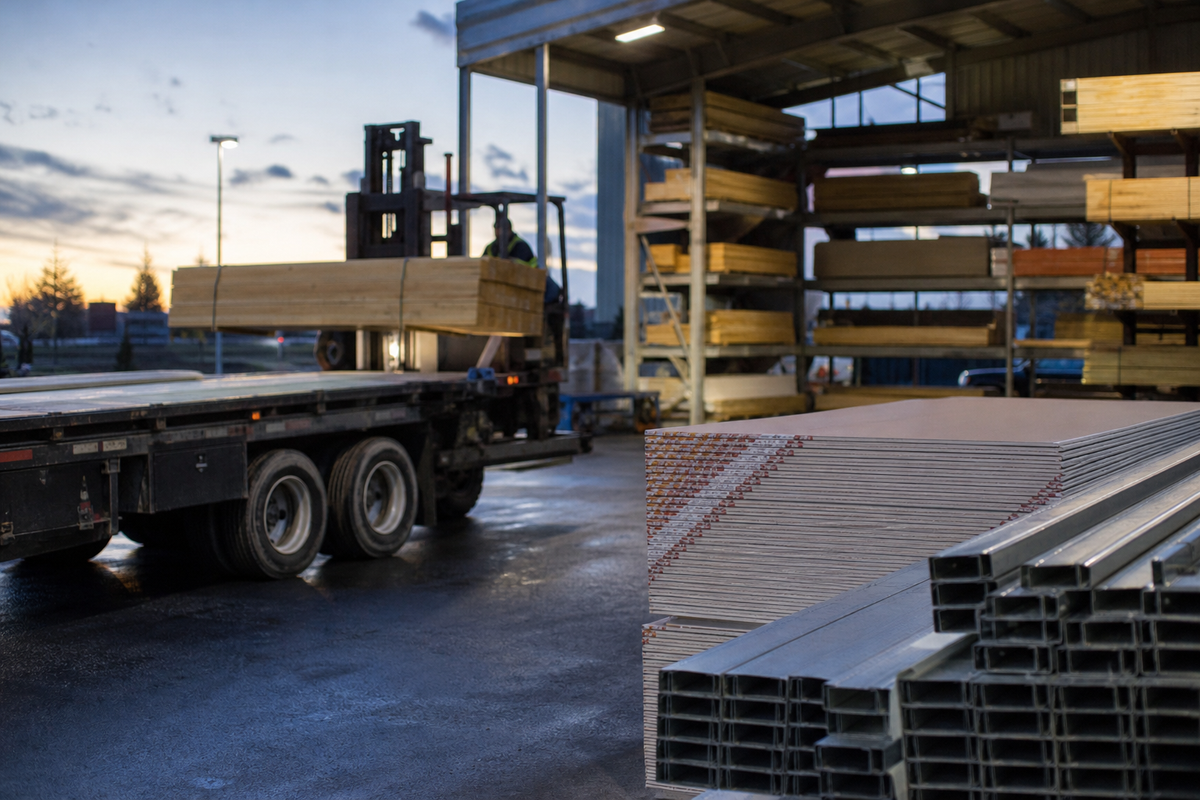
That something is distribution. In June 2024, Home Depot closed its acquisition of SRS Distribution, a residential specialty trade distributor serving professional roofers, landscapers and pool contractors, for a total enterprise value of approximately $18.25 billion, a deal the company said expanded its total addressable market by about $50 billion to approximately $1 trillion. In September 2025 it followed with GMS, a distributor of drywall, ceilings and steel framing, completed through SRS for approximately $5.5 billion including net debt. Ted Decker framed the logic plainly at the time: "We want to serve the Pro across their entire project." Wholesale distribution carries structurally lower margins than retail, and the footprint at quarter end shows how far the pivot has gone: 2,372 retail stores alongside over 1,320 SRS locations.
The new CEO built this
Which brings the leadership change into focus. On Nov. 23, McPhail becomes chief executive officer, Ann-Marie Campbell becomes president and chief operating officer, and Jordan Broggi takes over as chief financial officer, with Decker, back from a temporary medical leave, continuing as chair of the board. McPhail joined Home Depot in 2005 and was named chief financial officer in September 2019, a tenure during which he oversaw the acquisitions of HD Supply, SRS Distribution, GMS, Construction Resources and Mingledorff's, moves the company credits with positioning it "as a premier distributor and full-service partner for Pros of all sizes." That is the company describing itself as a distributor as much as a retailer. The executive who built the distribution portfolio is now running the company, and he told CNBC "We're not going to change course." Greg Brenneman, the independent lead director, called the group "the ideal leaders to continue building on the momentum." Nothing in the succession suggests a reversal.
What would have to go right
For the strategy to pay off, two things would have to be true. The first is operational: turning distribution volume into profit by cross-selling to Pros, converting the $50 billion of added addressable market into sales that lift, rather than dilute, the margin line. Guidance that holds gross margin at approximately 33.0% says the dilution is, for now, being managed rather than reversed. The second is macroeconomic: the consumer would have to keep spending. The backdrop is mixed. October retail and food services sales were estimated at $748.2 billion, up just 0.2% from September, a monthly change the Census Bureau said has insufficient statistical evidence to be distinguished from zero, even as sales ran 6.8% above a year earlier. A customer who is not accelerating leaves comp gains dependent on market share, smaller projects, and the Pro.
The quarter was a genuine beat, and the comp acceleration is a legitimate recovery story. But Home Depot is being rebuilt around a business where each additional dollar of sales carries less profit, the arithmetic in its own guidance confirms the trade, and the executive who made that trade is the one now taking the top job.