John Deere's Unlikely AI Play: How the Data Center Boom Is Reshaping the World's Largest Farm Equipment Maker

John Deere is not a company that typically appears in conversations about artificial intelligence. It makes tractors, combines, and excavators. Its customers are farmers and construction contractors. Its stock trades on the New York Stock Exchange under the ticker DE, and for most of its 189-year history, its fortunes have risen and fallen with the agricultural commodity cycle. That story is changing. Deere's fiscal second-quarter earnings report, released Thursday morning before the opening bell, contained a data point that would have seemed implausible two years ago: the company's construction segment grew 29% year over year, driven in significant part by demand for equipment to build AI data centers. The world's largest farm equipment maker has quietly become one of the most direct beneficiaries of the AI infrastructure buildout.
The headline numbers were solid. Revenue came in at $13.37 billion, up 5% year over year and well above the $12.73 billion analyst consensus. Earnings per share of $6.55 beat the $5.70 estimate by a wide margin, though a one-time $272 million refund of IEEPA tariffs - worth roughly $0.78 per share after tax - accounted for most of the beat. Strip that out and the underlying performance was roughly in line with expectations. The stock fell 5.2% to $531.35 on the day, a reaction that reflects both the tariff-adjusted reality of the earnings and the ongoing pressure on Deere's core large agricultural business, which saw sales fall 14% in the quarter as farmers continue to navigate elevated input costs and weak commodity margins.
The Construction Segment Is Carrying the Company
The story inside the numbers is the divergence between Deere's three operating segments. Large agriculture is at what management calls the bottom of the cycle. Production and Precision Agriculture sales fell 14% to $4.5 billion, and the full-year outlook calls for a further decline of 5% to 10%. The Iran war has made things worse: fertilizer prices have soared because natural gas - a key feedstock for nitrogen fertilizers - is no longer flowing freely through the Strait of Hormuz. Brazilian farmers, who buy inputs closer to their planting season, are particularly exposed. Deere revised its South American industry outlook to down 15% from down 5%.
Against that backdrop, the Construction and Forestry segment is doing the heavy lifting. Sales jumped 29% to $3.79 billion in the quarter, with an operating margin of 14.8%. Deere raised its full-year construction sales guidance to up approximately 20%, from the up 15% it had projected in February. The order book for construction equipment in the US and Canada is up more than 60% since November and is now at its highest level since April 2024, with over 80% of production slots filled for the year. CFO Brent Norwood said on the earnings call that customers have expressed confidence that incremental demand will extend into 2027.
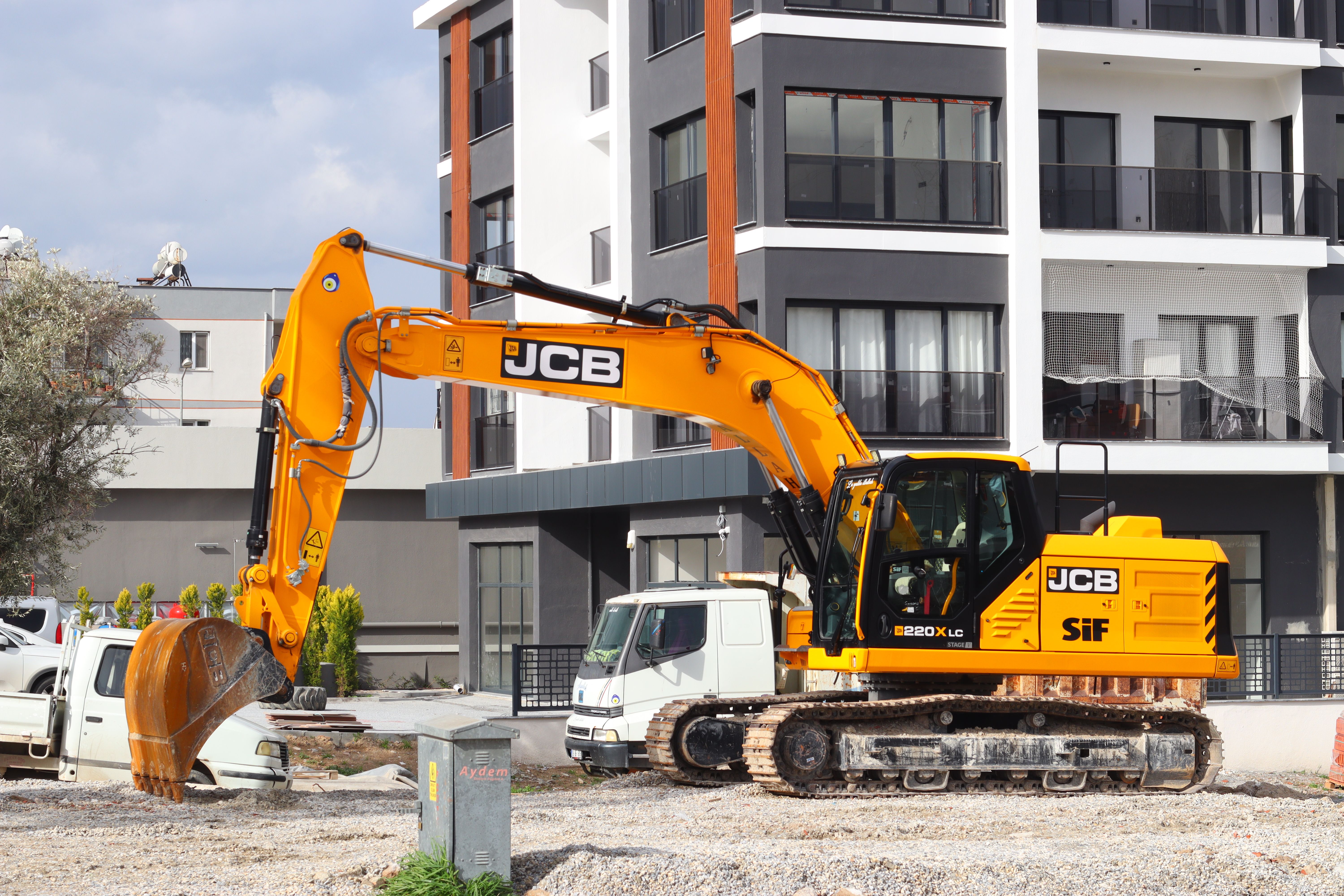
The driver is explicit. "Data center construction is expected to top $100 billion in 2026, with additional double-digit growth into 2027," Norwood said. "This is great for our customers in both large-scale site prep, but also water and utility contractors who also support these projects." Deere's excavators, bulldozers, and road-building equipment are doing the earthmoving and site preparation work for the massive campuses that hyperscalers are building across the United States. Every new data center that Microsoft, Amazon, Google, or Meta breaks ground on requires months of heavy construction work before a single server rack is installed. Deere is the company moving the dirt.
The AI Infrastructure Trade Has a Physical Layer
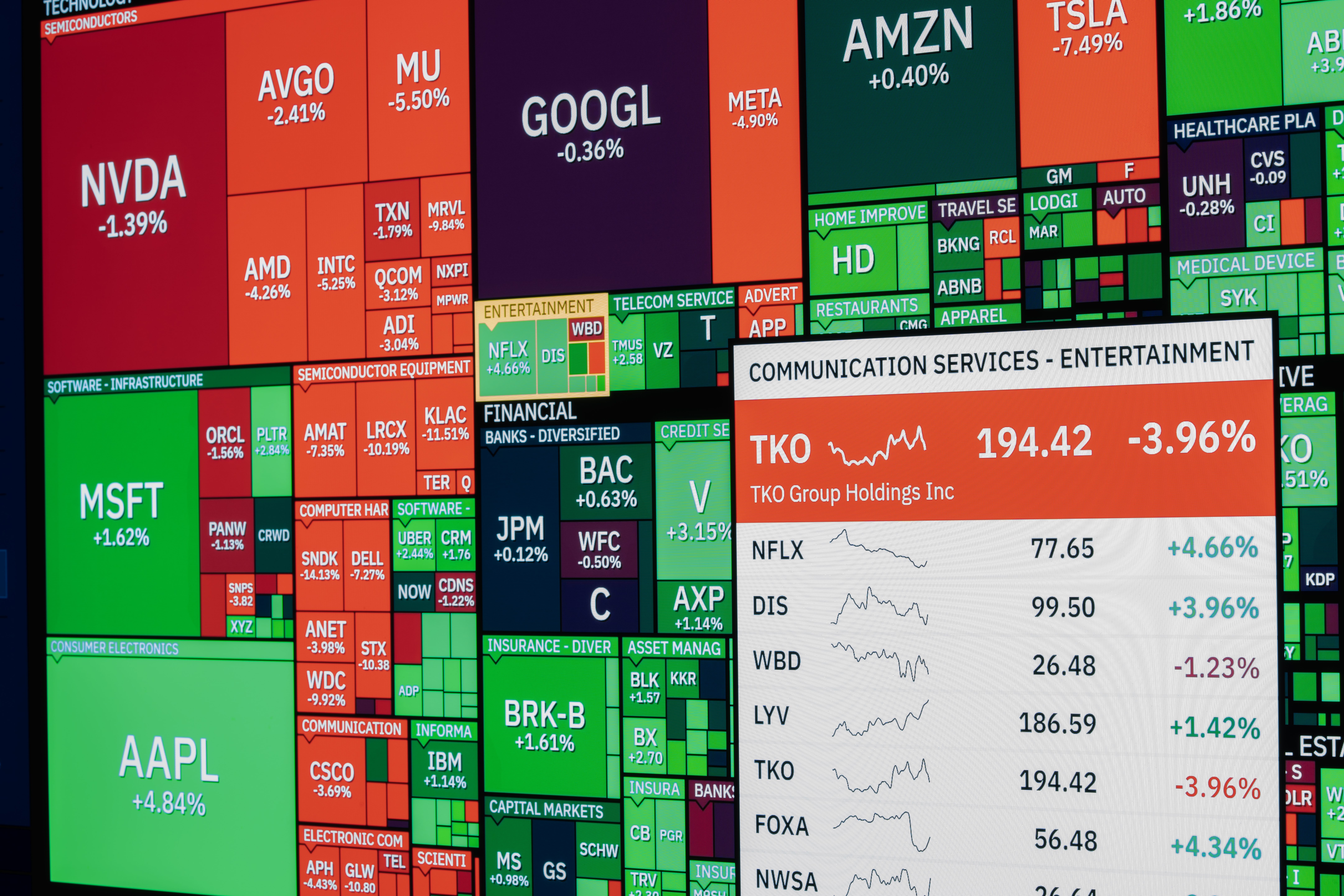
The financial markets have spent the past two years pricing the AI infrastructure buildout through the lens of semiconductors. Nvidia is the obvious beneficiary. Micron, which crossed $1 trillion in market capitalization earlier this week, is the memory play. Arm Holdings, which hit an all-time high on Wednesday, is the chip architecture story. But the AI buildout has a physical layer that precedes all of that, and it is one that the market has been slower to price. Before a data center can house a single GPU, someone has to clear the land, grade the site, lay the foundations, and run the utilities. That work requires construction equipment, and Deere - along with Caterpillar - is one of the two dominant suppliers of that equipment in the United States.
Deere has been making this case to investors for several quarters. On its Q1 earnings call, management specifically cited "data center construction starts" as a driver of construction equipment demand. The Q2 results confirm that the thesis is playing out in the actual numbers. The 29% construction revenue growth is not a rounding error or a one-quarter anomaly. It is a structural shift in who is buying Deere's equipment and why. The company is also investing to capture more of this demand: it recently completed a $70 million expansion of its Kernersville, North Carolina facility to build US-designed excavators domestically, and has committed to $20 billion in US manufacturing investment over the next decade.
The Tariff Complexity Underneath the Beat
The earnings beat requires some unpacking. The $272 million IEEPA tariff refund was a genuine one-time item, the result of refund claims filed with US Customs and Border Protection following the Supreme Court's invalidation of IEEPA tariffs earlier this year. It boosted margins by nearly 2.5 percentage points in the quarter. Without it, the underlying equipment operations margin would have been closer to 14.5% rather than the reported 16.9%.
The ongoing tariff picture is more complicated. Deere still expects approximately $1.2 billion in full-year tariff exposure - roughly a 3% margin headwind - as IEEPA tariffs were replaced by new Section 122 tariffs and adjusted Section 232 tariffs. Net of the refund, the company expects about $900 million in tariff costs for the year. Management has been explicit that it is not passing these costs to customers through surcharges, instead relying on sourcing adjustments, exemption submissions, and cost reduction to manage the impact. Approximately 80% of Deere's US complete goods are produced at US manufacturing facilities, and roughly 75% of the components used at those facilities are sourced from US-based suppliers - a structural advantage in the current trade environment.
What the Cycle Divergence Means for Investors
Deere's Q2 report is a case study in what happens when a diversified industrial company has its business segments at very different points in their respective cycles simultaneously. Large agriculture is at or near trough. Small Ag and Turf - which grew 16% in the quarter with a 20.6% operating margin - is progressing toward mid-cycle. Construction is slightly above mid-cycle and accelerating. The net result is a company that is delivering double-digit margins across all three segments even as its largest business by historical revenue is in a downturn.
Management maintained its full-year net income guidance of $4.5 billion to $5.0 billion, which is a meaningful statement given the Iran war's inflationary impact on fertilizer costs and the ongoing pressure on Brazilian farmers. The company expects the large ag cycle to bottom in 2026 and begin recovering in 2027, supported by aging fleet replacement demand, improving used inventory levels, and policy tailwinds including higher renewable volume obligations and potential year-round E15 ethanol blending.
For investors, the more interesting question is whether the market is correctly pricing Deere's construction exposure. The stock trades at a discount to its historical multiple, weighed down by the large ag downturn. But the construction segment - which is now generating nearly $4 billion in quarterly revenue and growing at 29% - is a different business than the one that drove Deere's valuation in previous cycles. If data center construction spending continues to grow at double-digit rates through 2027, as Deere's own customers are telling management, the construction segment alone could justify a meaningfully higher valuation for the company. The AI trade has a physical layer. Deere is building it.