Micron Hits $1 Trillion: Why the Memory Chip Giant Is Now the Backbone of the AI Economy
Micron Technology briefly crossed $1 trillion in market capitalization for the first time in its history on Tuesday, May 26, 2026, as the memory chip business is structurally transformed by artificial intelligence.


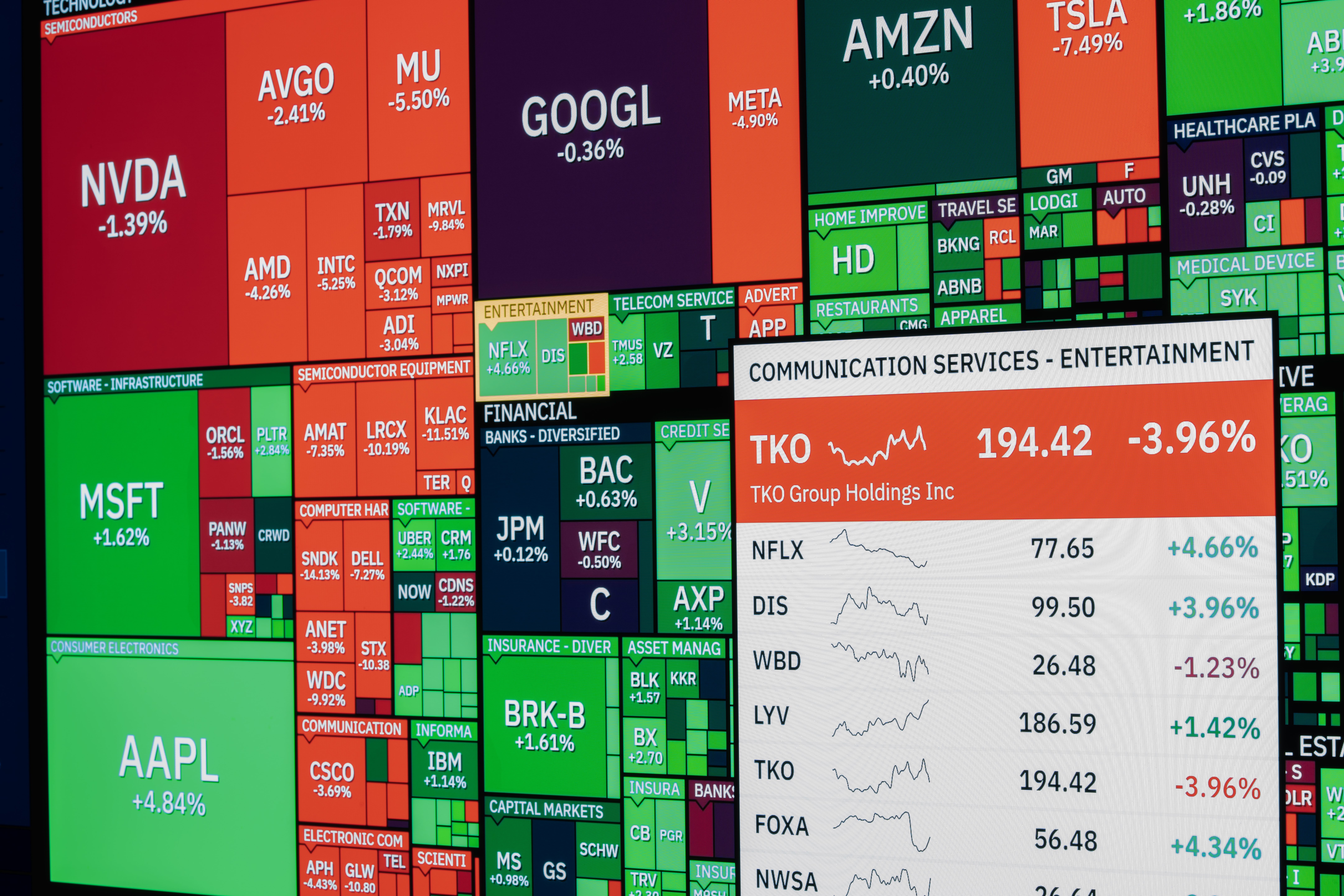
For most of its history, Micron Technology was the kind of company that Wall Street understood as a commodity business. Memory chips went up in price, Micron made money. Memory chips went down, Micron bled. The cycle was brutal, predictable, and largely unrewarding for long-term investors. That story ended on Tuesday, May 26, 2026, when Micron's stock surged more than 21 percent and the company briefly crossed $1 trillion in market capitalization for the first time in its history. The milestone is not just a number. It is a declaration that the memory chip business has been structurally transformed by artificial intelligence, and that Micron is now at the center of one of the most consequential infrastructure buildouts in the history of technology.
What Actually Happened on Tuesday
The catalyst was a research note from UBS analyst Timothy Arcuri that landed before the market open. Arcuri did not just raise his price target on Micron. He tripled it, lifting his estimate from $535 to $1,625 per share. The reasoning was specific and structural: long-term supply agreements are now firmly in place across most of the memory industry, with hyperscalers having already locked in approximately 60 to 70 percent of industry server DDR5 volumes under enhanced contracts spanning three to five years. These are not ordinary purchase orders. They are fixed-volume commitments with partially fixed pricing frameworks, the kind of arrangements that transform a cyclical commodity business into something that looks far more like a contracted infrastructure provider.
UBS raised its earnings per share estimates to $155, $167, and $117 for calendar years 2027, 2028, and 2029, respectively, and projected that Micron would generate over $400 billion in free cash flow across that period. Arcuri noted that EPS would remain comfortably above $100 throughout the period even assuming a moderate memory downcycle in 2029. The new $1,625 price target is based on approximately 15 times next-twelve-months price-to-earnings, with Arcuri explicitly arguing that Micron should trade at a similar multiple to Nvidia. That comparison would have seemed absurd two years ago. Today it is a serious analytical argument.
The Numbers Behind the Milestone
The UBS note did not arrive in a vacuum. Micron's fiscal second quarter results, reported in March, were among the most impressive in the company's history. Revenue came in at $23.86 billion, against analyst expectations of $20.07 billion. Adjusted earnings per share reached $12.20, well above the $9.31 consensus. Gross margins hit 74.9 percent. For the fiscal third quarter, management guided to $33.5 billion in revenue with gross margins of approximately 81 percent and non-GAAP earnings per share of $19.15. A single quarter of projected earnings now exceeds what the company generated in revenue for the entire fiscal year just three years ago.
The driver is High Bandwidth Memory, or HBM, the specialized memory architecture that sits directly alongside Nvidia's AI accelerators and is essential to the performance of large language models and AI inference workloads. Micron is the only US-based manufacturer of HBM, a fact that carries both commercial and geopolitical significance. Mizuho analyst Vijay Rakesh, who reiterated his Outperform rating on Tuesday, put it plainly: memory remains the AI backbone, with demand outstripping supply through 2026 and 2027. There is no clear line of sight on when the supply-demand imbalance could end.
Why This Is Different From Previous Cycles
The skeptical case on Micron has always been the same: memory is a commodity, cycles turn, and today's pricing power becomes tomorrow's oversupply. That argument is harder to make now, and not just because of the UBS note. The structural shift is the nature of the demand itself. AI training and inference workloads require memory in quantities and at speeds that were not commercially relevant two years ago. The hyperscalers building out AI infrastructure are not buying memory the way they bought server DRAM in 2018. They are signing multi-year contracts because they cannot afford supply disruptions in the middle of a capital expenditure cycle that is running at hundreds of billions of dollars annually across the industry.
The long-term agreement structure that UBS highlighted is the clearest evidence that memory has moved from a spot-market commodity to a contracted infrastructure input. When Amazon, Microsoft, Google, and Meta are willing to lock in three-to-five-year volume commitments at partially fixed prices, they are telling you something important about how they view memory in their AI stack. It is not optional. It is not substitutable on short notice. It is foundational.
What the $1 Trillion Milestone Actually Means
Micron joining the trillion-dollar club is significant not just for the company but for what it says about the AI infrastructure trade more broadly. The market has now assigned trillion-dollar valuations to Nvidia, the chip designer, and Micron, the memory supplier. The two companies represent the compute and memory layers of the AI stack, and together they suggest that the market is pricing in a sustained, multi-year buildout of AI infrastructure at a scale that justifies extraordinary valuations for the companies that supply the essential inputs.
The risks are real. Chinese memory manufacturer CXMT is entering the DDR5 production race, and any meaningful increase in supply from that direction could pressure pricing. The AI capex cycle, while currently robust, is not immune to a slowdown if enterprise AI adoption disappoints or if the hyperscalers decide to rationalize their spending. And Micron's own fiscal third quarter results, expected in late June, will be the first real test of whether the $33.5 billion revenue guidance holds.
But the more important question for investors is whether the structural argument holds: that AI has permanently elevated the floor for memory demand in a way that makes the old commodity cycle framework obsolete. Tuesday's move suggests that a growing number of institutional investors believe it does. Micron at $1 trillion is not the end of that argument. It may be closer to the beginning.