The OpenAI Miss That Rattled the AI Trade: What a Leaked Target Shortfall Means for the Market's Biggest Bet


The Wall Street Journal published a report on Monday evening that sent tremors through the AI trade on Tuesday, arriving at the worst possible moment: the day before Meta, Microsoft, Alphabet, and Amazon were all scheduled to report earnings. The report said OpenAI had missed its internal goal of reaching one billion weekly active ChatGPT users by the end of 2025, falling short at approximately 910 million. It also said the company had missed several monthly revenue targets in 2026 after rival Anthropic gained ground in the coding and enterprise markets. And it said OpenAI's CFO, Sarah Friar, had warned company leaders internally that she was worried the firm might not be able to pay for future computing contracts if revenue did not grow fast enough.
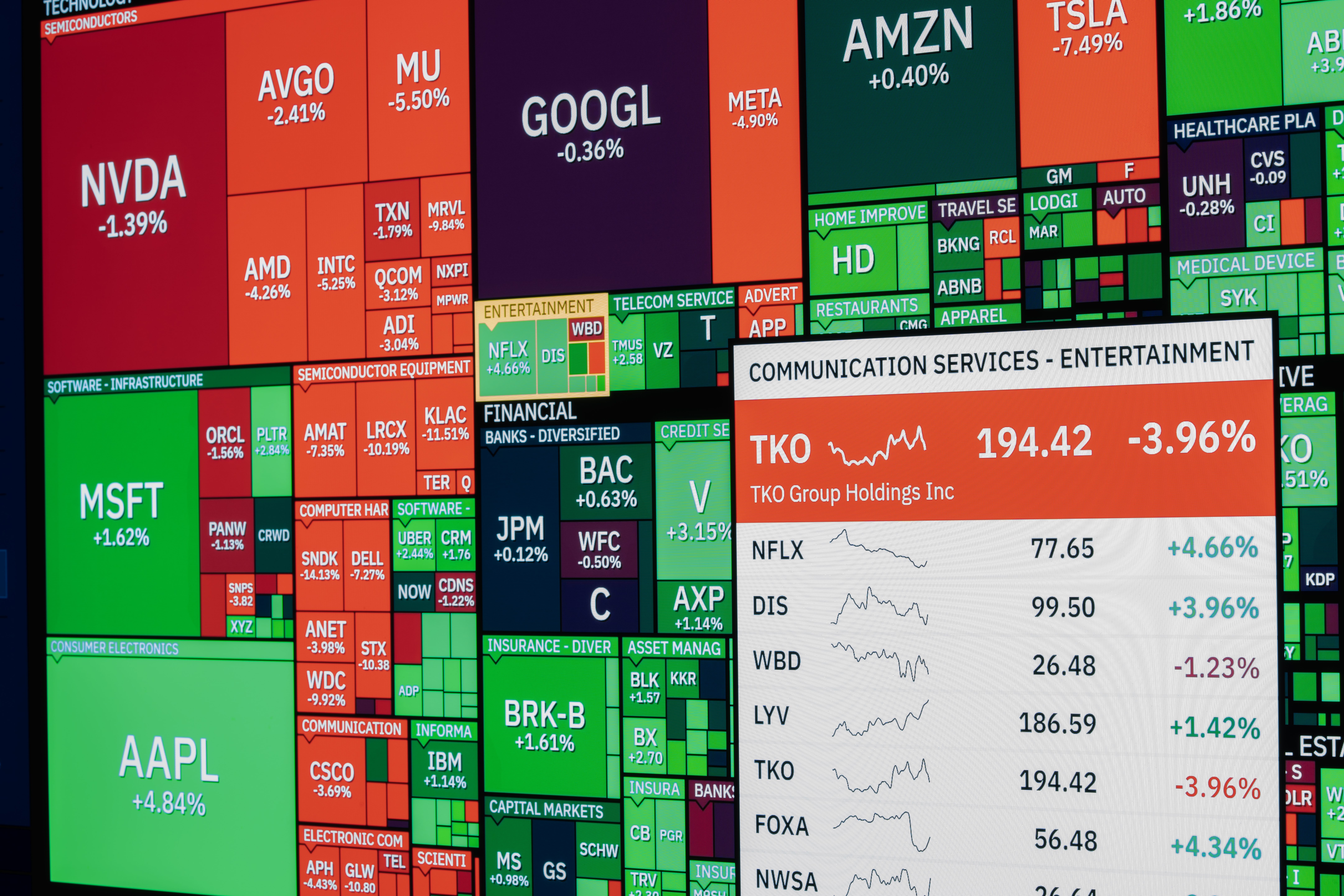
The market's reaction was swift and pointed. Oracle, which has a major cloud-computing pact with OpenAI, fell 4.1%. CoreWeave, the AI infrastructure company that went public in March and has OpenAI as its largest customer, dropped 5.8%. AMD fell 3.4%. Nvidia, which has ties to OpenAI and had surged 47% from late March through the prior week, fell 1.6% in its worst session in about a month. The Philadelphia Semiconductor Index shed 3.6%. The Nasdaq Composite fell 0.9%. The S&P 500 dropped 0.49%.
None of those moves were catastrophic in isolation. But the timing and the source of the anxiety were significant. This was not a macro shock or a geopolitical headline. It was a crack in the foundational narrative that has driven the AI trade for the past two years: that OpenAI's explosive growth would justify the hundreds of billions of dollars that the hyperscalers are pouring into AI infrastructure, and that the returns would eventually flow back to the chip designers, cloud providers, and data center operators that supply the ecosystem.
What the Report Actually Said
The details matter. OpenAI's stated 2026 revenue target is approximately $20 billion, itself a more than threefold jump from roughly $6 billion in 2024. The Journal reported that the company had missed several monthly milestones on the path to that target. The user shortfall - 910 million weekly active users versus a goal of one billion - is meaningful not just as a number but as a signal about the competitive dynamics in the AI model market. Anthropic's Claude has made significant inroads in coding and enterprise workflows, two of the highest-value use cases for AI tools. Google's Gemini models, which were widely seen as lagging OpenAI a year ago, have been substantially upgraded and are now considered competitive across most benchmarks.
The CFO's internal warning about computing contracts is the most operationally significant detail. OpenAI has committed to enormous amounts of cloud compute capacity - through Microsoft Azure, Oracle Cloud, and CoreWeave - to train and run its models. Those contracts are structured around revenue projections that assume continued rapid growth. If the revenue does not materialize at the pace required, the company faces a difficult choice: renegotiate contracts at potentially unfavorable terms, reduce its compute footprint and fall behind on model development, or raise additional capital to bridge the gap. None of those options is straightforward for a company that is simultaneously trying to complete a restructuring from a nonprofit to a for-profit entity and preparing for a potential IPO.
OpenAI pushed back on the report. A spokesperson said the company is "firing on all cylinders" and seeing strong growth in demand from enterprise customers and for its nascent advertising business. That response is consistent with the company's public posture, but it does not directly address the specific targets the Journal cited, and the market treated the non-denial as confirmation of the underlying facts.
The Microsoft Complication
The same day the OpenAI miss report circulated, Bloomberg reported a separate but related development: OpenAI had broken free from its exclusive AI partnership with Microsoft. The two companies had been operating under an arrangement in which Microsoft received a share of OpenAI's revenue in exchange for its massive Azure compute investment. That arrangement is being restructured, with Microsoft no longer sharing in OpenAI's revenue going forward. The change reflects OpenAI's desire for more commercial independence as it pursues its own enterprise sales motion and builds out its advertising business.
For Microsoft, the restructuring is a mixed signal. On one hand, it reduces the company's direct financial exposure to OpenAI's revenue trajectory - which, given Tuesday's report, looks like a less certain bet than it did six months ago. On the other hand, it potentially reduces Microsoft's upside if OpenAI does eventually achieve the scale it is targeting. Microsoft reports its own quarterly earnings Wednesday evening, and investors will be listening closely to what CEO Satya Nadella says about the Azure AI business and the company's relationship with OpenAI going forward.
The Broader Question the Report Raises
The OpenAI miss is not, by itself, a reason to abandon the AI trade. The company remains the most widely used AI platform in the world, with nearly a billion weekly active users. Its enterprise business is growing. Its advertising initiative is new and unproven but represents a potentially large revenue stream. And the competitive pressure from Anthropic and Google, while real, is a sign that the AI market is maturing and expanding rather than contracting.
But the report does raise a question that the market has been reluctant to ask directly: what happens to the AI infrastructure buildout if the application layer does not generate returns fast enough to justify the investment? The hyperscalers - Microsoft, Amazon, Google, and Meta - have collectively committed more than $650 billion in AI capital expenditure for 2026 alone. That spending is flowing to Nvidia for chips, to Micron for memory, to CoreWeave and Oracle for cloud capacity, and to a long tail of power, cooling, and data center construction companies. The entire ecosystem is predicated on the assumption that AI applications will generate enough revenue to make those investments rational.
OpenAI is the most visible test case for that assumption. It is the company that most directly monetizes AI at the application layer, and it is the company whose revenue trajectory most directly validates or undermines the infrastructure spending thesis. A miss against internal targets does not disprove the thesis. But it introduces uncertainty at a moment when the market has been pricing in near-certainty.
What the Next 48 Hours Will Tell Us
The timing of the OpenAI report - the day before the four largest AI spenders on earth report their quarterly results - is either very bad luck or very good journalism. Either way, it has set up Wednesday evening as one of the most consequential earnings windows of the year. If Meta, Microsoft, Alphabet, and Amazon all report strong AI revenue growth, raise their capital expenditure guidance, and describe robust enterprise demand for AI tools, the OpenAI miss will be reframed as a company-specific execution problem rather than a systemic signal. The stocks will recover, and the AI trade will resume its upward trajectory.
If the results are mixed - if one or more of the hyperscalers signals caution about AI monetization timelines, or if enterprise AI adoption is described as slower than expected - the OpenAI report will look like the first crack in a much larger story. The semiconductor index that fell 3.6% on Tuesday had surged 47% in the preceding five weeks. That kind of move builds in a lot of optimism, and optimism is fragile when the foundational narrative starts to show stress fractures.
The AI trade has survived periodic bouts of doubt before. The release of DeepSeek's R1 model in January triggered a similar selloff, and the market recovered within weeks as the hyperscalers reaffirmed their spending plans. The pattern suggests that the infrastructure buildout has enough momentum to absorb individual setbacks. But each test of that resilience raises the stakes for the next one. Tuesday's selloff was modest. The question is whether Wednesday's earnings reports give the market a reason to forget it ever happened.