S&P 500 Crosses 7,000 for the First Time: How Bank Earnings and Iran Ceasefire Hopes Erased the War's Damage


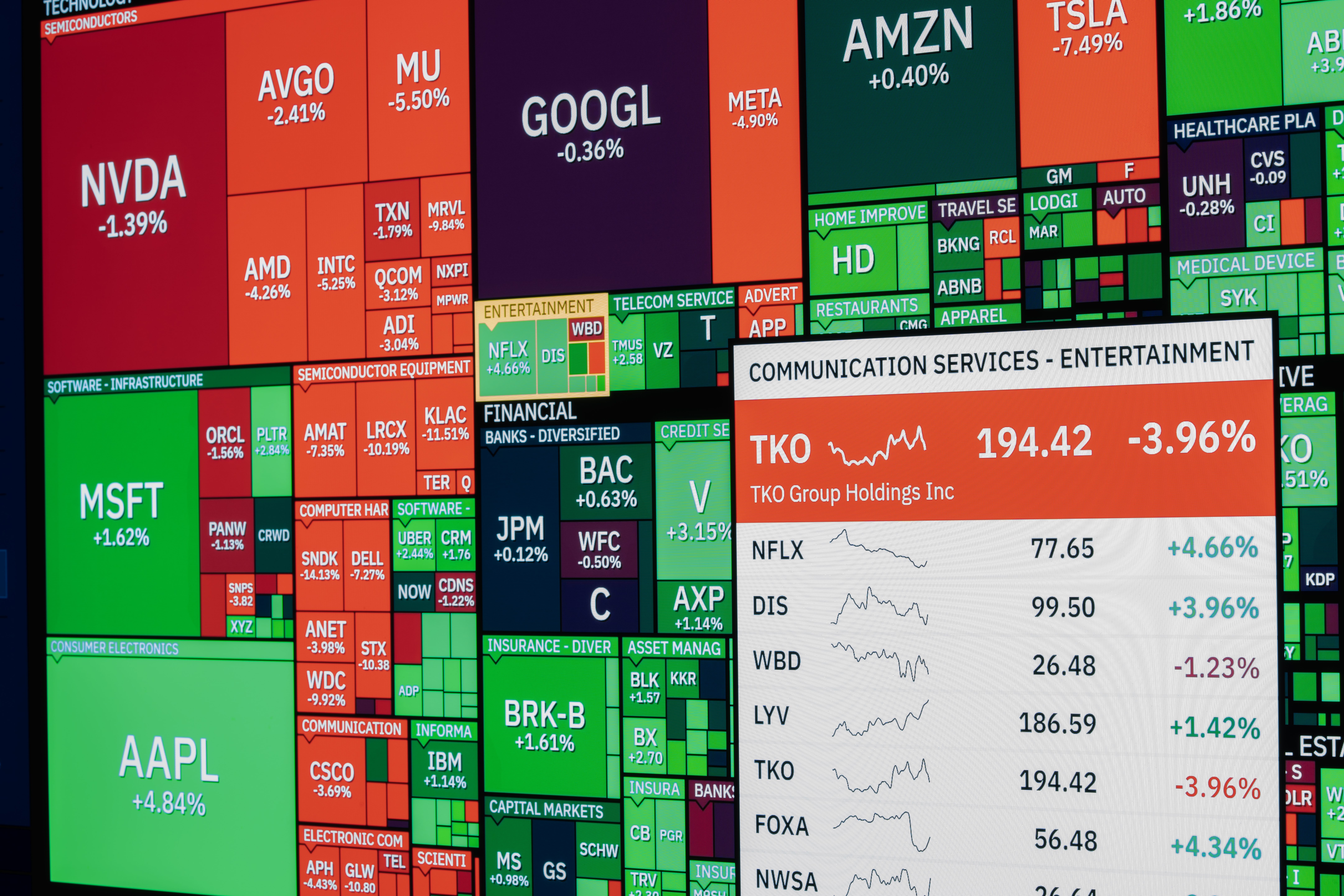
The S&P 500 closed above 7,000 for the first time in its history on Wednesday, erasing every point of the losses that the Iran war inflicted on US equity markets since the conflict began. The milestone, reached on the back of a blowout bank earnings season and growing optimism that a ceasefire extension could lead to a lasting peace deal, marks one of the fastest recoveries from a geopolitical shock in modern market history. In roughly five weeks, the index went from its war-driven lows to a fresh all-time high - a move that has left many strategists scrambling to explain why stocks are at records while oil is still above $100 a barrel and inflation is running well above the Fed's target.
The answer, as it usually is in bull markets, is earnings. And the earnings that kicked off this week were very good.
The Banks Set the Tone
Goldman Sachs fired the starting gun on Monday, reporting first-quarter earnings per share of $17.55 against a consensus estimate of $16.49. Revenue came in at $17.23 billion, above the $16.97 billion expected. Profit rose 19% year over year, driven by record performance in its Global Banking and Markets division, where revenue hit $12.74 billion - up 19% from a year earlier. Investment banking fees surged 48%, reflecting a rebound in deal activity that had been suppressed during the worst of the war-driven market volatility in late February and March. Equities trading set a new record. The bank reported an annualized return on common equity of 19.8%.
JPMorgan followed on Tuesday with numbers that were equally impressive. Net income rose 13% to $16.5 billion, or $5.94 per share, on revenue of $50.54 billion - up 10% year over year. Fixed income trading jumped 21% to $7.1 billion. Investment banking fees climbed 28% to $2.9 billion. Return on equity came in at 23%. CEO Jamie Dimon described the results as "strong" but used his prepared remarks to deliver a characteristically sober warning: while the economy remains resilient, he said, "persistent inflation and geopolitical tensions make the long-term outlook harder to navigate than in previous cycles." Dimon also trimmed the bank's full-year net interest income guidance by $1.5 billion to $103 billion, citing uncertainty around the rate path.
Morgan Stanley, Citigroup, Wells Fargo, and Bank of America all reported through the week, and all beat estimates. The pattern across the group was consistent: Wall Street businesses - trading, investment banking, wealth management - were strong. Main Street businesses - consumer lending, net interest income - were more cautious, with several banks trimming NII guidance as the prospect of rate cuts receded further. The bifurcation between the two halves of the banking system is a recurring theme in this cycle, and it continued in Q1 2026.
The Semiconductor Signal
The bank results were the headline, but the more structurally significant earnings of the week came from the semiconductor supply chain. TSMC reported record first-quarter revenue on Wednesday, driven by surging demand for its most advanced 2-nanometer and 3-nanometer chips. The Taiwan-based foundry, which manufactures chips for Apple, Nvidia, AMD, and virtually every other major semiconductor designer, is the clearest real-time indicator of where AI infrastructure spending actually stands. Its record quarter confirmed that the hyperscalers - Microsoft, Amazon, Google, Meta, and Oracle - are not pulling back on their AI buildout despite the macro headwinds.
ASML, the Dutch company that makes the extreme ultraviolet lithography machines without which advanced chips cannot be manufactured, raised its full-year 2026 revenue guidance to as high as 40 billion euros. The company's CEO described current conditions as an "AI Supercycle" that is outpacing the supply of its own tools. ASML's order book is a leading indicator for semiconductor capital expenditure, and its raised guidance is a direct signal that chipmakers are committing to capacity expansions that will take years to complete. The company did flag a minor "air pocket" in Q2 due to order timing, but the overarching message was unambiguous: the structural demand for AI infrastructure is not a cyclical phenomenon.
Together, the bank and semiconductor results pushed the S&P 500's blended first-quarter earnings growth rate to 13.2% - the sixth consecutive quarter of double-digit bottom-line growth. Revenue growth came in at 9.9%, the highest top-line growth rate since the third quarter of 2022. The Information Technology sector is projected to deliver 45% earnings expansion for the quarter, a number that would have seemed implausible at the start of the year when the Iran war was sending markets into a tailspin.
The Ceasefire Factor
Earnings alone do not fully explain a 7,000 S&P 500. The other ingredient is the Iran ceasefire that President Trump announced on April 7, which halted active hostilities and allowed oil tankers to begin transiting the Strait of Hormuz again. The initial two-week truce was set to expire next week, and reports circulating Wednesday suggested that the US and Iran were in discussions about a further extension to allow more time for peace negotiations. Those reports, combined with the earnings momentum, were enough to push the index through the psychologically significant 7,000 level.
The market's reaction to the ceasefire has been striking in its speed and magnitude. Oil prices, which had surged above $120 a barrel at the peak of the conflict, have retreated to around $103 as the Strait reopened and supply fears eased. That decline in energy costs has provided relief to airlines, cruise operators, and consumer-facing businesses that were being squeezed by fuel costs. It has also taken some of the edge off the inflation picture, though core inflation - which strips out energy - remains elevated and is unlikely to fall quickly regardless of what happens in the Middle East.
What the Records Do Not Resolve
The S&P 500 at 7,000 is a genuine milestone, and the earnings season that drove it there reflects real corporate strength. But the records do not resolve the underlying tensions that have been building in the economy since the war began. Inflation is running well above the Fed's 2% target. The central bank held rates steady at its last meeting in the most divided vote since 1992. The incoming Fed chair, Kevin Warsh, has not yet taken office and has not signaled clearly how he intends to handle an inflation problem that is partly structural and partly geopolitical.
Jamie Dimon's warning about a "complex set of risks" is worth taking seriously precisely because it came alongside a blowout earnings report. When the CEO of the most profitable bank in American history uses his best quarter in years to caution investors about the macro environment, it is not a throwaway line. The risks he is flagging - persistent inflation, geopolitical uncertainty, a Fed that is more divided than at any point in three decades - are real, and they have not gone away because the S&P 500 crossed an arbitrary round number.
The bull case is that earnings growth continues to compound, the Iran situation resolves, and the Fed manages to hold rates steady long enough for inflation to moderate on its own. The bear case is that the ceasefire collapses, oil spikes again, and the Fed is forced to hike into a slowing economy. The market, at 7,000, is pricing the bull case. The question for the weeks ahead is whether the data - starting with the Q1 GDP report and the April FOMC meeting at the end of the month - will validate that bet.