The $1.75 Trillion Bet: What the SpaceX IPO Means for Markets, Investors, and the Future of Capital

There is a number that capital markets have never seen before: $75 billion. That is how much SpaceX is targeting to raise in its initial public offering, set to begin its roadshow on June 4 and price as early as June 11, with Nasdaq trading under the ticker SPCX expected to start June 12. At a target valuation of roughly $1.75 trillion, the offering would surpass Saudi Aramco's 2019 record and become the largest IPO in the history of financial markets. For investors, the question is not just whether to buy shares. It is what the SpaceX IPO tells us about where capital markets are heading - and what it means that the most anticipated public offering in a generation is arriving at this particular moment.
A Company That Defies Simple Categorization
The first challenge for any investor approaching the SpaceX S-1 is figuring out what kind of company they are actually buying. The prospectus, filed with the SEC on May 20, 2026, describes a business that spans rocket launches, satellite internet, artificial intelligence infrastructure, social media, and eventually orbital data centers. SpaceX generated $4.69 billion in revenue in the first quarter of 2026, up 15% year-over-year. Starlink, the satellite internet service, accounted for 69% of that total - $3.26 billion - and is the only profitable segment, generating $1.19 billion in operating income. The space business lost $619 million in the quarter. The AI unit, which includes xAI and the Grok assistant following SpaceX's February 2026 merger with Musk's artificial intelligence startup, lost $2.5 billion.
The net loss for the quarter was $4.28 billion. For the full year 2025, the company lost $4.94 billion. These are not the numbers of a mature cash-generating business. They are the numbers of a company spending aggressively to build infrastructure it believes will be worth multiples of its current cost. Capital expenditures in Q1 2026 totaled $10.1 billion - more than double the prior year - with $7.7 billion of that directed at AI. SpaceX has $25.45 billion in contractual commitments, 95% of which fall in 2026 and 2027. The company is not conserving capital. It is deploying it at a pace that would be alarming in any other context.
The Starlink Engine and the AI Bet
What makes the SpaceX investment case coherent despite those losses is the Starlink flywheel. The service now has 10.3 million subscribers and is the only part of the business generating real operating profit. Anthropic, the AI company backed by Google and Amazon, is paying SpaceX $1.25 billion per month through May 2029 for compute capacity at the Colossus 1 data center in Memphis - a contract that alone represents $15 billion in committed revenue over the agreement's remaining term. That kind of contracted revenue from a credible counterparty changes the risk profile of the AI segment meaningfully.
SpaceX sees a total addressable market of $28.5 trillion across its businesses. The largest slice - $22.7 trillion - is enterprise AI applications. There is a $2.4 trillion AI infrastructure market, an $870 billion broadband market for Starlink, and a $740 billion mobile connectivity market. The company plans to begin deploying orbital data centers as early as 2028, arguing that space-based compute could reduce AI token costs and that its rocket launch capability gives it a structural advantage no terrestrial competitor can replicate. Whether those projections prove accurate is unknowable today. What is clear is that SpaceX is not positioning itself as a rocket company. It is positioning itself as the infrastructure layer for the next phase of the AI economy.
The Governance Question Investors Cannot Ignore
Elon Musk controls 85% of SpaceX's voting power through a dual-class share structure. He holds 849.5 million Class A shares and 5.57 billion Class B shares, with Class B carrying 10 times the voting weight of Class A. No other person or entity holds more than 5% of the company. The practical implication is that public shareholders will have essentially no ability to influence corporate decisions. Musk's compensation structure reinforces this dynamic: he was awarded 1 billion performance-based restricted shares in January, with vesting tied to establishing a permanent human colony on Mars with at least one million inhabitants. That is not a conventional incentive structure. It is a statement of priorities that public market investors will need to accept as a condition of participation.
The S-1 also discloses that SpaceX spent $131 million on Tesla Cybertrucks in 2025 and $697 million on Tesla Megapack battery systems in 2024 and 2025 - related-party transactions that illustrate the degree to which Musk's various enterprises are financially intertwined. X advertising revenue declined by $100 million in Q1 2026 during a technology rebuild, a stark contrast to growth at Meta, Pinterest, and Reddit. These are not disqualifying facts, but they are facts that investors in a conventional public company would expect to be able to address through board pressure or shareholder votes. At SpaceX, they cannot.
What the Blue Origin Explosion Reveals About the Stakes
The timing of the SpaceX IPO roadshow is made more striking by what happened on the evening of May 28, 2026, just days before the offering launches. Blue Origin's New Glenn rocket exploded on the launchpad at Cape Canaveral during a hotfire test, destroying the vehicle in a massive fireball. All personnel were accounted for, but the setback is significant for Jeff Bezos's space venture, which has been trying to close the gap with SpaceX in the commercial launch market. Blue Origin confirmed an anomaly during the test and said it was investigating.
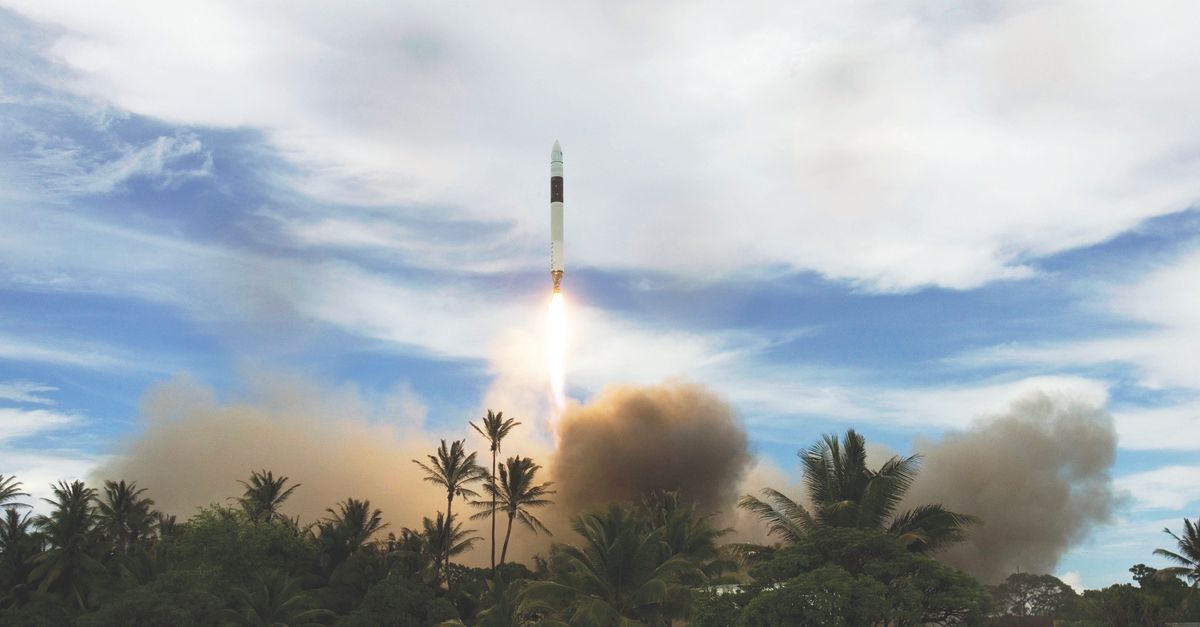
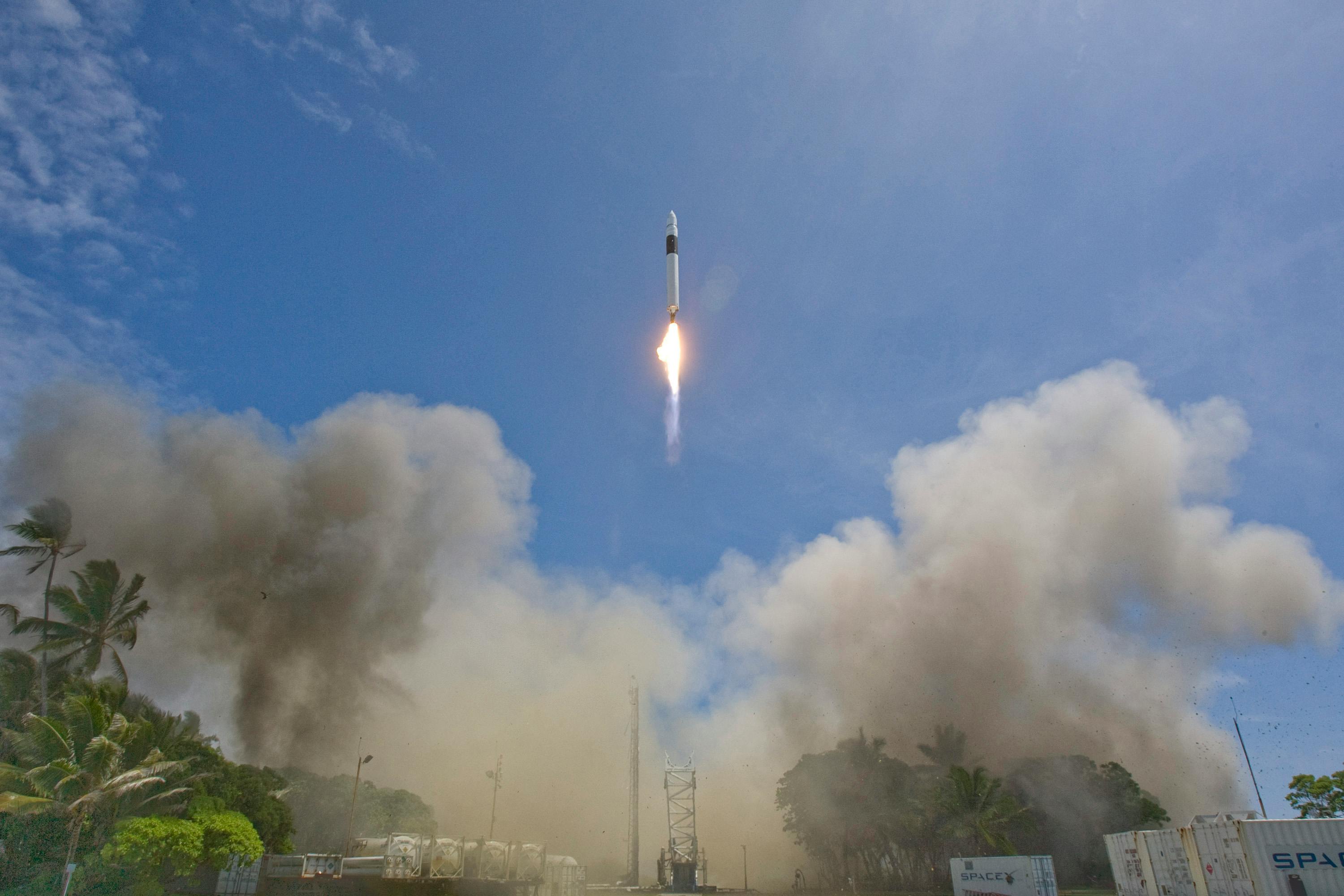
The contrast is instructive. SpaceX has now successfully launched and landed its Falcon 9 booster hundreds of times. Its Starship program, while still in development, has completed multiple test flights. The company's operational track record is the foundation on which the $1.75 trillion valuation rests. Blue Origin's explosion is a reminder that the barriers to entry in the launch business are not just financial - they are technical, and they take years to overcome. For investors evaluating the SpaceX IPO, the Blue Origin setback is a data point about competitive moat, not just a news item about a rival.
The Market Implications of a $75 Billion Raise
The mechanics of a $75 billion IPO have implications that extend well beyond SpaceX itself. Institutional investors who want meaningful exposure to SPCX will need to reallocate capital from existing positions. The bookbuilding period, which begins June 4, will absorb attention and capital from portfolio managers across the technology, aerospace, and AI sectors. Goldman Sachs is lead left on the offering, with Morgan Stanley, Bank of America, Citigroup, and JPMorgan as co-bookrunners - essentially every major Wall Street bank with a technology franchise is involved.
Nasdaq has already updated its fast-entry rules to allow newly listed large-cap companies to join the Nasdaq-100 index more quickly, a change that was widely understood to be designed with SpaceX in mind. Index inclusion would trigger automatic buying from passive funds tracking the Nasdaq-100, adding a mechanical demand driver on top of active investor interest. S&P Dow Jones Indices and FTSE Russell have launched similar fast-entry rules. The index inclusion dynamic could be one of the most significant near-term price supports for SPCX after it begins trading.
The Bigger Picture: What SpaceX Going Public Means
The SpaceX IPO is the first of what could be three mega-offerings in 2026, with OpenAI and Anthropic both eyeing the public market. Together, these listings would represent a generational transfer of private AI and technology value into public hands - a moment when the assets that have driven the most significant technological transformation in decades become accessible to ordinary investors for the first time.
That is not a reason to buy SpaceX at any price. The losses are real, the governance risks are real, and the $1.75 trillion valuation requires a level of execution across rockets, satellites, AI, and orbital infrastructure that has never been demonstrated at scale. But the SpaceX IPO is also a genuine inflection point - the moment when the most ambitious private company in the world decides that the public market is ready for it, or that it needs the public market to fund what comes next. For investors, the question is not whether SpaceX is a remarkable company. It clearly is. The question is what it is worth today, and whether the price of admission reflects the risks that come with buying into Elon Musk's vision of the future at the largest valuation ever assigned to a newly public company.