SpaceX's IPO Prospectus Reveals a Company Betting Its Future on AI, Not Rockets

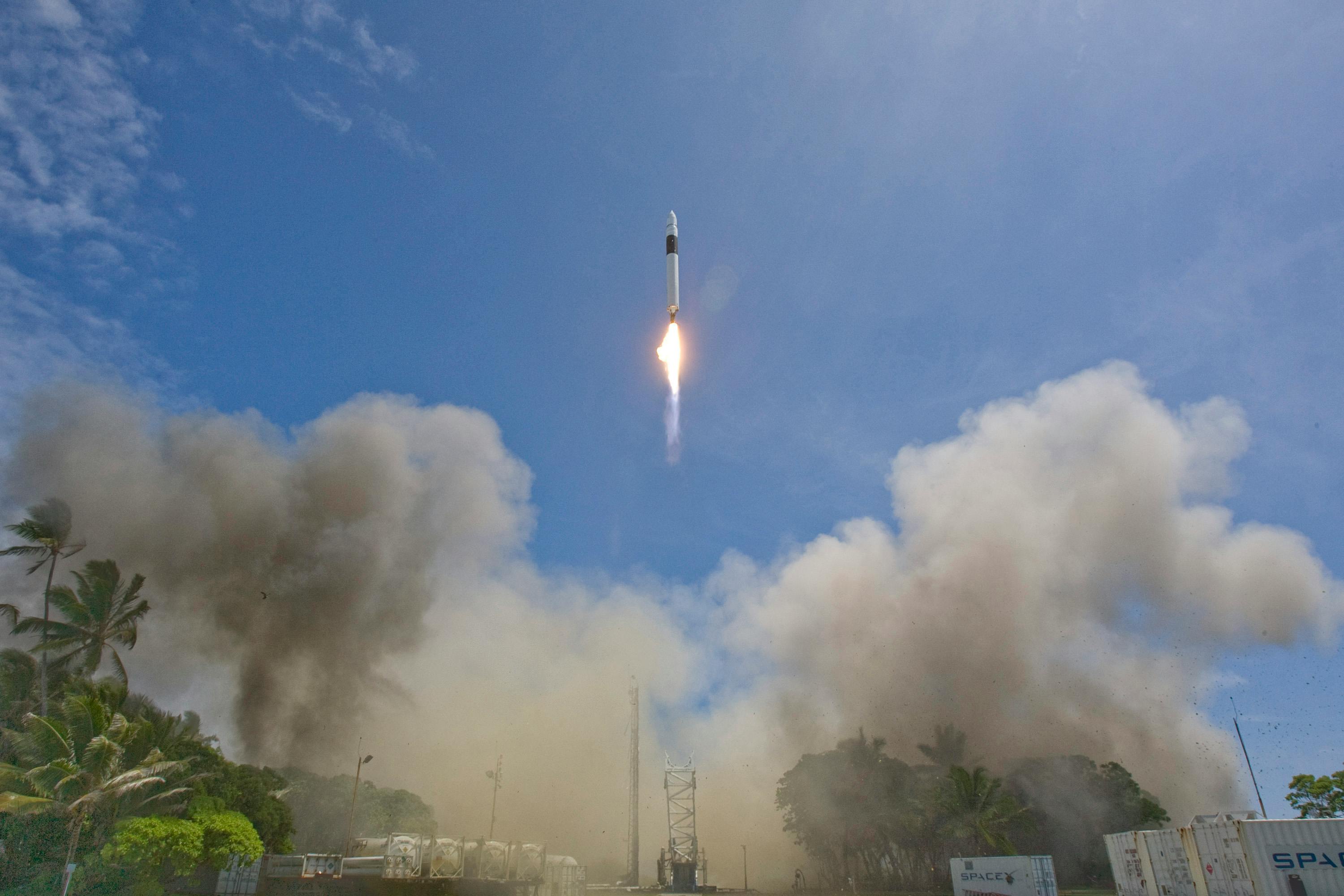
When SpaceX filed its S-1 with the Securities and Exchange Commission on May 20, the financial world finally got what it had been waiting years for: a real look inside Elon Musk's rocket company. What it found was not quite what most people expected. Yes, SpaceX is a rocket company. But the prospectus that landed on the SEC's website reads far more like the pitch deck of an AI infrastructure giant that happens to own a launch business on the side.
The headline numbers are striking. SpaceX generated $18.7 billion in revenue in 2025, a 33% increase from the prior year. Starlink, the satellite internet service, drove the bulk of that, accounting for $11.4 billion, or roughly 61% of total revenue. The space segment, which includes the Falcon 9 launch business and crew services to NASA, contributed $4 billion. The AI segment, built around the recently acquired xAI and its Grok platform, added $3.2 billion. By any measure, these are impressive numbers for a company that has never traded on a public exchange.
But the losses are equally striking. SpaceX posted a net loss of $4.9 billion in 2025, with an operating loss of $2.6 billion. The company's adjusted EBITDA of $6.6 billion tells a more flattering story, but the gap between operating cash generation and net income reflects the sheer scale of capital being deployed. Total long-term debt stood at $29.1 billion at the end of March 2026. This is not a company coasting toward profitability. It is a company in the middle of a massive, deliberate bet.
The AI Pivot Hidden in Plain Sight
The most revealing line in the entire filing may be the capital expenditure breakdown for the first quarter of 2026. SpaceX spent $1 billion on its space segment, $1.3 billion on connectivity, and $7.7 billion on AI. That means spending on xAI's projects, including Grok and the Colossus supercomputing clusters, was more than six times what the company spent on rockets. For the full year 2025, the AI segment consumed $12.7 billion in capex versus $3.8 billion for the space segment.
This is not a rounding error. It is a strategic declaration. SpaceX is positioning itself as an orbital AI compute platform, with rockets and Starlink serving as the infrastructure layer that makes that compute uniquely defensible. The company estimates its total addressable market at $28.5 trillion, with $26.5 trillion of that attributed to AI alone. The space and connectivity markets, which most investors would consider SpaceX's core business, account for less than 7% of that figure.
The Anthropic deal underscores just how serious this pivot is. According to the filing, Anthropic is paying SpaceX $1.25 billion per month through May 2029 for access to compute capacity from the Colossus and Colossus II data centers. That is roughly $15 billion in contracted AI revenue over the life of the agreement, beginning this month. For context, that single contract is worth more than three times what SpaceX's entire space segment generated in revenue last year.
The Musk Factor: Asset or Liability?
No IPO prospectus in recent memory has wrestled more openly with the question of founder dependency. The S-1 acknowledges that Musk holds 85.1% of the combined voting power, making SpaceX a controlled company under SEC definitions. That means the board is not required to have a majority of independent directors, and compensation and nominating committees need not be independent either. Investors buying into the SpaceX IPO are, in a very real sense, buying into Musk's judgment and continued engagement, with limited structural recourse if that judgment proves wrong.
The filing is candid about the risks. It notes that Musk also serves as CEO of Tesla, leads xAI, and has other significant commitments. It warns that his public statements and actions, whether or not directly related to SpaceX, could have a positive or negative impact on the company's business, customer relationships, and stock price. That is a remarkable disclosure for a company seeking a $2 trillion valuation, and it reflects a tension that institutional investors will need to price carefully.
On the other side of the ledger, Musk's compensation structure is designed to align his incentives with the most ambitious possible outcomes. His performance awards, which could be worth roughly $737 billion if fully vested, are tied to milestones including establishing a permanent human colony on Mars with at least one million inhabitants and deploying orbital AI compute at 100 terawatts of capacity. These are not conventional executive compensation benchmarks. They are science fiction targets written into a legal document, and they tell you something important about how Musk thinks about the company's trajectory.
What the Market Is Really Being Asked to Buy
The SpaceX IPO, expected to price in mid-June 2026, is shaping up to be the largest in history, targeting $75 to $80 billion or more in proceeds and a valuation approaching $2 trillion. That would easily eclipse Saudi Aramco's 2019 offering and would represent a 93x revenue multiple on 2025 figures. By traditional valuation metrics, that is an extraordinary ask.
But the SpaceX prospectus is not really asking investors to value a rocket company. It is asking them to value a vertically integrated AI infrastructure platform with a captive satellite network, a proprietary launch capability, and a founder who has demonstrated a willingness to pursue goals that most rational actors would dismiss as impossible. Whether that is worth $2 trillion depends entirely on how much weight you assign to the possibility that the AI compute market develops as SpaceX projects, and that Musk remains the driving force behind it.
For Wall Street, the more immediate question is what the SpaceX listing does to the broader market for late-stage private technology companies. If the deal prices well and trades up, it could open the floodgates for OpenAI, Databricks, and others that have been waiting in the wings. If it stumbles, it could reset expectations for the entire cohort. Either way, the SpaceX S-1 has already changed the conversation about what a technology company can be worth, and what investors are willing to believe.