SpaceX Passes Amazon in Three Days: What the SPCX Frenzy Is Really Telling Investors
SpaceX surpassed Amazon's market capitalization in just three days after its IPO debut, raising critical questions about valuation mechanics, index inclusion dynamics, and whether the market is pricing transformative technology or speculative fervor.

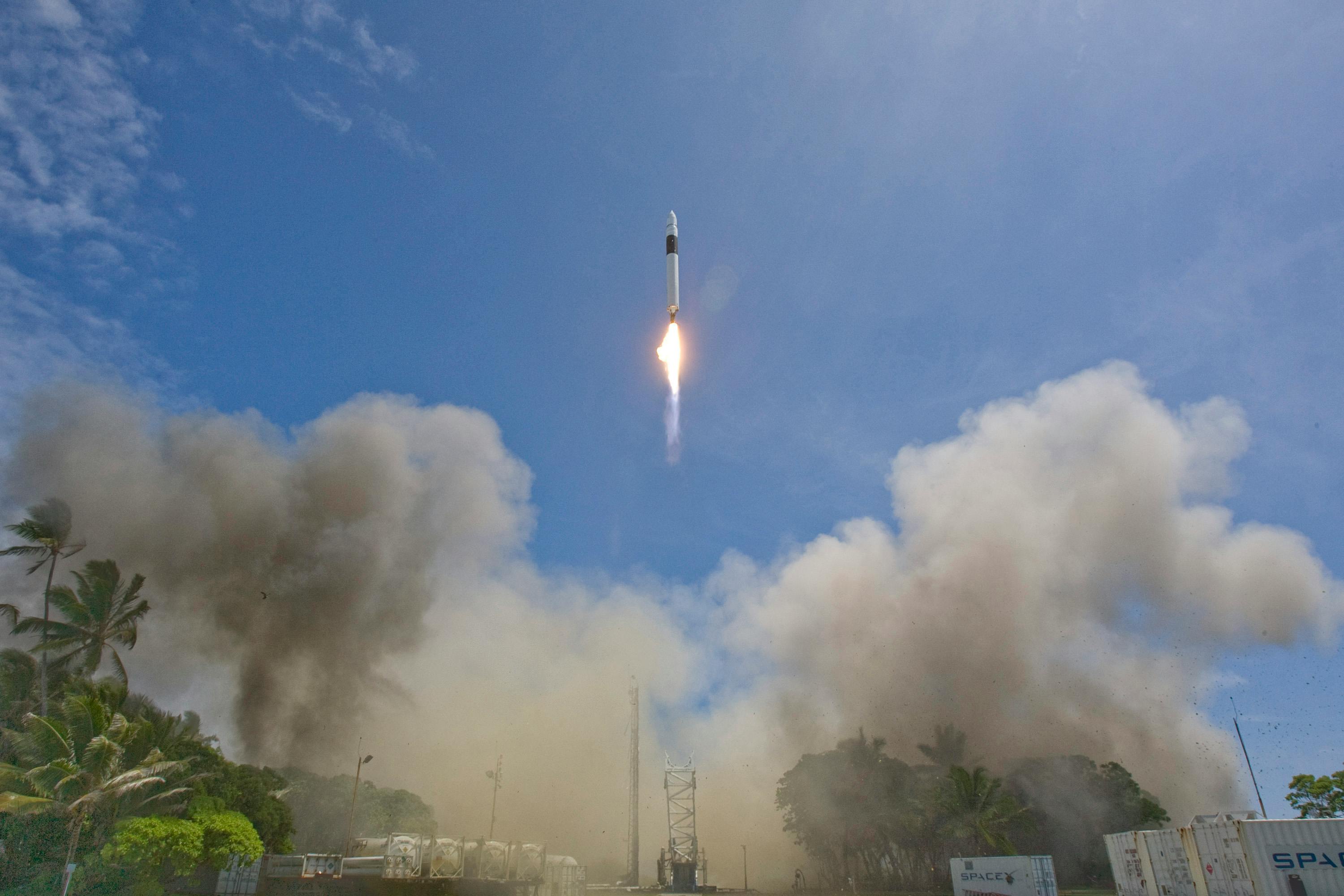
There is a number that captures the audacity of what happened on Tuesday, June 16: three. That is how many days it took SpaceX to surpass Amazon's market capitalization after going public - a company that took Jeff Bezos three decades to build, overtaken by a rocket company that lost $4.9 billion last year. The milestone arrived on the same morning that SpaceX briefly eclipsed Microsoft's market value as well, briefly making Elon Musk's aerospace and AI empire the fourth most valuable company in the United States. The stock closed at $201.80, up 4.8% on the day, giving SpaceX a market cap north of $2.6 trillion. If you bought the IPO at $135, you had a better return in three days than the entire three-year AI rally delivered to most investors.
The IPO That Rewrote the Record Books
SpaceX made its long-awaited debut on the Nasdaq on June 12, 2026, under the ticker SPCX, pricing at $135 per share and raising $75 billion - nearly triple the previous record set by Saudi Aramco in 2019. The stock opened above $150 and closed its first day at $161.11, a gain of nearly 20%. By day three, it had climbed another 25% from that close. The company that Elon Musk once gave less than a 10% chance of surviving is now worth more than Amazon, a company that generated $717 billion in revenue and $77.7 billion in profit last year. SpaceX, by contrast, posted $18.7 billion in revenue and a $4.9 billion net loss. The market is not pricing SpaceX on what it earned. It is pricing it on what it might become.
The mechanics behind the surge are worth understanding, because they explain both the euphoria and the risk. Only about 4% of SpaceX's shares are publicly traded. The rest remain locked up. That tiny float, combined with an estimated $22 billion to $27 billion in passive fund buying required for index inclusion under a new Nasdaq rule that fast-tracks megacap IPOs into the Nasdaq-100 in as little as 15 trading days, has created a supply-demand imbalance that is almost mathematically guaranteed to push prices higher in the short term. Retail investors poured $225 million into SPCX on a net basis in the first two days alone - roughly 75% of all net single-stock buying in the entire market over that stretch, according to Vanda Research. Options trading added another layer of forced buying: dealers who sold call options had to purchase shares to hedge, accelerating the move.
The Cursor Deal and the Conglomerate Question
The Tuesday surge was partly catalyzed by SpaceX's acquisition of Cursor, the AI coding tool that has become the dominant platform for software developers, for approximately $60 billion - more than SpaceX has spent on rockets in its entire history. The deal bolts a business generating $3 billion in annual revenue onto an entity that already combines reusable rockets, the Starlink satellite internet network, the xAI frontier AI lab, and the X social media platform. Musk has said the combined entity might reach approximately $1 trillion in revenue by 2030. It did $18.7 billion in 2025.
That gap between current reality and stated ambition is the central tension every investor in SPCX has to resolve. The bulls, led by Wedbush's Dan Ives, frame it as a fourth industrial revolution play - a company that owns the infrastructure of space, AI, and connectivity simultaneously. The bears, led by CFRA, opened coverage with a sell rating and a $115 price target, a 29% haircut from the IPO close. Morningstar pegged fair value at $780 billion, roughly 70% below where the stock was trading on Tuesday. The argument is straightforward: neither a commercially competitive Starship nor a profitable orbital data center business has been demonstrated. Investors are paying 94 times trailing revenue for projections that remain, by the company's own admission in its S-1, speculative.
The GameStop Comparison Nobody Wants to Make
Jim Cramer called it a memestock on Tuesday, and the comparison is uncomfortable precisely because it is not entirely wrong. The mechanics - a tiny float, massive retail enthusiasm, options-driven forced buying, and a narrative that transcends the underlying financials - rhyme with the 2021 GameStop episode in ways that should give serious investors pause. The difference is that SpaceX is a real business with real revenue, real contracts, and a real technological moat. Starlink alone serves tens of millions of customers globally. The Falcon 9 is the most reliable orbital rocket ever built. These are not the characteristics of a meme. But the valuation, at this moment, is being set by mechanics that have little to do with fundamentals.
The index inclusion dynamic is the most important factor that most retail investors are not thinking about. When passive funds are forced to buy $22 billion to $27 billion of a stock with almost nothing to sell them, the price goes up regardless of what the company is worth. That buying is coming. It is mechanical. And when it is done, the float will still be 4%, the losses will still be real, and the $1 trillion revenue target will still be four years away. Former Tesla board member Steve Westly put it plainly on CNBC: SpaceX's own investors will get pretty grumpy after three or four quarters if Musk misses the S-1 projections.
What This Means for the Broader Market
SpaceX's ascent is not happening in isolation. It is the opening act of what may be the most consequential IPO window in a generation. Anthropic filed its S-1 on June 1 at a near-$1 trillion valuation. OpenAI filed on June 8, targeting a September debut at $1 trillion. Three companies, each targeting a trillion-dollar valuation, each competing for the same pool of institutional capital, each arriving within months of each other. The question is not whether any one of them can attract investors. It is whether the market can absorb all three without the capital competition driving one or more of them to price below expectations.
For investors watching from the sidelines, the SpaceX story is a useful stress test for how markets price transformative technology at the moment of maximum narrative power. Amazon was once a money-losing bookseller that the market valued on the assumption it would eventually dominate commerce. It did. Facebook fell nearly 50% in its first three months as a public company and spent more than a year below its IPO price before becoming one of the best-performing mega-cap stocks ever. Saudi Aramco rose 10% on its first day and then fell below its offer price within months as oil markets turned. History does not repeat, but it rhymes. The question for SPCX is which of those stories it is writing - and the honest answer, three days in, is that nobody knows.
What is not in doubt is that SpaceX has done something no company has done before: it has gone public at a valuation that makes it, on paper, the fourth most valuable company in America, while losing money, with 96% of its shares still locked up, and with its most ambitious products still unproven. The market has voted. The rockets have not yet landed.