The 30-Year Is in 2007. The Rest of the Tape Is Not.
The long bond, oil, and semiconductors all moved on Monday. They did not agree.


The long bond, oil, and semiconductors all moved on Monday. They did not agree.
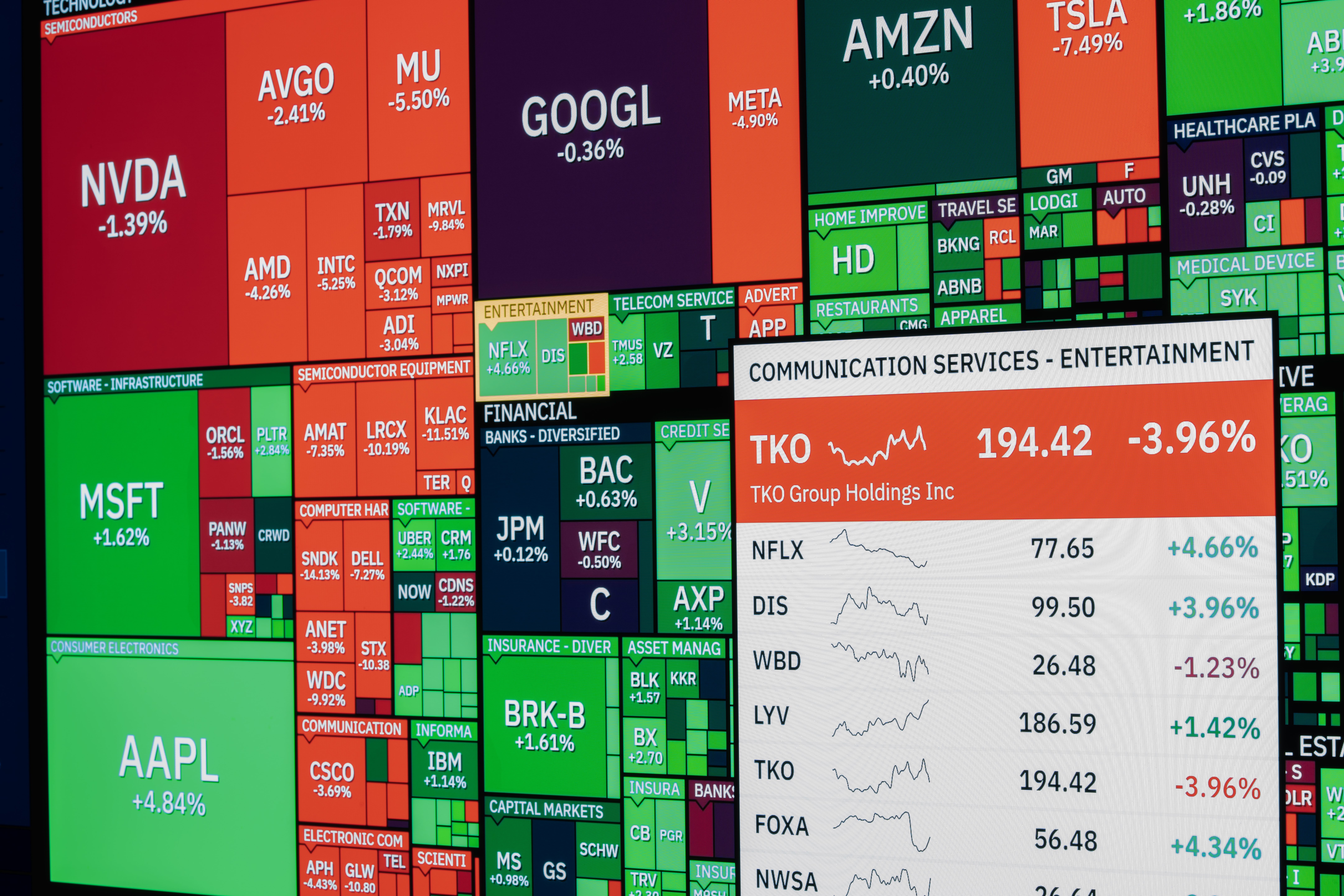
The 30-year Treasury yield closed at 5.31 percent, up five basis points, the highest since 2007. Brent settled near $91 a barrel. The S&P 500 still only lost half a percent, and the Philadelphia semiconductor index finished higher, Bloomberg reported.
The long end is not a Fed story
If this were a classic growth scare, the front end would be doing the work. It is not. The two-year yield only ticked up a basis point, to 4.18 percent. The 10-year rose three, to 4.72 percent. The 30-year did the damage.
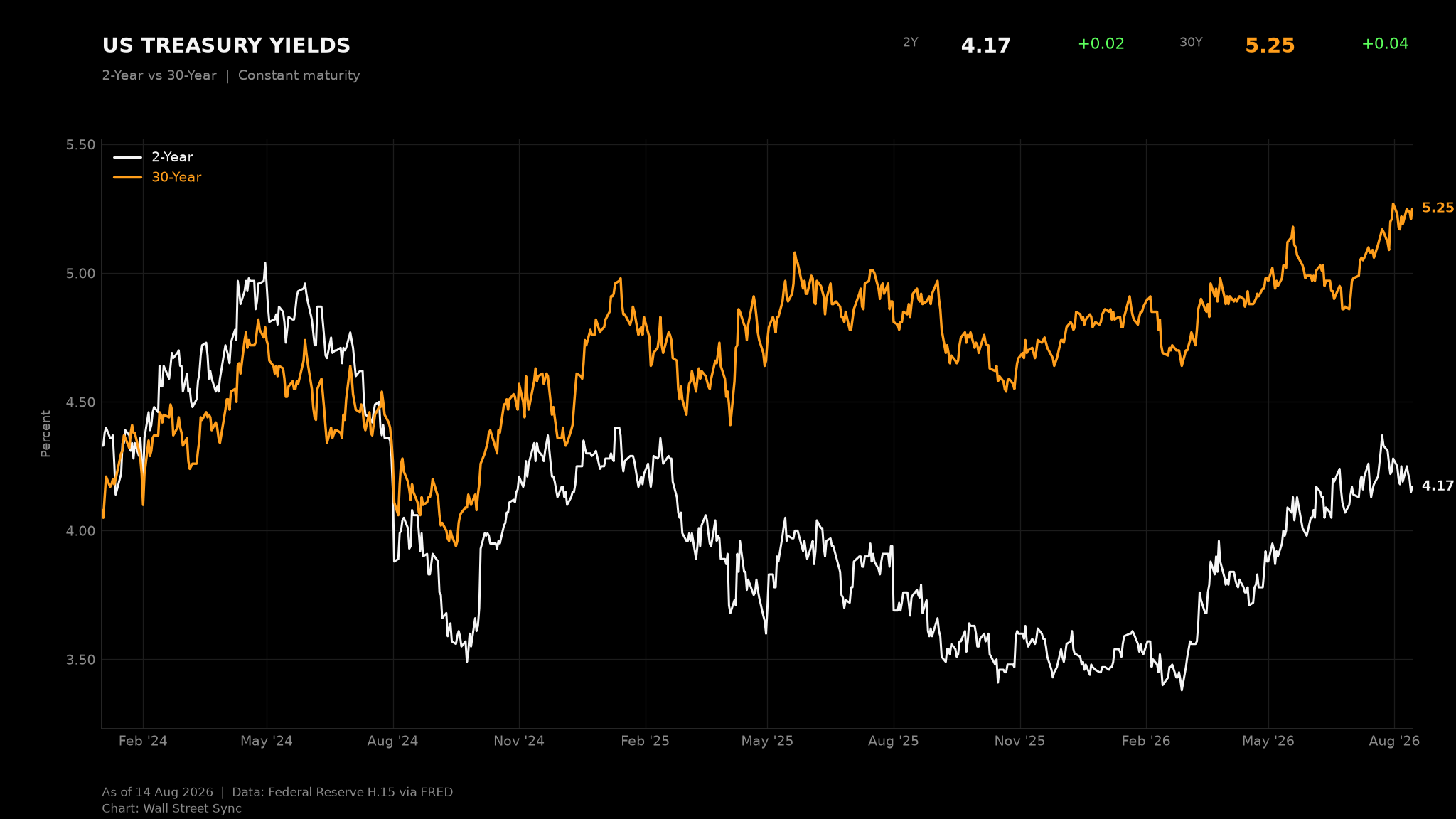
Chart by Wall Street Sync. 2-year vs 30-year constant-maturity yields through 14 Aug 2026. Data: FRED.
That is a term-premium move. Anthony Saglimbene at Ameriprise said large, frequent Treasury sales are how the bond market pushes back on the fiscal path, by demanding more yield for the paper to clear. You do not need a rate hike for that. You need a buyer who is no longer willing to finance an ever-larger stock of debt at last month's price.
The July FOMC already told you the policy rate is not the binding constraint. The committee held the funds target at 3.50 to 3.75 percent on a 9-3 vote, the fifth straight hold. Three presidents wanted a quarter-point increase. Chair Kevin Warsh has stripped most of the forward guidance out of the statement. Futures still only price roughly a 30 percent chance of a hike in September, per FedWatch, down hard from late July, because the data since the meeting went the other way.
Payrolls fell 23,000 in July, the BLS said. May and June were revised down by a combined 103,000. CPI landed on consensus. That combination is why hike odds collapsed. It is also why the 30-year rallying to a 19-year high on the same tape should bother people. The market that sets 30-year mortgages and corporate duration is not waiting on the funds rate. It is charging for supply, for deficits, and for inflation that has not been at 2 percent for years.
Oil is the inflation the minutes will not have
The 60-day U.S.-Iran memorandum expired Monday. Trump told reporters he would not extend it. Brent pushed through $90. West Texas Intermediate settled at $84.65, up 2.7 percent. Gold rose to about $4,420.
A one-day oil spike is noise. A war premium that keeps crude in the high $80s is a relative-price shock the Fed has spent two years trying to look through. Energy is how a "hold" committee becomes a hike committee without a hot payroll print. The July minutes, due Wednesday at 2 p.m. Eastern, cannot resolve that. They describe a meeting that took place before the jobs miss, before this CPI, and before this ceasefire ran out. Read them for the dissenters. Do not read them as a September forecast.
Jackson Hole is August 27-29, on financial innovation and payments, per the Kansas City Fed symposium. Useful for the digital-asset crowd. Not the venue that will tell you whether 5.31 percent on the long bond is a clearing price or a warning.
Semiconductors are trading a private income statement
While the long end sold off, chips bid. The SOX rose 1.6 percent. That bid has a document behind it. Bloomberg reported Friday that Anthropic's preliminary second-quarter revenue was above $11.5 billion, from $787 million a year earlier and $4.73 billion in the first quarter. Adjusted operating income was positive. The figures are preliminary and can still move.
That print is why memory and equipment caught a bid today. It is not a reason to ignore 5.31 percent. It is the reason the equity market thinks it can. AI capex has been the override on duration all year: if the private labs keep printing revenue like that, the cost of capital can rise and the semiconductor complex can still go up. Software did not get the same invitation. The tape is not "risk on." It is "pay for the watt, not the seat."
Retail names report this week (Walmart, Target, Home Depot, Lowe's) and will test the other half of that override. If the consumer that already produced a down payroll month also produced a down back-to-school, the long bond is not an isolated fiscal story. It is the discount rate on a slower economy with stickier energy.
The two prices that cannot both be right
Equities can look through a 5.31 percent 30-year for a while if Anthropic-type prints keep arriving and if oil mean-reverts. The bond market is not looking through the deficit, the auction calendar, or $90 Brent. One of those views is going to have to give.
The near-term tell is not the S&P. It is whether the 2s/30s steepener keeps going after Wednesday's minutes. If the front end stays anchored near 4.18 percent and the long end holds above 5.25 percent, the Fed has lost the long bond. That is a different problem from a September hike. It is a problem the equity market is currently treating as someone else's.