Warsh Takes the Wheel: What the New Fed Chair Means for Markets Navigating War and Inflation
Kevin Warsh is now the 17th Fed chair, inheriting a $6.8 trillion balance sheet, a market pricing in rate hikes, and an Iran war that has reshaped the inflation outlook. Here is what his arrival means for investors.

Wall Street returned from its Memorial Day break on Tuesday to a market landscape that looks fundamentally different than it did just a few months ago. Kevin Warsh is now the 17th chair of the Federal Reserve, oil is trading near $91 a barrel after peaking above $120 during the worst of the Iran war, and consumer confidence just ticked down again to 91.9 in May. The question investors are wrestling with is not whether the economy is resilient. It clearly is. The question is whether the new Fed chief will be willing to let that resilience breathe, or whether he will tighten the screws at exactly the wrong moment.
A New Sheriff at the Fed
Warsh was sworn in at the White House on May 22, stepping into a role that carries enormous weight at an unusually complicated moment. He inherits a Federal Open Market Committee that held rates steady at its April meeting with the highest level of internal dissent since 1992. He inherits a $6.8 trillion balance sheet that he has publicly called "bloated." And he inherits a market that, for the first time in years, is pricing in a rate hike as the most likely next move rather than a cut.
That last point deserves emphasis. The consensus on Wall Street has shifted dramatically. Analysts at the Schwab Center for Financial Research put it plainly last week: "We believe the Fed is likely on hold for an extended period of time, but the next move will likely be a hike." That is a remarkable statement given where rate expectations stood at the start of the year, when traders were still penciling in multiple cuts before year-end.
The shift reflects the reality of an economy absorbing a genuine supply shock. The 2026 Iran war, which began in late February, closed the Strait of Hormuz and triggered what the International Energy Agency called the largest supply disruption in the history of the global oil market. Americans have spent an estimated $44 billion in extra fuel costs since the conflict began. Inflation expectations, as measured by the University of Michigan survey, remain well above the Fed's comfort zone even as oil prices have retreated from their peak.
The Balance Sheet Battle Ahead
Beyond the immediate rate question, Warsh's more consequential legacy may be fought in the technical plumbing of the financial system. He has signaled a desire to move the Fed away from its post-2008 model of "ample reserves," where the central bank uses its massive balance sheet as a routine tool for managing financial conditions. His preferred alternative is a return to something closer to the pre-crisis framework of "scarce reserves," where the Fed intervenes more selectively and with clearer rules about when and why it acts.
The implications of that shift are not abstract. A smaller Fed footprint in day-to-day markets could mean higher Treasury yields, wider mortgage spreads, and less of the implicit backstop that equity markets have come to expect during periods of stress. Fed Governor Michael Barr has already pushed back publicly, arguing that shrinking the balance sheet without careful sequencing could actually increase volatility and force more interventions, not fewer. Former Cleveland Fed President Loretta Mester has noted that the Fed has never clearly communicated when it uses asset purchases for monetary policy purposes versus market stabilization, and that Warsh has an opportunity to fix that ambiguity.
None of this will happen quickly. Researchers at the Fed itself have estimated that meaningful balance sheet reduction could take "at least a year and quite possibly several" to implement responsibly. The June FOMC meeting, Warsh's first as chair, is unlikely to produce dramatic action. But the tone he sets, and the framework he begins to articulate, will matter enormously for how markets price risk over the next several years.
The Geopolitical Wild Card
Complicating the picture further is the Iran situation, which remains genuinely unresolved. Overnight, the US military conducted what it described as "self-defense" strikes in southern Iran targeting missile launch sites and boats placing mines, even as President Trump posted on social media that negotiations were "proceeding nicely." Markets have been whipsawing on every headline, with Dow futures jumping more than 300 points Tuesday morning on hopes that a peace deal is close, while Brent crude rose 2% on the strike news.
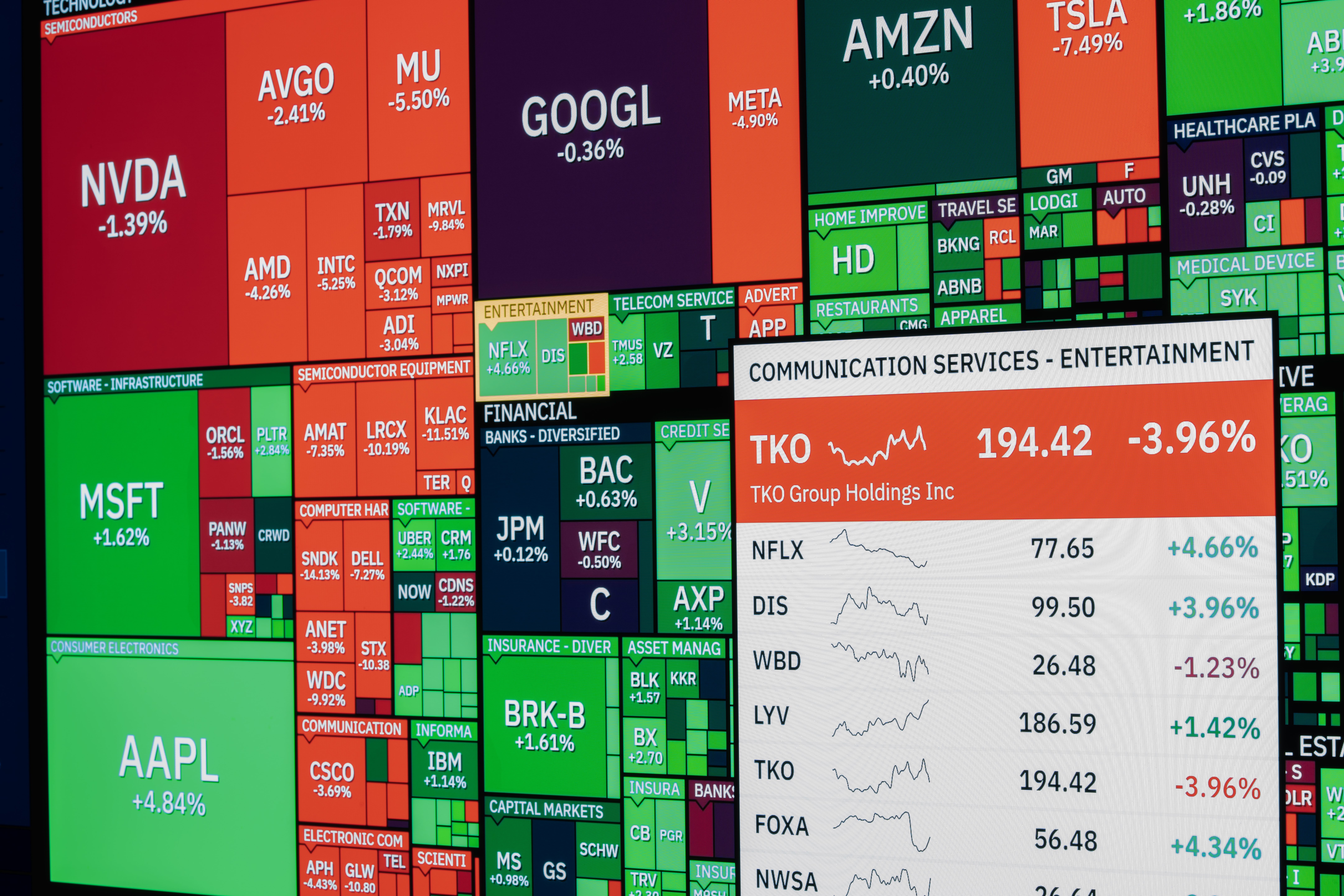
The disconnect between diplomatic optimism and continued military action captures the central tension in markets right now. Investors want to believe the war premium in oil is fading. The S&P 500 has rallied to 7,526, earnings growth for the season is running at nearly 28%, and the Nasdaq has recovered substantially from its wartime lows. But the hardest parts of any Iran deal, including the fate of the Strait of Hormuz and Iran's enriched uranium stockpile, remain unresolved. A deal that reopens the strait would be genuinely disinflationary and could give Warsh room to hold rates steady or even signal a more accommodative posture. A breakdown in talks would do the opposite.
What Investors Should Watch
The June FOMC meeting is the first real test of the Warsh era. Markets will be listening not just for the rate decision, which is almost certain to be a hold, but for the language around the balance sheet, the updated economic projections, and any signals about the threshold for a hike. Consumer confidence at 91.9 in May, down from 92.8 in April, suggests households are still feeling the pinch of elevated energy costs even as the headline numbers look strong. That is the kind of data that makes the Fed's job harder, not easier.
The earnings season has been a genuine bright spot, with more than 90% of S&P 500 companies having reported and average growth of nearly 28%. But with Nvidia now in the books and the retail calendar winding down, the market will have fewer fundamental catalysts to lean on heading into summer. Seasonal patterns, geopolitical headlines, and Fed communication will fill the void. In that environment, what Warsh says matters as much as what he does. The market is watching closely to see whether the new Fed chair is a steady hand or a source of new uncertainty.